
Jjajangmyeon
In its own language: 짜장면; 자장면
Korean Chinese noodles topped with a thick black bean sauce and diced pork
Jjajangmyeon is a Korean Chinese noodle dish featuring thick wheat noodles covered in a dark, sweet-salty sauce made from chunjang (black bean paste), diced pork, and vegetables. The dish was introduced to Korea by Chinese migrants from Shandong in the late 19th century and has become a popular everyday meal, with seafood and meat variations.
- Jjajangmyeon was brought to Korea by Chinese migrants from Shandong.
- Its sauce is made from chunjang, a fermented black bean paste.
- The Korean version is darker and sweeter than the Chinese original.
- It is commonly served with yellow pickled radish and raw onion.
- Incheon is closely linked to the dish's history.
What is Jjajangmyeon?
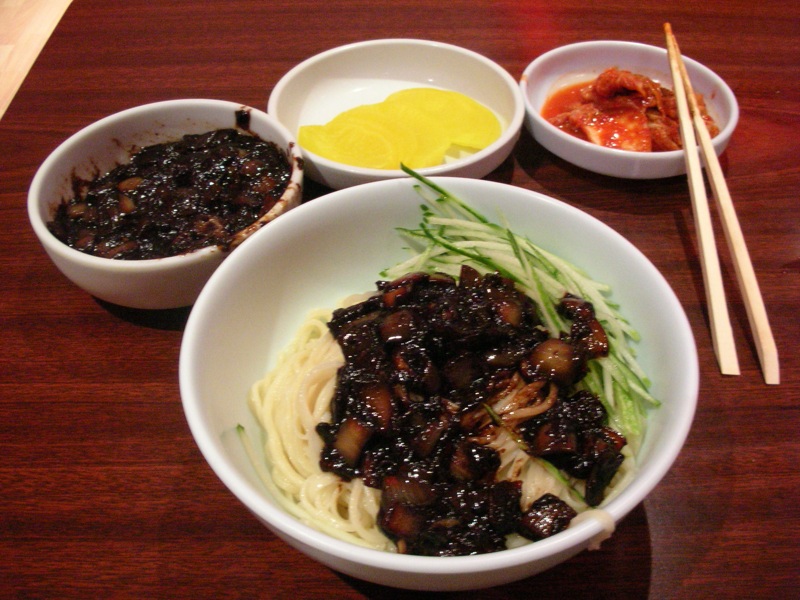
Jjajangmyeon is a bowl of thick wheat noodles topped with a glossy, jet-black sauce. The sauce is made from chunjang, a fermented black bean paste, fried with diced pork and vegetables like onions, zucchini, and cabbage. Aromatics such as scallion, ginger, and garlic are added, and sometimes soy or oyster sauce deepens the flavor. The finished dish is hearty, savory, and slightly sweet, with a rich, earthy aroma. It is often garnished with cucumber or egg and served with pickled radish and raw onion on the side.
Where does Jjajangmyeon come from?
Jjajangmyeon traces its roots to Chinese migrants from Shandong who settled in Incheon, Korea, in the late 19th century. The dish was adapted from the Chinese zhajiangmian, but Korean cooks made the sauce darker and sweeter by adding caramel and extra grains. It became widely popular in Korea after the Korean War, especially among merchants and dock workers in Incheon. Over time, it developed into a distinct Korean Chinese dish, now seen as part of Korea's own food culture.
How is Jjajangmyeon made?
To make jjajangmyeon, thick wheat noodles are boiled until chewy. The sauce begins with frying chunjang in oil, then adding diced pork (or sometimes beef or seafood), onions, zucchini, and cabbage. Aromatics like scallion, ginger, and garlic are sautéed, and soy or oyster sauce may be added. The mixture is simmered with stock and thickened with a starch slurry. The sauce is poured over the noodles and topped with garnishes such as cucumber or egg.



How and when is Jjajangmyeon eaten?
Jjajangmyeon is usually eaten hot for lunch or dinner, often as a casual meal at Korean Chinese restaurants. It is commonly served with danmuji, a sweet-sour yellow pickled radish, and raw onion with extra chunjang for dipping. The dish is mixed well before eating so the noodles are coated evenly in sauce. It is enjoyed alone or shared with friends and family, and is a popular choice for quick, filling meals.
Kinds of Jjajangmyeon
Several versions of jjajangmyeon exist. Gan-jjajang is a drier style with a thicker sauce, served separately from the noodles. Jaengban-jjajang is stir-fried and served on a plate. Yuni-jjajang uses ground meat, while samseon-jjajang adds seafood like squid or mussels. There are also instant noodle versions, and dishes like jajang-bap (with rice) and jajang-tteok-bokki (with rice cakes) use the same sauce.
What Jjajangmyeon means
Jjajangmyeon is deeply woven into Korean daily life and food culture. It is considered an affordable, comforting meal and is often associated with moving day or family gatherings. The former Gonghwachun restaurant in Incheon, where the dish became popular, is now a museum dedicated to jjajangmyeon. The dish symbolizes the blending of Chinese and Korean culinary traditions.
Questions people ask about Jjajangmyeon
What is jjajangmyeon made of?
Jjajangmyeon consists of thick wheat noodles topped with a sauce made from chunjang (black bean paste), diced pork, and vegetables such as onions, zucchini, and cabbage. Aromatics like scallion, ginger, and garlic are also included.
Where does jjajangmyeon come from?
Jjajangmyeon originated in Incheon, South Korea, brought by Chinese migrants from Shandong in the late 19th century. It is based on the Chinese dish zhajiangmian but has developed its own Korean style.
How is jjajangmyeon different from zhajiangmian?
The Korean jjajangmyeon uses a darker, sweeter sauce than the Chinese zhajiangmian. Korean cooks added caramel and extra grains to the sauce, giving it a jet-black color and a sweeter taste.
Are there vegetarian or seafood versions of jjajangmyeon?
Yes, there are versions with seafood like squid or mussels (samseon-jjajang), and some use ground meat or other ingredients. However, the classic version contains pork.
What is usually served with jjajangmyeon?
Jjajangmyeon is typically served with danmuji (yellow pickled radish) and raw onion, often with extra chunjang sauce for dipping.
Good reading and sources
The facts on this page come from the Wikipedia article "Jjajangmyeon", written by its contributors and used under the CC BY-SA 4.0 licence, and from its Wikidata record (CC0). Thali rewrote the text in its own words, with AI assistance, and compares every page with the article to make sure no passage is copied. It may be reused under the same CC BY-SA 4.0 licence with a link back.
It may contain mistakes, and it is not dietary or allergy advice: recipes differ from cook to cook. If something is wrong, tell us. Last refreshed 2026-10-03.
More from South Korea
All the food of South Korea KabochaVeganカボチャ
🇯🇵 Japan and 5 moreA sweet, dense winter squash with edible skin, used in Japanese and Asian cooking
Main dish, Lunch, Dinner
KabochaVeganカボチャ
🇯🇵 Japan and 5 moreA sweet, dense winter squash with edible skin, used in Japanese and Asian cooking
Main dish, Lunch, Dinner
 Bibimbap비빔밥
🇰🇷 South Korea and 1 moreKorean rice bowl with mixed vegetables, meat, egg and chili paste
Main dish, Lunch, Dinner
Bibimbap비빔밥
🇰🇷 South Korea and 1 moreKorean rice bowl with mixed vegetables, meat, egg and chili paste
Main dish, Lunch, Dinner
 Udonうどん / 饂飩
🇯🇵 Japan and 4 moreThick wheat noodles served hot or cold in Japanese cooking
Noodle or pasta dish, Lunch, Dinner
Udonうどん / 饂飩
🇯🇵 Japan and 4 moreThick wheat noodles served hot or cold in Japanese cooking
Noodle or pasta dish, Lunch, Dinner
Its cousins elsewhere
All noodles and pasta FideuàFish or seafood
🇪🇸 SpainSeafood and noodle dish from the Valencian coast, cooked in a wide shallow pan
Main dish, Lunch, Dinner
FideuàFish or seafood
🇪🇸 SpainSeafood and noodle dish from the Valencian coast, cooked in a wide shallow pan
Main dish, Lunch, Dinner
 KäsespätzleVegetarian
🇩🇪 Germany and 3 moreSoft egg noodles baked with cheese and topped with fried onions
Main dish, Lunch, Dinner
KäsespätzleVegetarian
🇩🇪 Germany and 3 moreSoft egg noodles baked with cheese and topped with fried onions
Main dish, Lunch, Dinner
 Pasta
🇮🇹 Italy and 1 moreUnleavened dough shaped and cooked, a staple of Italian cuisine
Main dish, Lunch, Dinner
Pasta
🇮🇹 Italy and 1 moreUnleavened dough shaped and cooked, a staple of Italian cuisine
Main dish, Lunch, Dinner
 SpaghettiVegan
🇮🇹 Italy and 2 moreLong, thin pasta strands made from durum wheat and water
Noodle or pasta dish, Lunch, Dinner
SpaghettiVegan
🇮🇹 Italy and 2 moreLong, thin pasta strands made from durum wheat and water
Noodle or pasta dish, Lunch, Dinner