Kabuli pulao
In its own language: قابلی پلو
Afghan rice pilaf with caramelized carrots, raisins, and meat
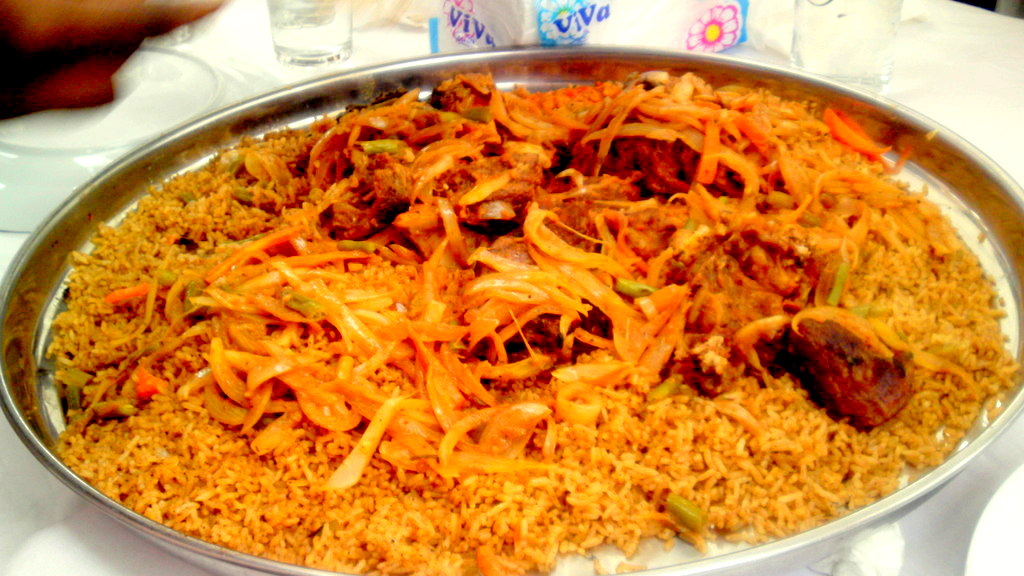
Kabuli pulao is a pilaf from Afghanistan made with rice, caramelized carrots, raisins, and marinated meat, often lamb or mutton. It is garnished with nuts and sometimes saffron, and is served hot at lunch or dinner, especially at gatherings and celebrations. The dish is a symbol of Afghan hospitality and is enjoyed across Central Asia.
- National dish of Afghanistan
- Made with rice, lamb, carrots, raisins, and nuts
- Garnished with almonds and pistachios
- Known as Bukhari rice in Saudi Arabia
- Served at gatherings and celebrations
What is Kabuli pulao?
Kabuli pulao is a rice dish where long-grain rice is cooked with tender pieces of marinated meat, usually lamb or mutton. Caramelized strips of carrot and plump raisins are mixed in, giving the dish a gentle sweetness and color. It is finished with a scattering of almonds and pistachios, and sometimes a hint of saffron for aroma and color. The grains remain separate, and the dish is both savory and lightly sweet, with a mix of textures from the soft rice, chewy raisins, and crunchy nuts.
Where does Kabuli pulao come from?
Despite its English name, Kabuli pulao did not originate in Kabul. Its roots are likely in the border region between northern Afghanistan and Uzbekistan, where rice pilaf traditions are ancient. The name 'Qabili' comes from a Persian word meaning 'capable' or 'skillful,' and early recipes appear in Persian cookbooks from the 16th century. The dish spread across Afghanistan, Central Asia, and into communities in Saudi Arabia, where it is known as Bukhari rice.
How is Kabuli pulao made?
To prepare Kabuli pulao, rice is boiled until just tender. Meat, often lamb or mutton, is marinated and cooked separately. Carrots are sliced into thin strips and caramelized, then mixed with raisins. The rice, meat, and sweet carrot-raisin mixture are layered together, sometimes with saffron added for fragrance. The dish is garnished with toasted almonds and pistachios before serving.
How and when is Kabuli pulao eaten?
Kabuli pulao is served hot, typically as the centerpiece of lunch or dinner. It is a main dish at gatherings, both formal and informal, and is often offered to guests as a sign of respect. Traditional side dishes may accompany it, but the pulao itself is the focus. It is enjoyed at family meals, festivals, and weddings throughout Afghanistan and neighboring regions.
Kinds of Kabuli pulao
In Uzbekistan and Tajikistan, similar dishes are called Osh palov. The Uzbeki version within Afghanistan, known as Uzbeki palaw, uses a different method for cooking rice, absorbing all the liquid rather than steaming. In Saudi Arabia, the dish is called Bukhari rice, reflecting the influence of Central Asian migrants. While the core ingredients remain similar, the cooking techniques and garnishes can vary by region.
What Kabuli pulao means
Kabuli pulao is considered the national dish of Afghanistan and is a symbol of hospitality and celebration. It is served at important events such as weddings and festivals, and its preparation is seen as a mark of skill. The dish has traveled with Afghan and Central Asian communities, becoming a part of the food culture in places like Uzbekistan and Saudi Arabia, where it carries local names and slight adaptations.
Questions people ask about Kabuli pulao
What is Kabuli pulao made of?
Kabuli pulao is made with rice, marinated meat (often lamb or mutton), caramelized carrots, raisins, and is garnished with almonds and pistachios. Saffron may also be added for aroma and color.
Where does Kabuli pulao come from?
Kabuli pulao comes from Afghanistan and is also found in Central Asian countries like Uzbekistan and Tajikistan. It is especially popular as a national dish in Afghanistan.
How is Kabuli pulao served?
It is served hot, usually as the main dish at lunch or dinner. It is often presented at gatherings, weddings, and festivals, accompanied by traditional side dishes.
Are there different versions of Kabuli pulao?
Yes, there are regional versions such as Uzbeki palaw in Afghanistan and Osh palov in Uzbekistan. In Saudi Arabia, a similar dish is called Bukhari rice.
Is Kabuli pulao always made with meat?
Traditionally, Kabuli pulao includes meat, usually lamb or mutton, but the sources do not mention vegetarian versions.
Good reading and sources
The facts on this page come from the Wikipedia article "Kabuli pulao", written by its contributors and used under the CC BY-SA 4.0 licence, and from its Wikidata record (CC0). Thali rewrote the text in its own words, with AI assistance, and compares every page with the article to make sure no passage is copied. It may be reused under the same CC BY-SA 4.0 licence with a link back.
It may contain mistakes, and it is not dietary or allergy advice: recipes differ from cook to cook. If something is wrong, tell us. Last refreshed 2026-10-03.
More from Afghanistan
All the food of Afghanistan Pilaf
🇺🇿 Uzbekistan and 5 moreRice cooked in stock with spices, meat or vegetables, with each grain kept separate
Main dish, Lunch, Dinner
Pilaf
🇺🇿 Uzbekistan and 5 moreRice cooked in stock with spices, meat or vegetables, with each grain kept separate
Main dish, Lunch, Dinner
 MantiMeat
🇺🇿 Uzbekistan and 5 moreSpiced meat dumplings wrapped in thin dough, steamed, boiled or baked
Dumpling, Lunch, Dinner
MantiMeat
🇺🇿 Uzbekistan and 5 moreSpiced meat dumplings wrapped in thin dough, steamed, boiled or baked
Dumpling, Lunch, Dinner
 HaleemMeat
🇮🇳 India and 7 moreA slow-cooked stew of wheat, lentils, meat and spices
Stew or curry, Breakfast, Lunch
HaleemMeat
🇮🇳 India and 7 moreA slow-cooked stew of wheat, lentils, meat and spices
Stew or curry, Breakfast, Lunch
 Khoreshخورش
🇮🇷 Iran and 4 moreSlow-cooked Persian stew, served hot with rice
Stew or curry, Lunch, Dinner
Khoreshخورش
🇮🇷 Iran and 4 moreSlow-cooked Persian stew, served hot with rice
Stew or curry, Lunch, Dinner
Its cousins elsewhere
All main dishes Paella
🇪🇸 Spain and 1 moreRice cooked with meat, seafood or vegetables in a wide shallow pan from Valencia
Main dish, Lunch
Paella
🇪🇸 Spain and 1 moreRice cooked with meat, seafood or vegetables in a wide shallow pan from Valencia
Main dish, Lunch
 Riz grasMeat
🇧🇫 Burkina Faso and 4 moreWest African rice cooked with meat and vegetables, served hot
Main dish, Lunch, Dinner
Riz grasMeat
🇧🇫 Burkina Faso and 4 moreWest African rice cooked with meat and vegetables, served hot
Main dish, Lunch, Dinner
 Chicken soupMeat
🇺🇸 United States and 4 moreA hot soup of chicken simmered with vegetables, noodles or grains
Soup, Lunch, Dinner
Chicken soupMeat
🇺🇸 United States and 4 moreA hot soup of chicken simmered with vegetables, noodles or grains
Soup, Lunch, Dinner
 ThieboudienneFish or seafood
🇸🇳 Senegal and 5 moreSenegalese rice and fish cooked together with vegetables and tomato
Main dish
ThieboudienneFish or seafood
🇸🇳 Senegal and 5 moreSenegalese rice and fish cooked together with vegetables and tomato
Main dish