
Haleem
A slow-cooked stew of wheat, lentils, meat and spices
Haleem is a thick stew made by slow-cooking wheat or barley, lentils, and meat with spices. It is eaten across South Asia, Central Asia, and the Middle East, especially during Ramadan and Muharram. The dish is served hot, often with flatbreads or on its own, and is known for its smooth, blended texture.
- Haleem is slow-cooked for up to eight hours for a smooth, blended texture.
- Hyderabadi haleem has Geographical Indication status in India.
- Popular during Ramadan and Muharram in South Asia and the Middle East.
- In Iran, it is commonly eaten for breakfast with cinnamon and sugar.
- Karachi haleem is known for its fine texture and balanced spices.
What is Haleem?
Haleem is a hearty, porridge-like stew made by simmering wheat or barley, lentils, and meat such as beef, mutton, goat, or chicken with a blend of spices. The mixture is cooked for hours, then beaten to a smooth, thick paste. Its color ranges from golden to brown, and it is often garnished with fried onions, coriander, and lemon or lime. The taste is rich, with the flavors of meat and spices melding into a comforting, filling dish.
Where does Haleem come from?
Haleem traces its roots to the Arab dish harees, which dates back at least to the 10th century, as described in early Arabic cookbooks from Baghdad. Harees spread across the Islamic world through trade, migration, and conquest, reaching Persia, Central Asia, and the Indian subcontinent. In South Asia, it evolved through the Delhi Sultanate and Mughal periods, absorbing local spices and cooking styles. Over time, haleem became distinct from its ancestor, with a spicier, more aromatic profile.
How is Haleem made?
To make haleem, wheat or barley is soaked and cooked with lentils and meat, often beef, mutton, or chicken. The mixture is simmered slowly for several hours with spices like cumin, coriander, cassia, and fennel, using water, milk, or broth as the liquid. Once the grains and meat are soft, the stew is beaten or stirred vigorously until everything blends into a thick, smooth paste. Ghee or butter may be added for richness. It is usually finished with garnishes such as fried onions, chopped herbs, and lemon.


How and when is Haleem eaten?
Haleem is eaten hot, either on its own or with flatbreads like naan. In Iran and neighboring countries, it is often a breakfast food, sometimes topped with cinnamon and sugar. In South Asia, it is popular as a snack or main meal, especially during Ramadan and Muharram, when it is prepared in large batches for communal eating. In Pakistan and Bangladesh, it is also sold as street food year-round. Garnishes may include fried onions, coriander, mint, ginger, lemon, or green chilies.
Kinds of Haleem
Many regions have their own versions of haleem. Hyderabadi haleem from India is famous for its fine texture and was granted Geographical Indication status. Karachi haleem in Pakistan is known for its smoothness and balanced spices. In Bangladesh, shahi halim keeps meat pieces intact rather than fully blending them. Related dishes include keşkek in Turkey and Central Asia, and harisa in the Arab world and Armenia. Khichra is similar but leaves the meat in chunks.
What Haleem means
Haleem holds special significance during Ramadan and Muharram, when it is cooked for breaking the fast and for gatherings. It is also part of Shabbat meals among Persian Jews, as it can be prepared ahead and cooked slowly overnight. In Hyderabad, haleem is so closely tied to the city that its version is protected by a Geographical Indication. The dish is a symbol of communal sharing, especially during religious observances, and is a staple in bazaars and street food culture.
When Haleem is on the table
Questions people ask about Haleem
What is haleem made of?
Haleem is made from wheat or barley, lentils, and meat such as beef, mutton, goat, or chicken, slow-cooked with spices and sometimes ghee or butter.
Where does haleem come from?
Haleem has roots in the Arab dish harees and spread to Persia, Central Asia, and South Asia, where it evolved into its current forms.
When is haleem usually eaten?
Haleem is eaten year-round as a snack or main meal, but is especially popular during Ramadan and Muharram for breaking fasts and communal gatherings.
How is haleem served?
It is served hot, often garnished with fried onions, coriander, lemon, and sometimes mint or green chilies, and can be eaten with flatbreads or on its own.
Are there different types of haleem?
Yes, regional versions include Hyderabadi haleem in India, Karachi haleem in Pakistan, shahi halim in Bangladesh, and related dishes like keşkek and harisa.
Good reading and sources
- City in for flavours of HaleemThe Hindu, Article
- The haleem debate: Why some Indian Muslims are renaming the Ramzan delicacy ‘daleem’Scroll.in, Article
- Archives Top and Latest NewsMint, Article
The facts on this page come from the Wikipedia article "Haleem", written by its contributors and used under the CC BY-SA 4.0 licence, and from its Wikidata record (CC0). Thali rewrote the text in its own words, with AI assistance, and compares every page with the article to make sure no passage is copied. It may be reused under the same CC BY-SA 4.0 licence with a link back.
It may contain mistakes, and it is not dietary or allergy advice: recipes differ from cook to cook. If something is wrong, tell us. Last refreshed 2026-10-03.
More from India
All the food of India Kebabكَبَاب
🇹🇷 Turkey and 5 moreGrilled or roasted meat, often on skewers, found across the Middle East and beyond
Main dish, Lunch, Dinner
Kebabكَبَاب
🇹🇷 Turkey and 5 moreGrilled or roasted meat, often on skewers, found across the Middle East and beyond
Main dish, Lunch, Dinner
 Biryani
🇮🇳 India and 5 moreRice and spiced meat or vegetables layered and cooked together
Main dish, Lunch, Dinner
Biryani
🇮🇳 India and 5 moreRice and spiced meat or vegetables layered and cooked together
Main dish, Lunch, Dinner
 French toast
🇫🇷 France and 5 moreBread soaked in egg and milk, pan-fried and served sweet or savoury
Main dish, Breakfast, Snacks
French toast
🇫🇷 France and 5 moreBread soaked in egg and milk, pan-fried and served sweet or savoury
Main dish, Breakfast, Snacks
 Fish and chipsFish or seafood
🇬🇧 United Kingdom and 8 moreBattered fried fish served hot with thick-cut chips
Main dish, Lunch, Dinner
Fish and chipsFish or seafood
🇬🇧 United Kingdom and 8 moreBattered fried fish served hot with thick-cut chips
Main dish, Lunch, Dinner
Its cousins elsewhere
All stews and curries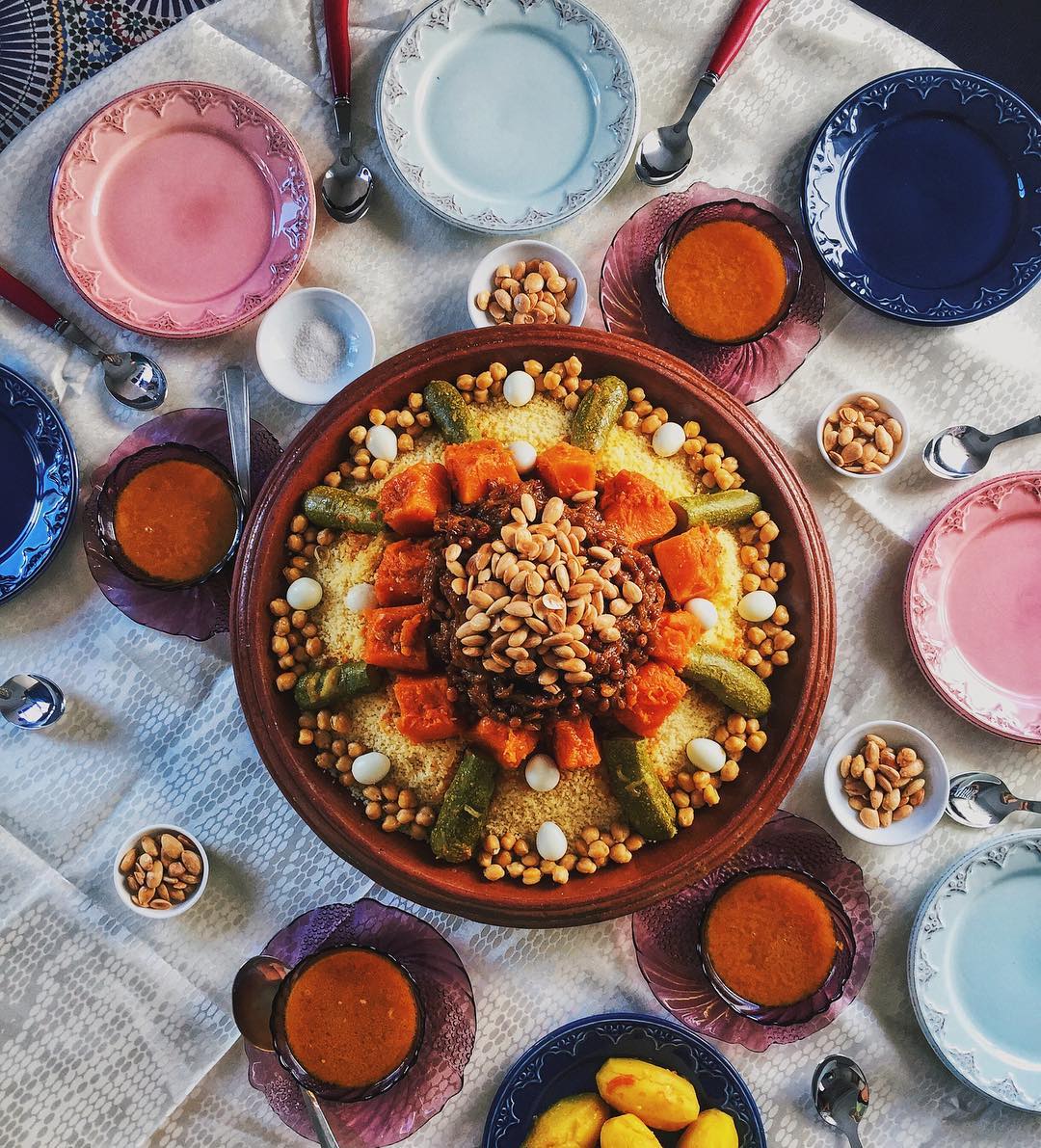 Couscousseksu
🇩🇿 Algeria and 4 moreSteamed semolina granules served with stew or vegetables across North Africa
Main dish, Lunch, Dinner
Couscousseksu
🇩🇿 Algeria and 4 moreSteamed semolina granules served with stew or vegetables across North Africa
Main dish, Lunch, Dinner
 MtoriMeat
🇹🇿 TanzaniaTanzanian stew of mashed green bananas and meat
Stew or curry, Breakfast, Lunch
MtoriMeat
🇹🇿 TanzaniaTanzanian stew of mashed green bananas and meat
Stew or curry, Breakfast, Lunch
 Tajineطاجين
🇲🇦 Morocco and 4 moreNorth African stew slow-cooked in a cone-lidded clay pot
Main dish, Lunch, Dinner
Tajineطاجين
🇲🇦 Morocco and 4 moreNorth African stew slow-cooked in a cone-lidded clay pot
Main dish, Lunch, Dinner
 CholentMeatטשאָלנט
🇫🇷 France and 5 moreA slow-cooked Jewish stew of meat, beans, grains and potatoes for the Sabbath
Stew or curry, Lunch
CholentMeatטשאָלנט
🇫🇷 France and 5 moreA slow-cooked Jewish stew of meat, beans, grains and potatoes for the Sabbath
Stew or curry, Lunch