
Karnıyarık
Eggplant filled with a savoury mixture of ground meat, vegetables and herbs
Karnıyarık is a Turkish dish where eggplants are split and filled with a seasoned mixture of ground meat, onions, tomatoes, garlic, and herbs. The eggplants are usually fried or roasted before being stuffed and baked. This dish is commonly enjoyed as part of a main meal, often accompanied by rice.
- Eggplants are filled with a savoury meat and vegetable mixture
- A classic dish from Turkey
- Often served with rice on the side
- The eggplants can be fried or roasted before stuffing
What is Karnıyarık?
Karnıyarık is a Turkish dish featuring eggplants that are split open and filled with a mixture of ground meat, onions, tomatoes, garlic, parsley, and spices. Sometimes green peppers are added for extra flavour. The eggplants are typically fried or roasted before being stuffed, which gives them a soft texture and rich taste. The filling is savoury and aromatic, blending the sweetness of tomatoes with the depth of cooked meat and herbs.
Where does Karnıyarık come from?
This dish comes from Turkey and its name means 'split belly' in Turkish, describing the way the eggplant is prepared. It is a well-known part of Turkish home cooking and is closely related to other stuffed eggplant dishes in the region. Karnıyarık stands out because it includes meat in the filling, unlike its vegetarian counterpart, İmam bayıldı.
How is Karnıyarık made?
To make Karnıyarık, eggplants are first prepared by frying or roasting until soft. They are then cut open lengthwise and filled with a cooked mixture of ground meat, onions, tomatoes, garlic, parsley, black pepper, and sometimes green pepper. Once stuffed, the eggplants are arranged in a baking dish and baked until the flavours meld and the filling is cooked through.
How and when is Karnıyarık eaten?
Karnıyarık is usually eaten as a main course during lunch or dinner. It is commonly served with a side of rice, which helps balance the rich flavours of the stuffed eggplant. The dish is enjoyed both in homes and restaurants across Turkey, often as part of a larger meal with salads or other vegetable dishes.
Kinds of Karnıyarık
A well-known variation is İmam bayıldı, which uses a similar method but leaves out the meat and is served without reheating. While Karnıyarık is always made with meat, cooks may choose to fry or roast the eggplants depending on preference. Some versions include green peppers in the filling for a bit of extra flavour.
What Karnıyarık means
Karnıyarık is a familiar dish in Turkish households and is often made for family meals. It reflects the Turkish tradition of stuffed vegetables and is a staple of everyday cooking. The dish is not tied to any particular festival or religious occasion, but is valued for its comforting taste and place in local cuisine.
Questions people ask about Karnıyarık
What is Karnıyarık made of?
Karnıyarık is made with eggplants that are filled with a mixture of ground meat, onions, tomatoes, garlic, parsley, black pepper, and sometimes green pepper.
Where does Karnıyarık come from?
Karnıyarık comes from Turkey and is a traditional part of Turkish home cooking.
Is Karnıyarık vegetarian?
No, Karnıyarık contains ground meat in its filling. A similar vegetarian dish is called İmam bayıldı.
How is Karnıyarık usually served?
It is typically served as a main dish for lunch or dinner, often with rice as a side.
What is the difference between Karnıyarık and İmam bayıldı?
Karnıyarık includes a meat filling, while İmam bayıldı is a vegetarian version without meat.
Good reading and sources
The facts on this page come from the Wikipedia article "Karnıyarık", written by its contributors and used under the CC BY-SA 4.0 licence, and from its Wikidata record (CC0). Thali rewrote the text in its own words, with AI assistance, and compares every page with the article to make sure no passage is copied. It may be reused under the same CC BY-SA 4.0 licence with a link back.
It may contain mistakes, and it is not dietary or allergy advice: recipes differ from cook to cook. If something is wrong, tell us. Last refreshed 2026-10-03.
More from Turkey
All the food of Turkey Kebabكَبَاب
🇹🇷 Turkey and 5 moreGrilled or roasted meat, often on skewers, found across the Middle East and beyond
Main dish, Lunch, Dinner
Kebabكَبَاب
🇹🇷 Turkey and 5 moreGrilled or roasted meat, often on skewers, found across the Middle East and beyond
Main dish, Lunch, Dinner
 Pilaf
🇺🇿 Uzbekistan and 5 moreRice cooked in stock with spices, meat or vegetables, with each grain kept separate
Main dish, Lunch, Dinner
Pilaf
🇺🇿 Uzbekistan and 5 moreRice cooked in stock with spices, meat or vegetables, with each grain kept separate
Main dish, Lunch, Dinner
 Moussakaμουσακάς
🇬🇷 Greece and 5 moreBaked casserole of eggplant or potato, often layered with meat and sauce
Main dish, Lunch, Dinner
Moussakaμουσακάς
🇬🇷 Greece and 5 moreBaked casserole of eggplant or potato, often layered with meat and sauce
Main dish, Lunch, Dinner
 Freekehفريكة
🇵🇸 Palestine and 5 moreRoasted green durum wheat grains, a staple across the eastern Mediterranean
Main dish, Lunch, Dinner
Freekehفريكة
🇵🇸 Palestine and 5 moreRoasted green durum wheat grains, a staple across the eastern Mediterranean
Main dish, Lunch, Dinner
Its cousins elsewhere
All main dishes Cataplana
🇵🇹 PortugalSeafood and meat stew cooked in a sealed metal vessel from Portugal's Algarve
Main dish, Lunch, Dinner
Cataplana
🇵🇹 PortugalSeafood and meat stew cooked in a sealed metal vessel from Portugal's Algarve
Main dish, Lunch, Dinner
 RatatouilleVegan
🇫🇷 FranceA Provençal stew of summer vegetables cooked in olive oil
Main dish, Lunch, Dinner
RatatouilleVegan
🇫🇷 FranceA Provençal stew of summer vegetables cooked in olive oil
Main dish, Lunch, Dinner
 Riz grasMeat
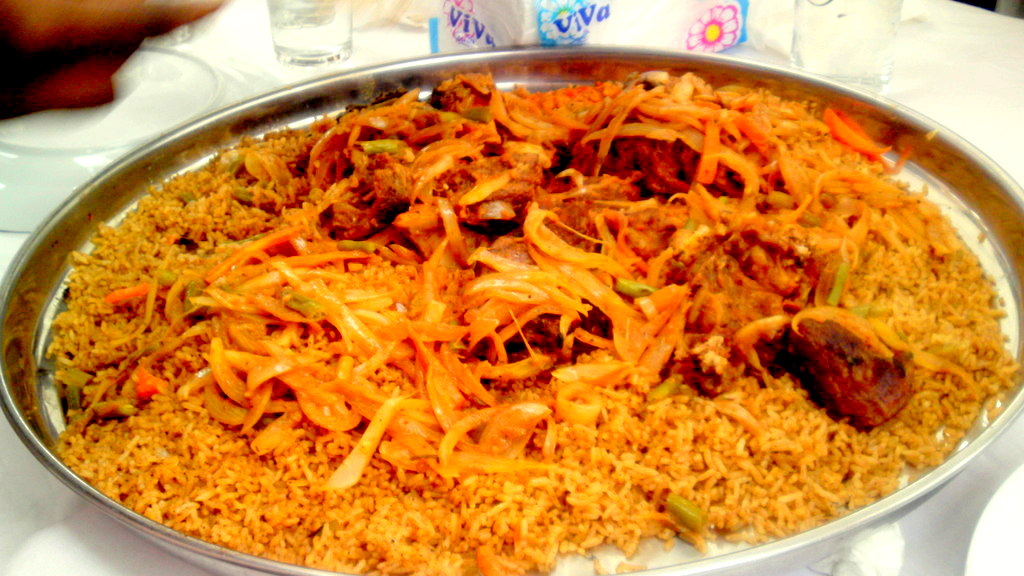
🇧🇫 Burkina Faso and 4 moreWest African rice cooked with meat and vegetables, served hot
Main dish, Lunch, Dinner
Riz grasMeat
🇧🇫 Burkina Faso and 4 moreWest African rice cooked with meat and vegetables, served hot
Main dish, Lunch, Dinner
 Pörkölt
🇭🇺 Hungary and 4 moreHungarian stew of meat, paprika and onion, simmered with vegetables
Stew or curry, Lunch, Dinner
Pörkölt
🇭🇺 Hungary and 4 moreHungarian stew of meat, paprika and onion, simmered with vegetables
Stew or curry, Lunch, Dinner