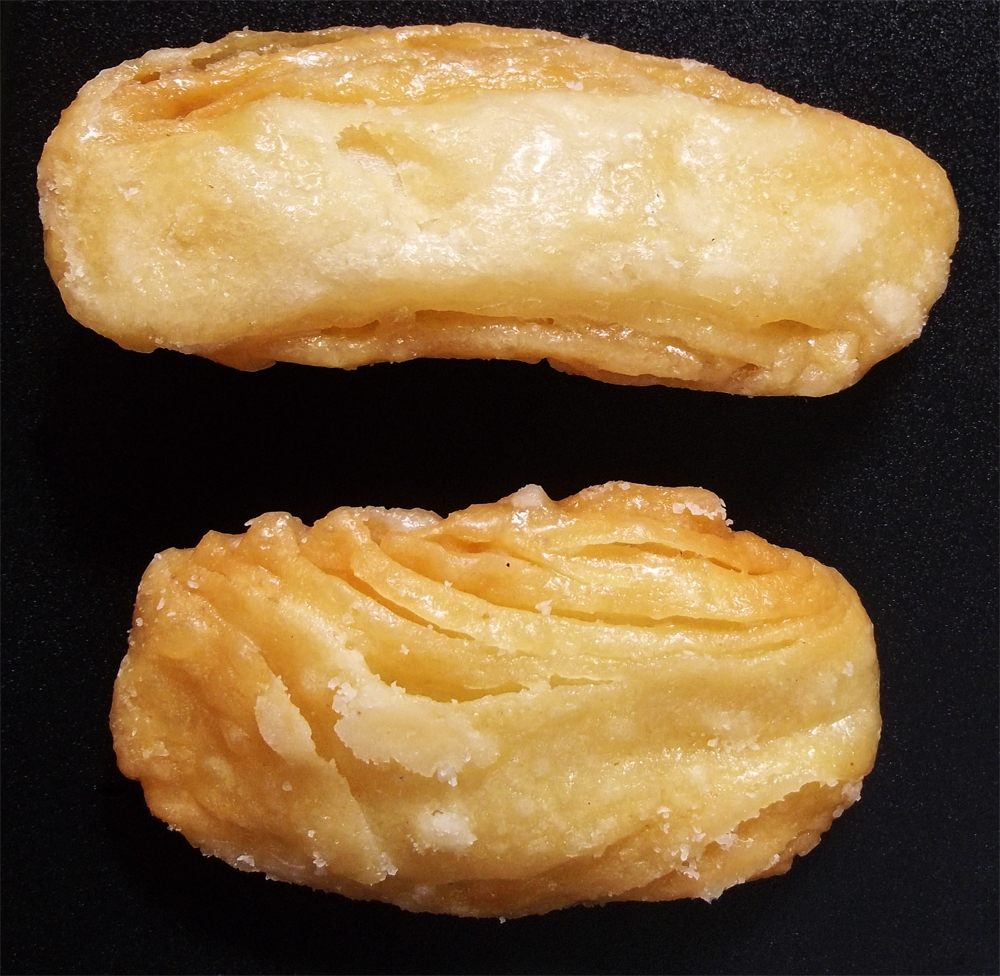
Khaja
In its own language: 𑂎𑂔𑂳𑂩𑂲
Crisp, layered pastry deep-fried and soaked in sugar syrup
Khaja is a sweet pastry from India, made by frying layers of wheat flour dough and soaking them in sugar syrup. It is especially known in Bihar, Odisha, Andhra Pradesh, and nearby regions, and is often enjoyed during festivals and special occasions.
- Silao Khaja from Bihar has a Geographical Indication (GI) tag
- Made by deep-frying layered wheat flour dough
- Soaked in sugar syrup for sweetness and shine
- Popular during Chhath Puja and at weddings
- Kakinada Kaja is a well-known regional variety
What is Khaja?
Khaja is a sweet made by layering dough from wheat flour, sometimes with mawa (milk solids), and deep-frying it until crisp. After frying, the pastry is soaked in a sugar syrup, which gives it a glossy finish and a sweet, sticky taste. Some versions include a filling of dried fruit, but many are simply flaky and sweet. The texture can range from crunchy to slightly chewy, depending on the region.
Where does Khaja come from?
Khaja has a long history in eastern India, with strong ties to Bihar, especially around Silao and Nalanda. It is mentioned in local stories and was noted by British archaeologist Joseph David Beglar in the 19th century. There are legends connecting it to King Vikramaditya and to the travels of the Buddha, who is said to have been offered Khaja in Silao. The sweet is also found in Odisha, Andhra Pradesh, and parts of Karnataka, with each region adapting the method and texture.
How is Khaja made?
To make Khaja, wheat flour is mixed with mawa and oil to form a dough. This dough is rolled out, folded to create layers, and then cut into pieces. The pieces are deep-fried in oil until they turn golden and crisp. Once fried, they are soaked in a thick sugar syrup, allowing the pastry to absorb sweetness. In some places, the syrup is mainly on the inside, while in others, the whole pastry is coated.
How and when is Khaja eaten?
Khaja is enjoyed as a sweet snack or with tea, and is often shared during festivals and family celebrations. In Bihar, it is a traditional offering during Chhath Puja and is commonly given as a gift at weddings. Tourists visiting Buddhist sites in Rajgir and Nalanda often try Silao Khaja. The sweet is eaten on its own, without accompaniments.
Kinds of Khaja
There are several regional types of Khaja. Silao Khaja from Bihar is known for its flaky, layered texture, while versions from Odisha and Andhra Pradesh use thicker sheets of dough, resulting in a harder bite. Kakinada Kaja from Andhra Pradesh is dry on the outside but syrupy inside. Other local names and styles include Tapeswaram Kaja and Pipra Khaja.
What Khaja means
Khaja is closely linked to local identity in Bihar, especially in Magadh, and is a symbol of hospitality and celebration. Silao Khaja received a Geographical Indication (GI) tag in 2018, recognizing its unique regional character. It is a common treat for visitors to historical and religious sites, and plays a role in wedding rituals and major festivals like Chhath Puja.
Questions people ask about Khaja
What is Khaja made of?
Khaja is prepared from wheat flour, sugar, cooking oil, and sometimes mawa (milk solids). The dough is layered, deep-fried, and then soaked in sugar syrup.
Where does Khaja come from?
Khaja is a traditional sweet from India, especially known in Bihar, Odisha, Andhra Pradesh, and surrounding areas.
Is Khaja vegetarian?
Yes, Khaja is vegetarian. It is made with wheat flour, sugar, oil, and occasionally mawa, which is a dairy product.
When is Khaja usually eaten?
Khaja is enjoyed as a snack or with tea, and is often served during festivals like Chhath Puja and at weddings.
Are there different types of Khaja?
Yes, there are regional varieties such as Silao Khaja from Bihar, Kakinada Kaja from Andhra Pradesh, and others, each with its own texture and style.
Good reading and sources
The facts on this page come from the Wikipedia article "Khaja", written by its contributors and used under the CC BY-SA 4.0 licence, and from its Wikidata record (CC0). Thali rewrote the text in its own words, with AI assistance, and compares every page with the article to make sure no passage is copied. It may be reused under the same CC BY-SA 4.0 licence with a link back.
It may contain mistakes, and it is not dietary or allergy advice: recipes differ from cook to cook. If something is wrong, tell us. Last refreshed 2026-10-03.
More from India
All the food of India Ice cream
🇺🇸 United States and 5 moreA frozen dessert made from sweetened, flavoured milk or cream
Sweet or dessert, Snacks
Halvaحَلَاوَة
🇮🇷 Iran and 5 moreDense sweet made from seeds, grains, or vegetables, found across Asia, Africa, and Europe
Sweet or dessert, Snacks, Tea time
Ice cream
🇺🇸 United States and 5 moreA frozen dessert made from sweetened, flavoured milk or cream
Sweet or dessert, Snacks
Halvaحَلَاوَة
🇮🇷 Iran and 5 moreDense sweet made from seeds, grains, or vegetables, found across Asia, Africa, and Europe
Sweet or dessert, Snacks, Tea time
 Candy
🇺🇸 United States and 5 moreSmall sweet treats made mainly from sugar or sweeteners
Sweet or dessert, Snacks
Candy
🇺🇸 United States and 5 moreSmall sweet treats made mainly from sugar or sweeteners
Sweet or dessert, Snacks
 Samosa
🇮🇳 India and 5 moreFried or baked pastry with a spiced filling, shaped into triangles or cones
Pie or savoury pastry, Snacks, Lunch
Samosa
🇮🇳 India and 5 moreFried or baked pastry with a spiced filling, shaped into triangles or cones
Pie or savoury pastry, Snacks, Lunch
Its cousins elsewhere
All sweets and desserts Doughnut
🇺🇸 United States and 5 moreSweet fried or baked rings or balls, often glazed or filled
Sweet or dessert, Breakfast, Snacks
Doughnut
🇺🇸 United States and 5 moreSweet fried or baked rings or balls, often glazed or filled
Sweet or dessert, Breakfast, Snacks
 Crêpe
🇫🇷 FranceThin French pancakes, served sweet or savoury with a range of fillings
Main dish, Breakfast, Lunch
Crêpe
🇫🇷 FranceThin French pancakes, served sweet or savoury with a range of fillings
Main dish, Breakfast, Lunch
 Cinnamon rollVegetarian
🇸🇪 Sweden and 4 moreA sweet rolled bun with cinnamon and sugar, baked and often topped with icing
Sweet or dessert, Breakfast, Tea time
Cinnamon rollVegetarian
🇸🇪 Sweden and 4 moreA sweet rolled bun with cinnamon and sugar, baked and often topped with icing
Sweet or dessert, Breakfast, Tea time
 BerlinerVegetarian
🇩🇪 Germany and 5 moreJam-filled German doughnut without a central hole, dusted with sugar or glazed
Sweet or dessert, Snacks, Tea time
BerlinerVegetarian
🇩🇪 Germany and 5 moreJam-filled German doughnut without a central hole, dusted with sugar or glazed
Sweet or dessert, Snacks, Tea time