
Locro
A thick Andean stew of squash, corn, potato and meat, eaten across South America
Locro is a hearty stew made with squash or pumpkin, corn, potatoes, beans, and often meat, eaten in the Andes and especially in Argentina, Peru, Ecuador, and Bolivia. It is a winter dish and a symbol of national identity in Argentina, where it is served on patriotic holidays and at gatherings.
- Locro is a national dish in several South American countries
- Argentine locro is eaten on May 25 and July 9, key national holidays
- The stew is based on squash, corn, potatoes, and often meat
- Yahuarlocro in Ecuador uses lamb entrails and blood
- Locro is especially popular in winter
What is Locro?
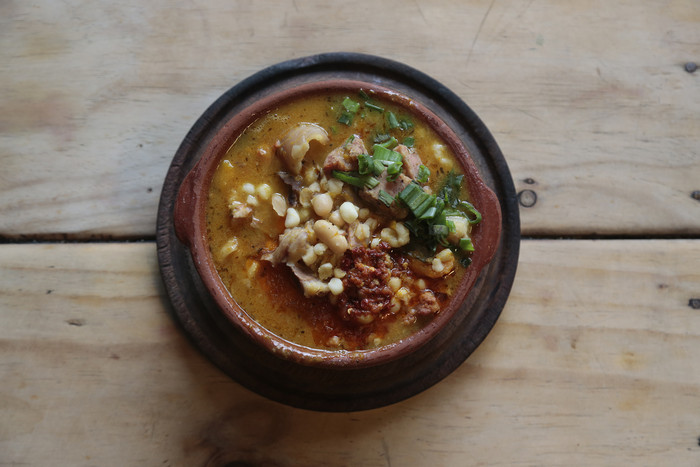
Locro is a thick stew from the Andes, made with a base of squash or pumpkin, corn, and potatoes. Beans, onions, and meat—often beef, pork, or sausage—are common, but some versions are vegetarian. The stew is usually yellow from the squash and has a creamy, hearty texture. In some places, it is spiced with chili or paprika and served with a hot sauce. Locro is filling and warming, especially popular in cold weather.
Where does Locro come from?
Locro traces its roots to the Andean civilizations, with early versions dating back to the Inca Empire. The first locro was made from potatoes, chili, salt, water, and chuño (a dried potato product). Over centuries, the dish spread along the Andes and evolved, especially after European contact, which introduced new meats and seasonings. In Argentina, locro became a symbol of national pride and is now a key part of the country’s food culture.
How is Locro made?
To make locro, cooks simmer squash or pumpkin, corn, and potatoes with beans and onions until soft. Meat such as beef, pork, or sausage is often cooked separately and added later. The stew is seasoned with chili, paprika, and sometimes a spicy sauce called quiquirimichi. In Argentina, the dish is cooked slowly over low heat for hours, resulting in a thick, creamy consistency. Each region adds its own touches, such as lamb in Ecuador or peas in Neuquén.


How and when is Locro eaten?
Locro is mainly eaten for lunch or dinner, especially in winter or on cold days. In Argentina, it is a centerpiece at patriotic celebrations and large gatherings, sometimes served at weddings. The stew is often accompanied by red wine in winter or white wine in warmer weather. In Peru, it may be served with white rice. Locro is shared in large pots, making it a communal meal.
Kinds of Locro
There are many types of locro. In Ecuador, yahuarlocro includes lamb entrails and blood. Peruvian locro is thick, with macre pumpkin, potatoes, cheese, and green peas, and is often vegetarian. In Argentina, versions differ by region: some use peas or cassava, others add pork, chorizo, or offal. Locro pulsudo is dense and spicy, while huaschalocro is a lighter, meatless version. Some use wheat or crushed corn for extra thickness.
What Locro means
Locro is closely tied to national identity in Argentina, where it is eaten on May 25 and July 9, dates marking the country’s independence. It is a symbol of unity and tradition, often cooked in large pots for public gatherings. The dish reflects both indigenous Andean roots and European influences. Locro’s role at festivals and weddings shows its importance in social and cultural life across the Andes.
Questions people ask about Locro
What is locro made of?
Locro is made with squash or pumpkin, corn, potatoes, beans, onions, and often meat such as beef or sausage. Some versions are vegetarian, while others include pork, chorizo, or offal.
Where does locro come from?
Locro originated with the Andean civilizations and is now eaten in Argentina, Peru, Ecuador, Bolivia, Chile, Paraguay, and Colombia. It has deep roots in the Andes and is especially important in Argentina.
When is locro usually eaten?
Locro is mainly eaten in winter or on cold days. In Argentina, it is a traditional dish for national holidays like May 25 and July 9, and is also served at weddings and large gatherings.
Are there different kinds of locro?
Yes, there are many regional versions. Ecuador’s yahuarlocro uses lamb entrails and blood. Peruvian locro is thick and often vegetarian. Argentine locro varies by region, with some adding peas, cassava, pork, or chorizo.
Is locro always made with meat?
No, while many versions include beef, pork, or sausage, some types—especially in Peru and in the huaschalocro style—are vegetarian and focus on vegetables and beans.
Good reading and sources
The facts on this page come from the Wikipedia article "Locro", written by its contributors and used under the CC BY-SA 4.0 licence, and from its Wikidata record (CC0). Thali rewrote the text in its own words, with AI assistance, and compares every page with the article to make sure no passage is copied. It may be reused under the same CC BY-SA 4.0 licence with a link back.
It may contain mistakes, and it is not dietary or allergy advice: recipes differ from cook to cook. If something is wrong, tell us. Last refreshed 2026-10-03.
More from Argentina
All the food of Argentina Pizza
🇮🇹 Italy and 4 moreFlatbread topped with tomato, cheese and baked at high heat
Main dish, Lunch, Dinner
Pizza
🇮🇹 Italy and 4 moreFlatbread topped with tomato, cheese and baked at high heat
Main dish, Lunch, Dinner
 Pie
🇬🇧 United Kingdom and 5 moreA baked dish with a pastry crust and sweet or savoury filling
Main dish, Lunch, Dinner
Pie
🇬🇧 United Kingdom and 5 moreA baked dish with a pastry crust and sweet or savoury filling
Main dish, Lunch, Dinner
 BarbacoaMeat
🇲🇽 Mexico and 3 moreMeat slow-cooked in a pit lined with agave or banana leaves
Main dish, Lunch, Dinner
BarbacoaMeat
🇲🇽 Mexico and 3 moreMeat slow-cooked in a pit lined with agave or banana leaves
Main dish, Lunch, Dinner
 ChunchulloMeat
🇦🇷 Argentina and 5 moreBraided and roasted small intestine, a grill favorite in Latin America
Main dish, Lunch, Dinner
ChunchulloMeat
🇦🇷 Argentina and 5 moreBraided and roasted small intestine, a grill favorite in Latin America
Main dish, Lunch, Dinner
Its cousins elsewhere
All stews and curries Sancocho
🇩🇴 Dominican Republic and 5 moreA hearty stew of meat, tubers and vegetables in a rich broth
Soup, Lunch, Dinner
Sancocho
🇩🇴 Dominican Republic and 5 moreA hearty stew of meat, tubers and vegetables in a rich broth
Soup, Lunch, Dinner
 HaminMeatחמין
🇪🇸 Spain and 5 moreA slow-cooked Jewish stew of grains, meat, beans and potatoes for the Sabbath
Stew or curry, Lunch
HaminMeatחמין
🇪🇸 Spain and 5 moreA slow-cooked Jewish stew of grains, meat, beans and potatoes for the Sabbath
Stew or curry, Lunch
 Chili con carneMeat
🇲🇽 Mexico and 1 moreA spicy stew of meat and chili peppers from Mexico and the United States
Main dish, Lunch, Dinner
Chili con carneMeat
🇲🇽 Mexico and 1 moreA spicy stew of meat and chili peppers from Mexico and the United States
Main dish, Lunch, Dinner
 CholentMeatטשאָלנט
🇫🇷 France and 5 moreA slow-cooked Jewish stew of meat, beans, grains and potatoes for the Sabbath
Stew or curry, Lunch
CholentMeatטשאָלנט
🇫🇷 France and 5 moreA slow-cooked Jewish stew of meat, beans, grains and potatoes for the Sabbath
Stew or curry, Lunch