
Lorne sausage
Scottish breakfast sausage shaped in a square block and sliced for serving
Lorne sausage is a traditional Scottish sausage made from minced meat, rusk and spices, formed into a block and sliced into squares. It is usually served hot as part of a Scottish breakfast, often without a casing. The sausage is commonly eaten in slices, either on its own or in a sandwich.
- Lorne sausage is shaped in a block and sliced, not stuffed in a casing
- Made from minced meat, rusk, and spices
- A staple of the Scottish cooked breakfast
- Named after the Lorne region in Argyll
- First advertised as early as 1892
What is Lorne sausage?
Lorne sausage is a Scottish sausage made from minced meat—usually beef, pork or both—mixed with rusk, a type of dry bread or biscuit, and spices. Unlike most sausages, it does not use a casing. Instead, the mixture is packed into a rectangular tin, creating a block that is sliced into thick, square pieces. The slices are typically about one centimetre thick. Lorne sausage is served hot, often as part of a cooked breakfast. Its texture is firm but not dense, and the taste is savoury with mild seasoning.
Where does Lorne sausage come from?
The Lorne sausage is believed to be named after the Lorne region in Argyll, Scotland. Newspaper adverts for 'Lorne Sausage' date back to at least 1892, predating the fame of comedian Tommy Lorne, sometimes mistakenly linked to its name. The exact origins are unclear, but it has long been a staple in Scottish breakfasts and is closely tied to Scottish culinary tradition.
How is Lorne sausage made?
To make Lorne sausage, minced beef, pork, or a combination is mixed with rusk and spices. The mixture is tightly packed into a rectangular mould, usually about ten centimetres square in cross-section. There is no casing; the block is chilled or set, then sliced into squares about one centimetre thick. The slices are then fried or grilled before serving. The lack of casing means the mixture must be packed firmly to hold its shape.
How and when is Lorne sausage eaten?
Lorne sausage is most commonly eaten as part of a traditional Scottish breakfast, alongside foods like black pudding, baked beans, mushrooms, and fried bread. It is also popular in breakfast rolls or sandwiches, where its square shape fits neatly between slices of bread. The sausage is usually served hot, and its convenient shape makes it easy to prepare and eat at home or in cafés.
Kinds of Lorne sausage
While the classic Lorne sausage uses a mix of beef and pork, some versions use only one type of meat. The thickness and size of the slices can vary, and different spice blends may be used by butchers or home cooks. The basic form—a square, casing-free sausage—remains the same throughout Scotland.
What Lorne sausage means
Lorne sausage is a familiar part of daily life in Scotland, especially at breakfast. Its square shape and lack of casing set it apart from other sausages. It is often mentioned in discussions of Scottish food culture and is a point of local pride. The sausage is also sized to fit traditional plain loaves, making it a practical choice for sandwiches.
Questions people ask about Lorne sausage
What is Lorne sausage made of?
Lorne sausage is made from minced meat—usually beef, pork, or both—mixed with rusk and spices. The mixture is formed into a block and sliced into squares.
Where does Lorne sausage come from?
Lorne sausage comes from Scotland and is named after the Lorne region in Argyll. It has been a part of Scottish cuisine since at least the late 19th century.
Why is Lorne sausage square?
Unlike most sausages, Lorne sausage is not stuffed into a casing. Instead, the mixture is packed into a rectangular mould and sliced, giving it its distinctive square shape.
How is Lorne sausage usually served?
It is usually served hot as part of a traditional Scottish breakfast, or in a sandwich or breakfast roll. Its square shape fits well between slices of bread.
Does Lorne sausage contain a casing?
No, Lorne sausage does not use a casing. The mixture is pressed into a block and sliced, so it holds its shape without one.
Good reading and sources
The facts on this page come from the Wikipedia article "Lorne sausage", written by its contributors and used under the CC BY-SA 4.0 licence, and from its Wikidata record (CC0). Thali rewrote the text in its own words, with AI assistance, and compares every page with the article to make sure no passage is copied. It may be reused under the same CC BY-SA 4.0 licence with a link back.
It may contain mistakes, and it is not dietary or allergy advice: recipes differ from cook to cook. If something is wrong, tell us. Last refreshed 2026-10-03.
More from the United Kingdom
All the food of the United Kingdom Pizza
🇮🇹 Italy and 4 moreFlatbread topped with tomato, cheese and baked at high heat
Main dish, Lunch, Dinner
Pizza
🇮🇹 Italy and 4 moreFlatbread topped with tomato, cheese and baked at high heat
Main dish, Lunch, Dinner
 French toast
🇫🇷 France and 5 moreBread soaked in egg and milk, pan-fried and served sweet or savoury
Main dish, Breakfast, Snacks
French toast
🇫🇷 France and 5 moreBread soaked in egg and milk, pan-fried and served sweet or savoury
Main dish, Breakfast, Snacks
 Pancake
🇺🇸 United States and 5 moreFlat cakes made from batter, cooked on a griddle or pan and served sweet or savoury
Main dish, Breakfast, Snacks
Pancake
🇺🇸 United States and 5 moreFlat cakes made from batter, cooked on a griddle or pan and served sweet or savoury
Main dish, Breakfast, Snacks
 Fish and chipsFish or seafood
🇬🇧 United Kingdom and 8 moreBattered fried fish served hot with thick-cut chips
Main dish, Lunch, Dinner
Fish and chipsFish or seafood
🇬🇧 United Kingdom and 8 moreBattered fried fish served hot with thick-cut chips
Main dish, Lunch, Dinner
Its cousins elsewhere
All main dishes Kibbehكبة
🇸🇾 Syria and 5 moreSpiced ground meat and bulgur shaped, stuffed, and fried, baked or served raw
Main dish, Lunch, Dinner
Kibbehكبة
🇸🇾 Syria and 5 moreSpiced ground meat and bulgur shaped, stuffed, and fried, baked or served raw
Main dish, Lunch, Dinner
 Stuffed squash
🇹🇷 Turkey and 5 moreSquash or zucchini filled with rice and sometimes meat, simmered or baked
Main dish, Lunch, Dinner
Stuffed squash
🇹🇷 Turkey and 5 moreSquash or zucchini filled with rice and sometimes meat, simmered or baked
Main dish, Lunch, Dinner
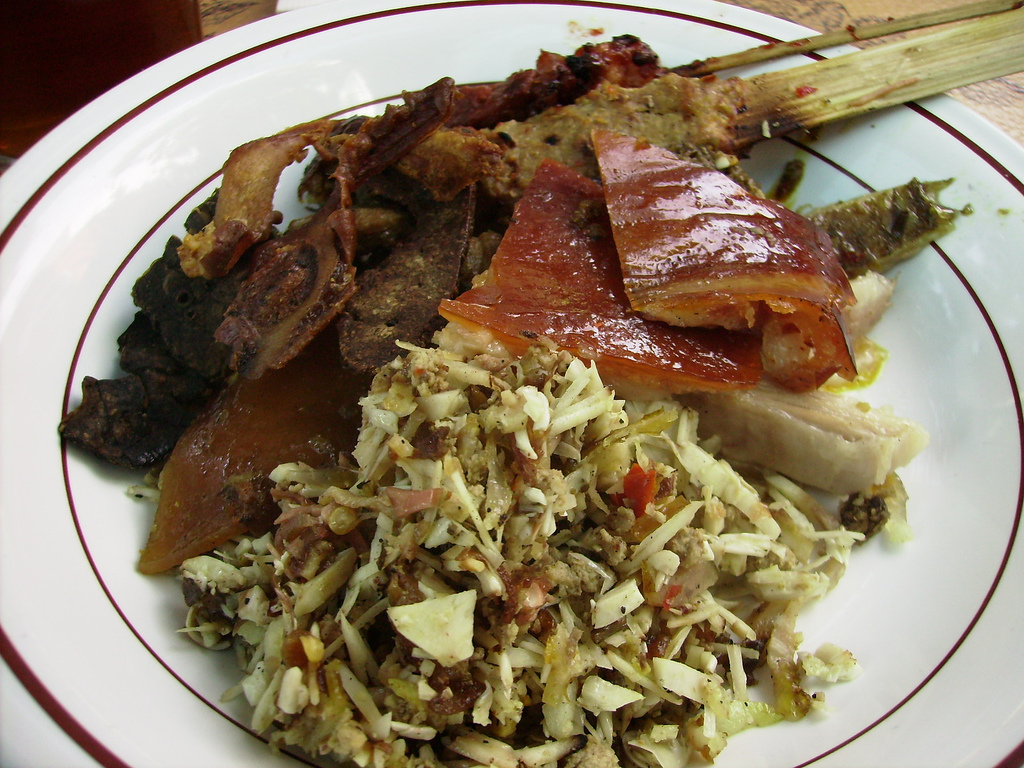 LawarMeatᬮᬯᬃ
🇮🇩 IndonesiaBalinese dish of vegetables, coconut and minced meat with herbs and spices
Main dish, Lunch, Dinner
LawarMeatᬮᬯᬃ
🇮🇩 IndonesiaBalinese dish of vegetables, coconut and minced meat with herbs and spices
Main dish, Lunch, Dinner
 KoftaMeat
🇪🇬 Egypt and 5 moreMinced meat shaped into balls or patties, cooked with spices in many regions
Main dish
KoftaMeat
🇪🇬 Egypt and 5 moreMinced meat shaped into balls or patties, cooked with spices in many regions
Main dish