
Kofta
Minced meat shaped into balls or patties, cooked with spices in many regions
Kofta refers to a wide group of dishes made from ground meat shaped into balls, patties, or cylinders, mixed with spices and sometimes other ingredients. It is found in the cooking of Egypt, India, Turkey, Iran, and many other places, with each region offering its own versions. Kofta can be grilled, fried, baked, or cooked in sauce, and is enjoyed in everyday meals and at gatherings.
- Kofta is made from ground meat mixed with spices
- It can be shaped as balls, patties, or cylinders
- Versions exist from India to North Africa and the Balkans
- Some types are filled with nuts, cheese, or eggs
- Cooking methods include grilling, frying, and baking
What is Kofta?
Kofta is a dish where ground meat, such as beef, lamb, chicken, or sometimes camel, is mixed with spices and shaped into balls, patties, or logs. The mixture may also include onion, herbs like parsley, and sometimes rice, bulgur, or vegetables. Some versions have fillings such as nuts or eggs. Kofta can be cooked in many ways: grilled, fried, baked, or simmered in sauce. The size and shape can range from small balls to large rounds, and the taste depends on the spices and additions used.
Where does Kofta come from?
Kofta has roots in early Arab and Byzantine cooking, with some of the first recipes using ground lamb. The word comes from Persian and Hindi-Urdu, meaning 'pounded meat.' Its spread across regions led to many local versions, and it appears in the cuisines of the Middle East, South Asia, the Balkans, and North Africa. In some places, kofta holds cultural importance and is part of debates about culinary heritage.
How is Kofta made?
To make kofta, minced meat is blended with spices and sometimes with ingredients like rice, bulgur, vegetables, or eggs to help bind the mixture. Some recipes add fillings such as nuts or cheese inside the meat. The shaped mixture can be cooked in several ways, such as grilling over fire, pan-frying, baking in an oven, or simmering in a sauce or soup. The choice of cooking method and added ingredients varies by region.


How and when is Kofta eaten?
Kofta is served in many ways depending on the country and local custom. It may come with sauces, dips, or as part of a stew. In some places, it is eaten with flatbreads or rice. Kofta can be a main dish at family meals or gatherings, and is sometimes featured at special occasions. The accompaniments and style of serving change from one region to another.
Kinds of Kofta
There are many types of kofta across different cuisines. In the Levant, kafta is often grilled and served with bread. Indian versions may use vegetables or paneer instead of meat and are cooked in curry sauces. Some Iranian and Azerbaijani koftas are very large and may be stuffed. Greek and Turkish cuisines have vegetarian versions using tomatoes or courgettes. Other regional names and fillings reflect local tastes and ingredients.
What Kofta means
Kofta is a dish with deep roots in many cultures, appearing in both everyday meals and at communal gatherings. In Turkey, it is a common choice for group events. In Armenia and Azerbaijan, kofta is seen as a symbol of national cooking, with debates over its origins. Its many forms and names show how food traditions travel and adapt across regions.
Questions people ask about Kofta
What is kofta made of?
Kofta is usually made from minced meat such as beef, lamb, chicken, or mutton, mixed with spices. Some versions include rice, bulgur, vegetables, eggs, or nuts.
Where does kofta come from?
Kofta originated in early Arab and Byzantine cooking and spread across the Middle East, South Asia, the Balkans, and North Africa. It is now found in many countries, each with its own style.
How is kofta cooked?
Kofta can be grilled, fried, baked, or simmered in sauce or soup. The cooking method and added ingredients depend on local traditions.
Are there vegetarian versions of kofta?
Yes, some regions make kofta with vegetables, paneer (a type of cheese), or bulgur instead of meat.
What are some popular kofta variations?
Popular types include Indian malai kofta, Levantine kafta, large Azerbaijani Tabriz köftesi, and Greek tomato or courgette-based versions.
Good reading and sources
The facts on this page come from the Wikipedia article "Kofta", written by its contributors and used under the CC BY-SA 4.0 licence, and from its Wikidata record (CC0). Thali rewrote the text in its own words, with AI assistance, and compares every page with the article to make sure no passage is copied. It may be reused under the same CC BY-SA 4.0 licence with a link back.
It may contain mistakes, and it is not dietary or allergy advice: recipes differ from cook to cook. If something is wrong, tell us. Last refreshed 2026-10-03.
More from Egypt
All the food of Egypt ShawarmaMeatشاورما
🇸🇾 Syria and 5 moreMeat roasted on a vertical spit and sliced into flatbread with sauces and vegetables
Street food, Lunch, Dinner
ShawarmaMeatشاورما
🇸🇾 Syria and 5 moreMeat roasted on a vertical spit and sliced into flatbread with sauces and vegetables
Street food, Lunch, Dinner
 Moussakaμουσακάς
🇬🇷 Greece and 5 moreBaked casserole of eggplant or potato, often layered with meat and sauce
Main dish, Lunch, Dinner
Moussakaμουσακάς
🇬🇷 Greece and 5 moreBaked casserole of eggplant or potato, often layered with meat and sauce
Main dish, Lunch, Dinner
 Freekehفريكة
🇵🇸 Palestine and 5 moreRoasted green durum wheat grains, a staple across the eastern Mediterranean
Main dish, Lunch, Dinner
Ta'ameyaVeganطعمية
🇪🇬 EgyptEgyptian fritters of fava beans and herbs, deep-fried and eaten in pita sandwiches
Street food, Breakfast, Lunch
Freekehفريكة
🇵🇸 Palestine and 5 moreRoasted green durum wheat grains, a staple across the eastern Mediterranean
Main dish, Lunch, Dinner
Ta'ameyaVeganطعمية
🇪🇬 EgyptEgyptian fritters of fava beans and herbs, deep-fried and eaten in pita sandwiches
Street food, Breakfast, Lunch
Its cousins elsewhere
All main dishes Biryani
🇮🇳 India and 5 moreRice and spiced meat or vegetables layered and cooked together
Main dish, Lunch, Dinner
Biryani
🇮🇳 India and 5 moreRice and spiced meat or vegetables layered and cooked together
Main dish, Lunch, Dinner
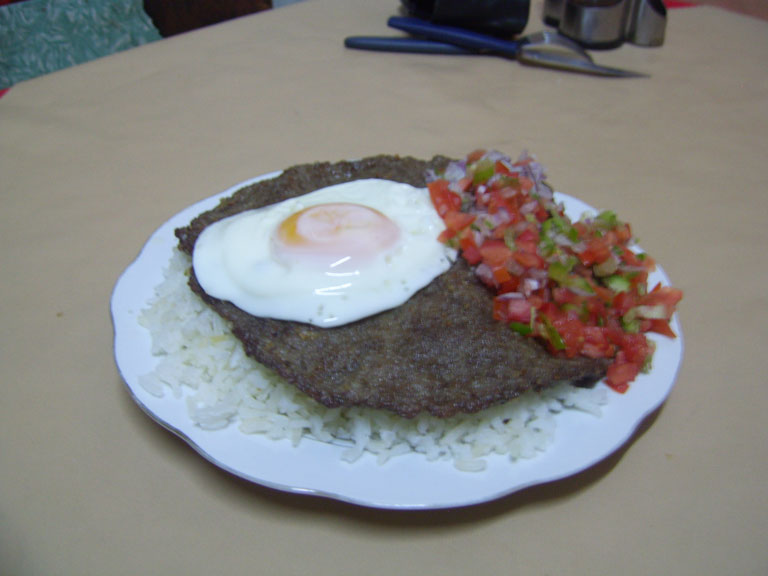 SilpanchoMeatSillp'anchu
🇧🇴 BoliviaLayered Bolivian meal with rice, potatoes, breaded meat, and fried eggs
Main dish, Lunch, Dinner
SilpanchoMeatSillp'anchu
🇧🇴 BoliviaLayered Bolivian meal with rice, potatoes, breaded meat, and fried eggs
Main dish, Lunch, Dinner
 Cabbage roll
🇺🇦 Ukraine and 5 moreCooked cabbage leaves wrapped around seasoned fillings, simmered or baked
Main dish, Lunch, Dinner
Cabbage roll
🇺🇦 Ukraine and 5 moreCooked cabbage leaves wrapped around seasoned fillings, simmered or baked
Main dish, Lunch, Dinner
 Kibbehكبة
🇸🇾 Syria and 5 moreSpiced ground meat and bulgur shaped, stuffed, and fried, baked or served raw
Main dish, Lunch, Dinner
Kibbehكبة
🇸🇾 Syria and 5 moreSpiced ground meat and bulgur shaped, stuffed, and fried, baked or served raw
Main dish, Lunch, Dinner