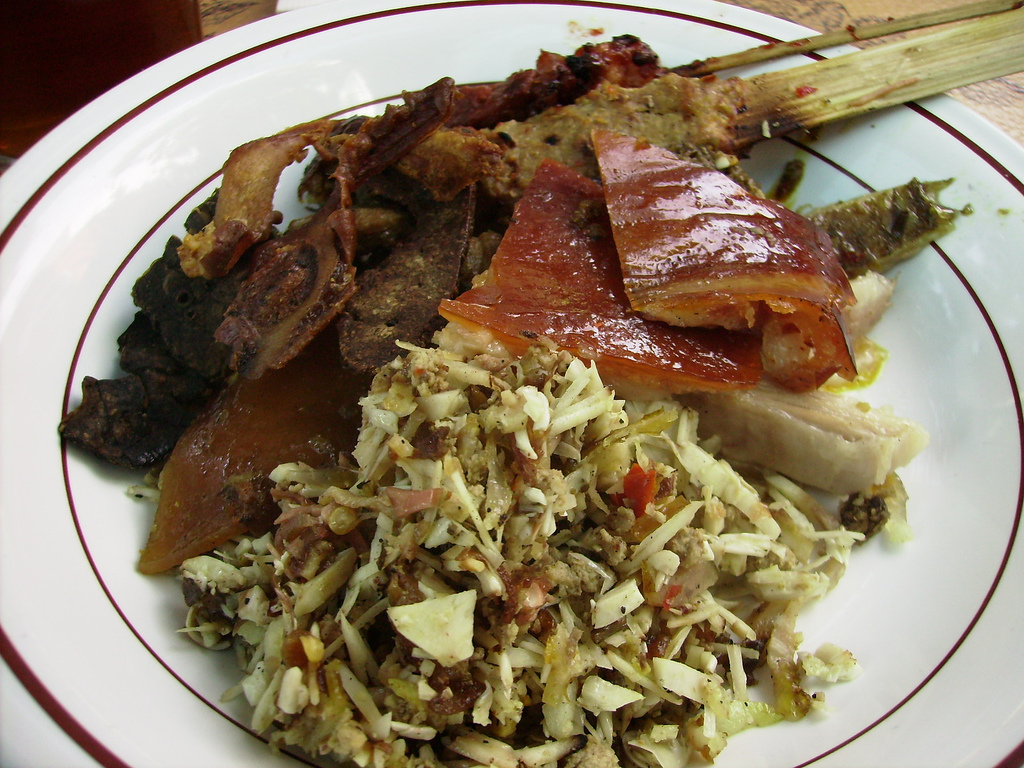
Lawar
In its own language: ᬮᬯᬃ
Balinese dish of vegetables, coconut and minced meat with herbs and spices
Lawar is a Balinese dish made by mixing vegetables, grated coconut, and minced meat with herbs and spices. It is commonly served in Bali, often at restaurants and warungs, and is usually eaten fresh with steamed rice and sometimes other meats.
- Lawar is a Balinese dish of vegetables, coconut, and minced meat.
- Some versions include animal blood for flavor and color.
- It is usually served at room temperature with steamed rice.
- Lawar spoils quickly and should be eaten fresh.
- Different types are named for their main protein or color.
What is Lawar?
Lawar is a dish from Bali made by combining chopped vegetables such as green beans, grated coconut, and minced meat. The mixture is seasoned with a blend of herbs and spices, including kaffir lime leaves, chili, and sometimes garlic. Coconut milk and palm sugar add richness and depth, while fried shallots provide a crisp topping. Lawar is often served at room temperature and eaten with steamed rice. It is not vegetarian, as it usually contains meat and sometimes animal blood for extra flavor. The dish is known for its complex, savory taste and fragrant aroma.
Where does Lawar come from?
Lawar comes from Bali, Indonesia, where it is a common part of local meals. It is widely available in Balinese restaurants and small eateries called warungs. The dish reflects the island’s tradition of combining fresh vegetables, coconut, and protein, often pork or chicken. Lawar’s name changes depending on the main protein used, such as chicken lawar or pork lawar. The use of blood in some versions is a traditional practice to deepen the flavor and color, with 'lawar merah' indicating blood is used, and 'lawar putih' meaning it is not.
How is Lawar made?
To make lawar, vegetables like green beans are chopped and mixed with freshly grated coconut. Minced meat, often pork or chicken, is added, along with eggs and sometimes animal blood. The mixture is seasoned with herbs and spices such as kaffir lime leaves, chili, and palm sugar. Everything is stir-fried in coconut oil, and coconut milk is poured in for extra richness. Fried shallots are sprinkled on top before serving. Lawar is prepared fresh and should be eaten soon after, as it spoils quickly due to its high protein and fat content.
How and when is Lawar eaten?
Lawar is typically eaten as a main course, served with steamed rice and sometimes with other meat dishes like babi guling (roast suckling pig). It is a common everyday food in Bali, found in both restaurants and local warungs. Because it spoils quickly, lawar is usually made and consumed on the same day, often for lunch or dinner. The dish is enjoyed at room temperature and is a staple at communal meals and gatherings.
Kinds of Lawar
There are several types of lawar, named according to their main protein or color. Chicken lawar and pork lawar are common, while jackfruit lawar uses young jackfruit as the main ingredient. Lawar merah includes animal blood, giving it a red color, while lawar putih is made without blood and appears white. Lawar padamare is a combination of several types of lawar mixed together. Each variation reflects local preferences and available ingredients.
What Lawar means
Lawar is an important part of Balinese daily life and cuisine. It is widely eaten at home, in restaurants, and at local eateries. The dish is associated with communal eating and is often prepared for family gatherings and social occasions. Its quick spoilage means it is always served fresh, highlighting the Balinese value of freshness in food. Lawar’s variations and use of local ingredients show the diversity and adaptability of Balinese cooking.
Questions people ask about Lawar
What is lawar made of?
Lawar is made from a mixture of vegetables like green beans, grated coconut, minced meat (often pork or chicken), eggs, coconut milk, herbs, and spices. Some versions also include animal blood.
Where does lawar come from?
Lawar originates from Bali, Indonesia. It is a traditional Balinese dish commonly found in restaurants and warungs across the island.
Is lawar vegetarian?
Lawar is not vegetarian, as it usually contains minced meat and sometimes animal blood, despite having a rich mix of vegetables and coconut.
How is lawar served?
Lawar is typically served at room temperature, accompanied by steamed rice and sometimes other meat dishes like roast suckling pig. It is eaten fresh, often for lunch or dinner.
Are there different types of lawar?
Yes, lawar is named for its main protein or color. There are versions with chicken, pork, or jackfruit, and types like lawar merah (with blood) and lawar putih (without blood).
Good reading and sources
The facts on this page come from the Wikipedia article "Lawar (food)", written by its contributors and used under the CC BY-SA 4.0 licence, and from its Wikidata record (CC0). Thali rewrote the text in its own words, with AI assistance, and compares every page with the article to make sure no passage is copied. It may be reused under the same CC BY-SA 4.0 licence with a link back.
It may contain mistakes, and it is not dietary or allergy advice: recipes differ from cook to cook. If something is wrong, tell us. Last refreshed 2026-10-03.
More from Indonesia
All the food of Indonesia Biryani
🇮🇳 India and 5 moreRice and spiced meat or vegetables layered and cooked together
Main dish, Lunch, Dinner
Biryani
🇮🇳 India and 5 moreRice and spiced meat or vegetables layered and cooked together
Main dish, Lunch, Dinner
 Roti canaiரொட்டி சென்னை
🇲🇾 Malaysia and 5 moreUnleavened flatbread tossed thin and cooked until crisp, served with curry or dal
Bread, Breakfast, Snacks
Roti canaiரொட்டி சென்னை
🇲🇾 Malaysia and 5 moreUnleavened flatbread tossed thin and cooked until crisp, served with curry or dal
Bread, Breakfast, Snacks
 BreadfruitVegan
🇵🇭 Philippines and 4 moreLarge tropical fruit cooked as a starchy staple in many island cuisines
Main dish, Lunch, Dinner
BreadfruitVegan
🇵🇭 Philippines and 4 moreLarge tropical fruit cooked as a starchy staple in many island cuisines
Main dish, Lunch, Dinner
Its cousins elsewhere
All main dishes Stuffed peppers
🇧🇬 Bulgaria and 5 moreBell peppers filled with seasoned mixtures and cooked until tender
Main dish, Lunch, Dinner
Stuffed peppers
🇧🇬 Bulgaria and 5 moreBell peppers filled with seasoned mixtures and cooked until tender
Main dish, Lunch, Dinner
 Oil DownMeat
🇬🇩 Grenada and 3 moreGrenada’s national stew of breadfruit, salted meat, and coconut milk
Stew or curry, Lunch, Dinner
Oil DownMeat
🇬🇩 Grenada and 3 moreGrenada’s national stew of breadfruit, salted meat, and coconut milk
Stew or curry, Lunch, Dinner
 KoftaMeat
🇪🇬 Egypt and 5 moreMinced meat shaped into balls or patties, cooked with spices in many regions
Main dish
KoftaMeat
🇪🇬 Egypt and 5 moreMinced meat shaped into balls or patties, cooked with spices in many regions
Main dish
 Pâté
🇫🇷 France and 5 moreA smooth or coarse spread made from minced meat, liver, or vegetables
Sauce, pickle or ferment
Pâté
🇫🇷 France and 5 moreA smooth or coarse spread made from minced meat, liver, or vegetables
Sauce, pickle or ferment