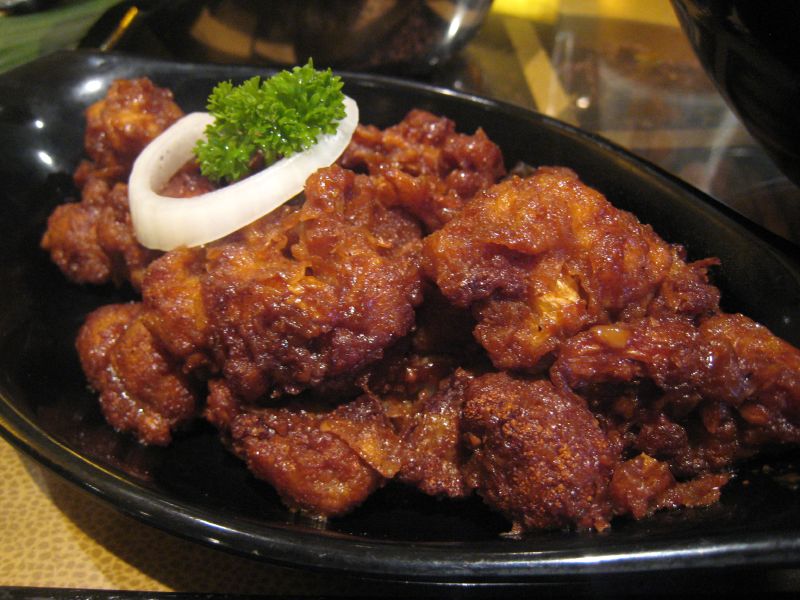
Gobi Manchurian
Cauliflower fritters tossed in a tangy, spicy Indo-Chinese sauce
Gobi Manchurian is a dish from India where cauliflower florets are battered, fried, and then coated in a sauce with soy, garlic, and chili. It is a vegetarian take on Manchurian, a style of Indian Chinese food, and is enjoyed as both a snack and a main course, often with rice.
- Cauliflower is battered, deep-fried, and tossed in a spicy sauce
- Part of the Indian Chinese food tradition, not from China
- Served both as a snack and as a main dish with rice
- Comes in dry and gravy versions
- Popular in Indian restaurants and street stalls
What is Gobi Manchurian?
Gobi Manchurian features cauliflower pieces that are dipped in a spiced batter and deep-fried until crisp. These golden fritters are then tossed in a sauce made with soy, chili sauce, garlic, and bell peppers, giving the dish a bold, tangy, and spicy flavor. The finished dish is often garnished with chopped spring onions. It is known for its crunchy texture and the savory, slightly sweet sauce that coats each piece.
Where does Gobi Manchurian come from?
Despite the name, Gobi Manchurian does not come from China or the Manchuria region. It was created in India, where Chinese cooking techniques and flavors were adapted to suit local tastes. The dish emerged in the 1970s in Mumbai, combining Indian ingredients like ginger, garlic, and green chili with Chinese elements such as soy sauce and cornstarch. Over time, it became a popular part of Indian Chinese cuisine, especially in urban centers.
How is Gobi Manchurian made?
To prepare Gobi Manchurian, cauliflower florets are first coated in a mixture of corn flour and maida (refined wheat flour), along with spices. The battered florets are deep-fried until crisp. Separately, a sauce is made by sautéing garlic, onions, and bell peppers, then adding soy sauce, chili sauce, and sometimes a bit of cornstarch to thicken. The fried cauliflower is tossed in this sauce and finished with spring onions.


How and when is Gobi Manchurian eaten?
Gobi Manchurian is enjoyed in different ways. The dry version is often served as a snack or appetizer, sometimes with tomato ketchup on the side. The saucier, gravy version is eaten as a main dish, usually paired with rice dishes like fried rice or steamed rice. It is popular in restaurants, at street stalls, and as a bar snack. The dish is eaten at lunch or dinner, and is a favorite among vegetarians.
Kinds of Gobi Manchurian
There are two main types: dry (or crispy) and with gravy. The dry style is served as finger food or a starter, while the gravy version is saucier and eaten with rice. Some recipes add MSG for extra flavor, though some avoid it. The level of spiciness can be adjusted, ranging from mild to very hot. Other versions use different vegetables or proteins, but cauliflower remains the classic vegetarian choice.
What Gobi Manchurian means
Gobi Manchurian is a staple of Indian Chinese cuisine, a style that blends Chinese techniques with Indian flavors. It is found in restaurants and street food stalls across India and is especially popular in cities. The dish reflects the creativity of cooks who adapted foreign influences to local tastes, and it is now a familiar comfort food for many urban Indians.
Questions people ask about Gobi Manchurian
What is Gobi Manchurian made of?
It is made from cauliflower florets that are battered and deep-fried, then tossed in a sauce with soy, chili sauce, garlic, onions, and bell peppers.
Where did Gobi Manchurian originate?
Gobi Manchurian was created in India, as part of the Indian Chinese cuisine that adapts Chinese flavors to Indian tastes.
Is Gobi Manchurian vegetarian?
Yes, the classic version uses cauliflower and contains no meat, making it suitable for vegetarians.
How is Gobi Manchurian usually served?
It can be served dry as a snack or appetizer, or with a thick sauce as a main dish alongside rice.
What does Gobi Manchurian taste like?
The dish is savory, tangy, and spicy, with crispy cauliflower coated in a flavorful sauce.
Good reading and sources
- Chicken ManchurianThe New York Times, Recipe
- The story of India’s iconic Chinese-inspired chicken Manchurian dishSouth China Morning Post, Article
- Manchurian (dish) on WikipediaEncyclopedia
- More photos on Wikimedia CommonsPhotos
- Wikidata recordOpen data
The facts on this page come from the Wikipedia article "Manchurian (dish)", written by its contributors and used under the CC BY-SA 4.0 licence, and from its Wikidata record (CC0). Thali rewrote the text in its own words, with AI assistance, and compares every page with the article to make sure no passage is copied. It may be reused under the same CC BY-SA 4.0 licence with a link back.
It may contain mistakes, and it is not dietary or allergy advice: recipes differ from cook to cook. If something is wrong, tell us. Last refreshed 2026-10-03.
More from India
All the food of India Kebabكَبَاب
🇹🇷 Turkey and 5 moreGrilled or roasted meat, often on skewers, found across the Middle East and beyond
Main dish, Lunch, Dinner
Kebabكَبَاب
🇹🇷 Turkey and 5 moreGrilled or roasted meat, often on skewers, found across the Middle East and beyond
Main dish, Lunch, Dinner
 Samosa
🇮🇳 India and 5 moreFried or baked pastry with a spiced filling, shaped into triangles or cones
Pie or savoury pastry, Snacks, Lunch
Samosa
🇮🇳 India and 5 moreFried or baked pastry with a spiced filling, shaped into triangles or cones
Pie or savoury pastry, Snacks, Lunch
 Biryani
🇮🇳 India and 5 moreRice and spiced meat or vegetables layered and cooked together
Main dish, Lunch, Dinner
Biryani
🇮🇳 India and 5 moreRice and spiced meat or vegetables layered and cooked together
Main dish, Lunch, Dinner
 French toast
🇫🇷 France and 5 moreBread soaked in egg and milk, pan-fried and served sweet or savoury
Main dish, Breakfast, Snacks
French toast
🇫🇷 France and 5 moreBread soaked in egg and milk, pan-fried and served sweet or savoury
Main dish, Breakfast, Snacks
Its cousins elsewhere
All main dishes RatatouilleVegan
🇫🇷 FranceA Provençal stew of summer vegetables cooked in olive oil
Main dish, Lunch, Dinner
RatatouilleVegan
🇫🇷 FranceA Provençal stew of summer vegetables cooked in olive oil
Main dish, Lunch, Dinner
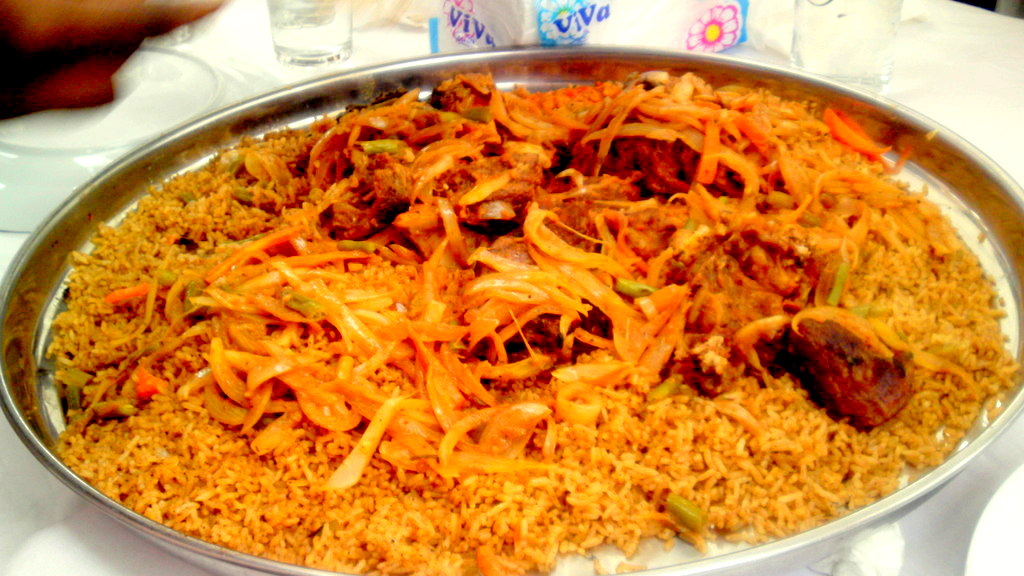 Riz grasMeat
🇧🇫 Burkina Faso and 4 moreWest African rice cooked with meat and vegetables, served hot
Main dish, Lunch, Dinner
Riz grasMeat
🇧🇫 Burkina Faso and 4 moreWest African rice cooked with meat and vegetables, served hot
Main dish, Lunch, Dinner
 Hallaca
🇻🇪 Venezuela and 5 moreCorn dough parcels filled with meat stew and wrapped in plantain leaves
Main dish, Dinner
Hallaca
🇻🇪 Venezuela and 5 moreCorn dough parcels filled with meat stew and wrapped in plantain leaves
Main dish, Dinner
 Picadillo
🇲🇽 Mexico and 5 moreGround meat sautéed with vegetables, often served with rice or as a filling
Main dish, Lunch, Dinner
Picadillo
🇲🇽 Mexico and 5 moreGround meat sautéed with vegetables, often served with rice or as a filling
Main dish, Lunch, Dinner