
Mazamorra
In its own language: Kaguyjy
Traditional corn-based dessert or drink found across Spain and Latin America
Mazamorra refers to a range of traditional dishes and drinks made mainly from maize, found in Spain and many Latin American countries. Its form varies widely: it can be a cold soup, a sweet pudding, a creamy porridge, or a corn-based beverage. Mazamorra is often eaten as a dessert, snack, or even a meal, with local versions reflecting regional tastes and customs.
- Mazamorra is made mainly from maize and varies widely by country.
- Peru’s purple mazamorra is linked to the Lord of Miracles festival in October.
- In Colombia, it is often sold as street food and eaten with panela and milk.
- Paraguay’s kaguyjy became popular during the Paraguayan War.
- Dominican and Cuban versions are called majarete and are creamy corn puddings.
What is Mazamorra?
Mazamorra is a family of dishes and drinks centered on maize (corn), prepared in many ways across Spain and Latin America. In some places, it is a sweet, creamy pudding or porridge, while in others it is a thick drink or even a cold soup. The base is usually maize, sometimes white, yellow, or purple, cooked until soft and mixed with ingredients like milk, sugar, vanilla, cinnamon, or fruit. Some versions are smooth and custard-like, others chunky or soupy. The taste and texture depend on the local recipe, ranging from sweet and creamy to lightly spiced or fruity.
Where does Mazamorra come from?
The name mazamorra has roots in Andalusian Arabic and Ancient Greek, with influence from the Spanish word for dough. It began as a broad term for various simple, maize-based foods in Spain and spread throughout Hispanic America. Each region adapted it to local ingredients and tastes, leading to a wide variety of forms. In Paraguay, it became popular during the Paraguayan War as a filling meal during food shortages. In Colombia, it was once a stew for sailors and rowers, but today is mostly a corn-based drink or porridge. The dish’s history is marked by adaptation and local tradition.
How is Mazamorra made?
How mazamorra is made depends on the country. In Argentina and Uruguay, white maize is boiled with water and sugar, sometimes with milk or vanilla, until soft and creamy. In Colombia, maize kernels are soaked, sometimes with lye or ash, then cooked until very soft, and served with milk and panela (unrefined cane sugar). In the Dominican Republic and Cuba, corn is blended with milk, sugar, butter, and spices, thickened with cornstarch, and flavored with cinnamon or lemon zest. Peruvian mazamorra uses purple corn, pineapple, sweet potato flour, and spices, giving it a deep color and fruity taste. Other versions add fruits, pumpkin, or coconut cream.


How and when is Mazamorra eaten?
Mazamorra is eaten at different times depending on the region. It can be a breakfast, dessert, snack, or even a main meal. In Colombia, it is often sold as street food and eaten with meals like bandeja paisa. In Argentina, it is traditional on national holidays. In Peru, purple mazamorra is made especially in October for the Lord of Miracles festival. Some versions are served warm, others cold. Toppings may include cinnamon, nutmeg, or fruit. In some places, it is enjoyed with bread or as part of a festive meal.
Kinds of Mazamorra
There are many regional versions of mazamorra. In Spain’s Andalusia, it is a cold soup with bread, almonds, and garlic. Paraguay’s kaguyjy uses native maize and may be sweetened with honey or milk. In the Dominican Republic and Cuba, majarete is a creamy corn pudding. Ecuador has a simpler, porridge-like version, while Peru is known for its purple corn mazamorra, especially during festivals. Some places add pumpkin, coconut, or other local ingredients. The dish can be adapted to be sweet or savory, thick or thin, depending on local custom.
What Mazamorra means
Mazamorra holds a place in everyday and festive life in many countries. In Paraguay, it became a symbol of resilience during the war. In Peru, the purple version is linked to the Lord of Miracles festival in October. In Argentina, it is eaten on national holidays. In Colombia, it is a familiar street food and comfort dish. The many forms of mazamorra reflect local history, resources, and tastes, making it a marker of regional identity. Its preparation and sharing are often tied to family and community gatherings.
Questions people ask about Mazamorra
What is mazamorra made of?
Mazamorra is usually made from maize (corn), with other ingredients like milk, sugar, cinnamon, vanilla, and sometimes fruit or cornstarch, depending on the country.
Where does mazamorra come from?
Mazamorra has roots in Spain and spread to many Latin American countries, where each region developed its own version using local ingredients.
Is mazamorra a dessert or a drink?
It can be either, depending on the region. Some versions are creamy puddings or porridges, while others are thick drinks or even cold soups.
When is mazamorra usually eaten?
Mazamorra is eaten as a dessert, snack, or meal. In Peru, the purple version is made for the Lord of Miracles festival in October. In other countries, it is enjoyed year-round.
Are there different types of mazamorra?
Yes, there are many regional variations. Some use white, yellow, or purple corn, and others add milk, fruit, spices, or even pumpkin or coconut.
Good reading and sources
The facts on this page come from the Wikipedia article "Mazamorra", written by its contributors and used under the CC BY-SA 4.0 licence, and from its Wikidata record (CC0). Thali rewrote the text in its own words, with AI assistance, and compares every page with the article to make sure no passage is copied. It may be reused under the same CC BY-SA 4.0 licence with a link back.
It may contain mistakes, and it is not dietary or allergy advice: recipes differ from cook to cook. If something is wrong, tell us. Last refreshed 2026-10-03.
More from Spain
All the food of Spain Hot chocolate
🇲🇽 Mexico and 5 moreA warm drink made from chocolate or cocoa, milk or water, and sugar
Drink, Breakfast, Snacks
Hot chocolate
🇲🇽 Mexico and 5 moreA warm drink made from chocolate or cocoa, milk or water, and sugar
Drink, Breakfast, Snacks
 Sangriasangría
🇪🇸 Spain and 1 moreRed wine mixed with fruit and served cold, from Spain and Portugal
Drink
Sangriasangría
🇪🇸 Spain and 1 moreRed wine mixed with fruit and served cold, from Spain and Portugal
Drink
 JeropigaVegan
🇵🇹 Portugal and 1 morePortuguese sweet fortified drink made by adding aguardente to grape must
Drink
JeropigaVegan
🇵🇹 Portugal and 1 morePortuguese sweet fortified drink made by adding aguardente to grape must
Drink
 SherryVeganJerez
🇪🇸 SpainFortified wine from southern Spain, made mainly from Palomino grapes
Drink
SherryVeganJerez
🇪🇸 SpainFortified wine from southern Spain, made mainly from Palomino grapes
Drink
Its cousins elsewhere
All drinks Atole
🇲🇽 Mexico and 4 moreHot drink made from masa (corn dough), sweetened and flavored with spices or fruit
Drink, Breakfast, Snacks
Atole
🇲🇽 Mexico and 4 moreHot drink made from masa (corn dough), sweetened and flavored with spices or fruit
Drink, Breakfast, Snacks
 SalepVegetarian
🇹🇷 Turkey and 3 moreA thick, hot drink made from wild orchid tubers, enjoyed in winter
Drink, Snacks
SalepVegetarian
🇹🇷 Turkey and 3 moreA thick, hot drink made from wild orchid tubers, enjoyed in winter
Drink, Snacks
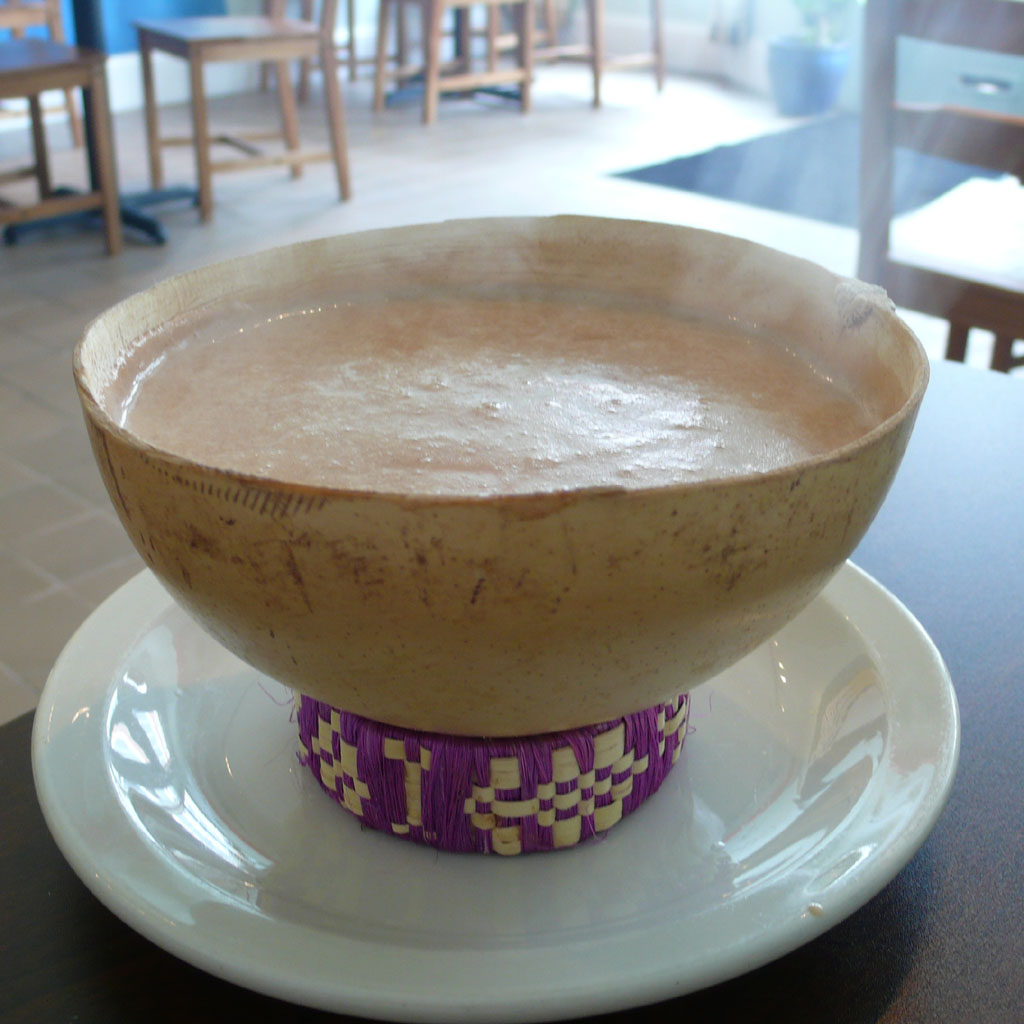 Champurrado
🇲🇽 Mexico and 1 moreThick Mexican hot chocolate drink made with corn dough and spices
Drink, Breakfast, Snacks
Champurrado
🇲🇽 Mexico and 1 moreThick Mexican hot chocolate drink made with corn dough and spices
Drink, Breakfast, Snacks
 BhangVeganभांग
🇮🇳 IndiaCannabis leaf paste used in drinks and sweets, central to Indian spring festivals
Drink, Snacks
BhangVeganभांग
🇮🇳 IndiaCannabis leaf paste used in drinks and sweets, central to Indian spring festivals
Drink, Snacks