
Nabemono
In its own language: 鍋物
Japanese hot pot dishes cooked and shared at the table
Nabemono, or nabe, refers to a wide range of Japanese hot pot dishes where meat, seafood, tofu, and vegetables are simmered together in a shared pot. Eaten especially in winter, nabemono is cooked at the table, letting diners pick ingredients from the bubbling broth and dip them in sauces. It is a sociable meal, central to gatherings with friends and family in Japan.
- Nabemono means 'things in a pot' in Japanese.
- It is cooked and eaten at the table, often in winter.
- There are both light and richly flavored broths.
- Regional versions use local specialties like salmon or oysters.
- Diners dip cooked items in sauces like ponzu or sesame.
What is Nabemono?
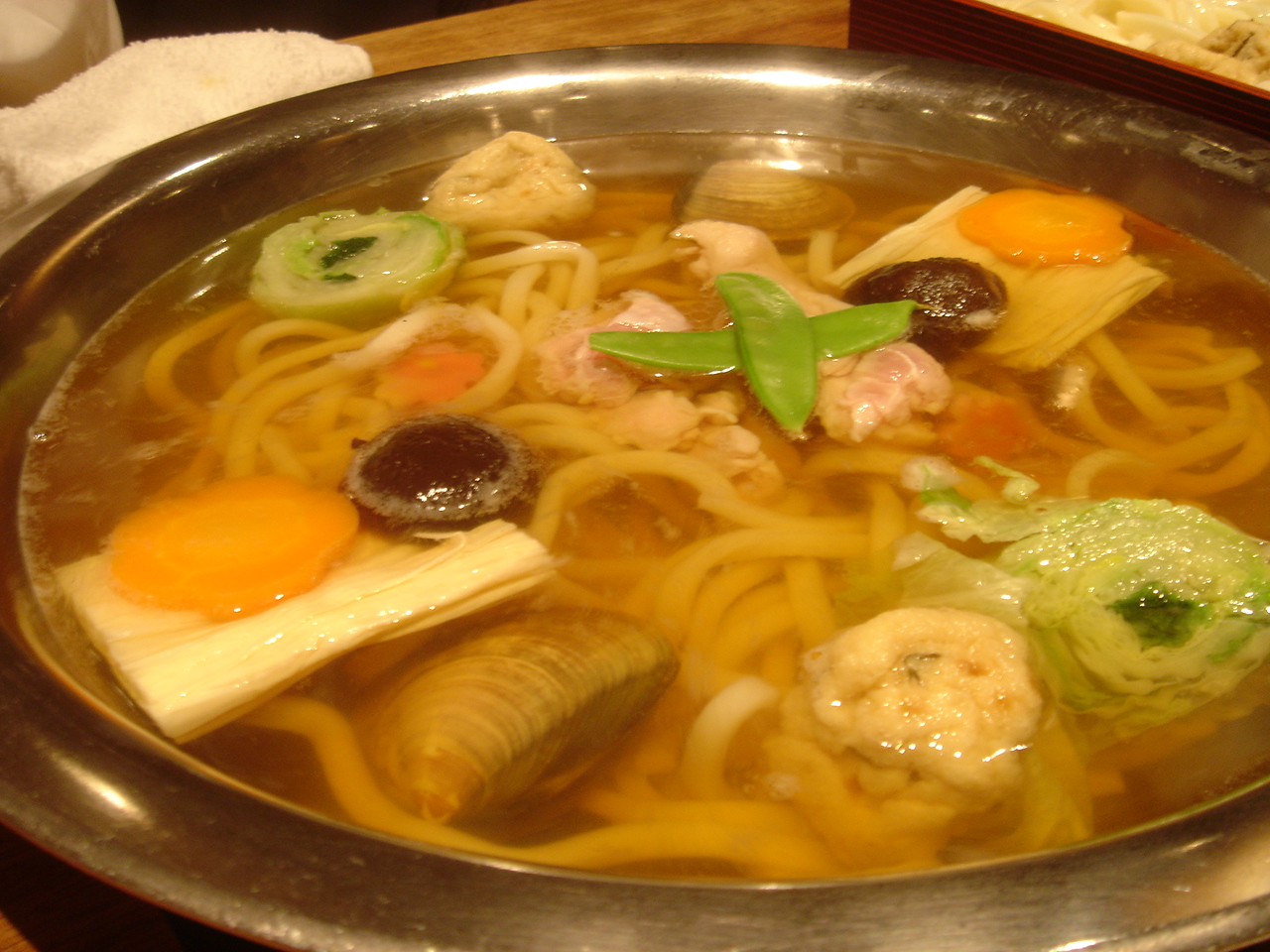
Nabemono is a group of Japanese dishes where various ingredients are simmered together in a pot of broth. The pot, often made of clay or cast iron, sits at the center of the table, bubbling with meats, seafood, tofu, noodles, and vegetables. Diners pick out what they want as it cooks, sometimes dipping it in sauces. The broth can be light, flavored with kelp, or rich with miso or soy sauce. Nabemono is warming and filling, especially popular in colder months.
Where does Nabemono come from?
Nabemono has long been part of Japanese cooking, with the word itself meaning 'things in a pot.' The practice of cooking and eating from a shared pot at the table is seen as a sociable way to dine, especially during winter. Over time, many regional types developed, each using local ingredients. Some, like chankonabe, were created for sumo wrestlers, while others, such as motsunabe, became popular for their taste and affordability.
How is Nabemono made?
To make nabemono, a pot is filled with broth and set to boil, often on a portable stove at the table. Ingredients like sliced meat, seafood, tofu, mushrooms, leafy greens, and noodles are added in stages. Diners help themselves as items cook, sometimes adding more ingredients as they go. The broth can be simple, letting the flavors of the ingredients shine, or seasoned with miso, soy sauce, or dashi.



How and when is Nabemono eaten?
Nabemono is usually eaten at dinner, especially on cold days. The pot is shared by everyone at the table, making it a communal meal. Diners pick cooked items from the pot, sometimes eating them with the broth or dipping them into sauces such as ponzu (citrus soy) or sesame sauce. Some types are served with raw egg for dipping. After the main ingredients are eaten, noodles or rice may be added to the remaining broth.
Kinds of Nabemono
There are many kinds of nabemono across Japan. Chankonabe is packed with meat and vegetables for sumo wrestlers. Motsunabe uses beef or pork offal and is a specialty from Fukuoka. Oden features eggs, daikon, and fishcakes in a light broth. Sukiyaki and shabu-shabu use thinly sliced beef. Regional versions include salmon-based Ishikari-nabe in Hokkaido, kiritampo-nabe with pounded rice in Akita, and fugu-chiri with pufferfish in western Japan.
What Nabemono means
Nabemono is more than just food; it is a symbol of togetherness in Japan. Eating from a shared pot is seen as the most sociable way to dine with family and friends. Many regions take pride in their unique versions, and some, like chankonabe, are tied to specific groups such as sumo wrestlers. The meal is especially associated with winter and home gatherings.
Questions people ask about Nabemono
What is nabemono made of?
Nabemono can include meat, seafood, tofu, vegetables, and noodles, all simmered together in a pot of broth. The specific ingredients vary by type and region.
Where does nabemono come from?
Nabemono is from Japan. It is a traditional way of cooking and eating where diners share a pot of simmering ingredients at the table.
How is nabemono usually served?
It is served in a pot placed at the center of the table, kept hot by a portable stove. Diners pick out cooked ingredients and may dip them in sauces before eating.
Are there different types of nabemono?
Yes, there are many types, such as chankonabe, motsunabe, oden, sukiyaki, shabu-shabu, and regional varieties using local ingredients.
Is nabemono vegetarian or does it have meat?
It varies. Some types are vegetarian, using tofu and vegetables, while others include meat, seafood, or offal.
Good reading and sources
The facts on this page come from the Wikipedia article "Nabemono", written by its contributors and used under the CC BY-SA 4.0 licence, and from its Wikidata record (CC0). Thali rewrote the text in its own words, with AI assistance, and compares every page with the article to make sure no passage is copied. It may be reused under the same CC BY-SA 4.0 licence with a link back.
It may contain mistakes, and it is not dietary or allergy advice: recipes differ from cook to cook. If something is wrong, tell us. Last refreshed 2026-10-03.
More from Japan
All the food of Japan Pizza
🇮🇹 Italy and 4 moreFlatbread topped with tomato, cheese and baked at high heat
Main dish, Lunch, Dinner
Pizza
🇮🇹 Italy and 4 moreFlatbread topped with tomato, cheese and baked at high heat
Main dish, Lunch, Dinner
 Sushi寿司
🇯🇵 JapanVinegared rice paired with seafood, vegetables or other toppings
Main dish, Lunch, Dinner
TofuVegan豆腐
🇨🇳 China and 5 moreSoft white blocks made by curdling soy milk and pressing the curds
Main dish
Sushi寿司
🇯🇵 JapanVinegared rice paired with seafood, vegetables or other toppings
Main dish, Lunch, Dinner
TofuVegan豆腐
🇨🇳 China and 5 moreSoft white blocks made by curdling soy milk and pressing the curds
Main dish
 Sashimi刺身
🇯🇵 JapanThin slices of raw fish or meat, served with soy sauce and condiments
Main dish, Lunch, Dinner
Sashimi刺身
🇯🇵 JapanThin slices of raw fish or meat, served with soy sauce and condiments
Main dish, Lunch, Dinner
Its cousins elsewhere
All main dishes Pâté
🇫🇷 France and 5 moreA smooth or coarse spread made from minced meat, liver, or vegetables
Sauce, pickle or ferment
Pâté
🇫🇷 France and 5 moreA smooth or coarse spread made from minced meat, liver, or vegetables
Sauce, pickle or ferment
 Empanada
🇪🇸 Spain and 5 morePastry turnovers filled with meat, cheese, or vegetables, baked or fried
Pie or savoury pastry, Lunch, Dinner
Empanada
🇪🇸 Spain and 5 morePastry turnovers filled with meat, cheese, or vegetables, baked or fried
Pie or savoury pastry, Lunch, Dinner
 Quiche
🇫🇷 FranceFrench tart with a savoury custard filling in a pastry case
Pie or savoury pastry
Quiche
🇫🇷 FranceFrench tart with a savoury custard filling in a pastry case
Pie or savoury pastry
 RagùMeat
🇮🇹 Italy and 1 moreItalian meat sauce for pasta, made in many regional styles
Main dish, Lunch, Dinner
RagùMeat
🇮🇹 Italy and 1 moreItalian meat sauce for pasta, made in many regional styles
Main dish, Lunch, Dinner