
Paomo
In its own language: 泡馍
Flatbread torn into pieces and simmered in a spiced lamb or beef soup
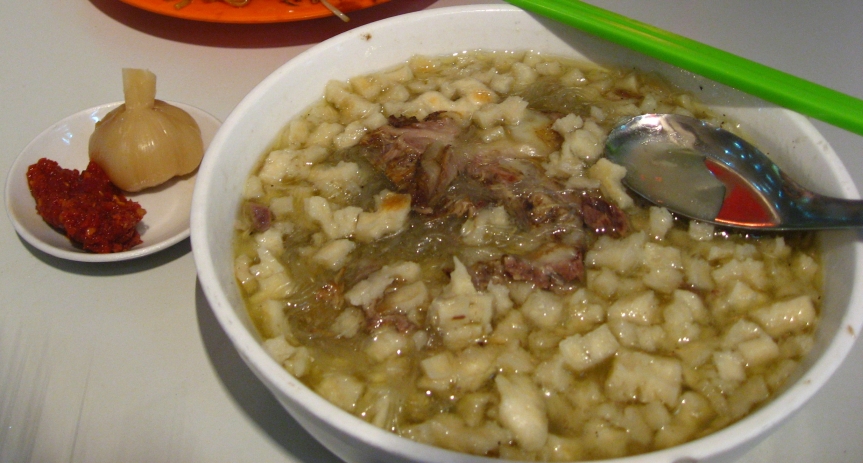
Paomo is a Shaanxi dish where wheat flatbread is broken into small bits and simmered in a rich broth with lamb or beef. It is especially popular in Xi'an and nearby areas, and is commonly eaten with pickled garlic and chili sauce. The stew is hearty and warming, often enjoyed as a main meal.
- Bread is torn by hand into small pieces before cooking
- Broth is flavored with Sichuan pepper, star anise, and other spices
- Served hot with lamb or beef and sometimes cellophane noodles
- Often eaten with pickled garlic and chili oil
- A specialty of Xi'an and the Shaanxi region
What is Paomo?
Paomo is a stew from Shaanxi, China, made by tearing round wheat flatbread into small pieces and soaking them in a hot, aromatic broth. The soup is prepared with either lamb or beef, simmered with spices like Sichuan pepper, star anise, tsaoko, and cinnamon. The finished dish is thick with bread, meat, and sometimes cellophane noodles. It is usually served steaming hot, with diners adding chili oil, cilantro, or pickled garlic to taste. The bread absorbs the flavors of the broth, making each bite soft and savory.
Where does Paomo come from?
Paomo has deep roots in Shaanxi, especially in Xi'an and the Guanzhong region. A well-known legend links its invention to Zhao Kuangyin, who later became the first emperor of the Song dynasty. The story goes that he tore up his last pieces of bread and mixed them into a merchant's lamb soup, creating a meal that stayed with him. After becoming emperor, he returned to relive that taste, which led to the dish being named and remembered. While this tale is part of local folklore, paomo's real origins are tied to the region's wheat and lamb traditions.
How is Paomo made?
To make paomo, a round wheat flatbread is first cooked on an iron griddle using a lightly leavened dough. The bread is then broken by hand into small chunks, often by the diner themselves in traditional restaurants. Meanwhile, lamb or beef is simmered with bones and spices until the meat is soft and the broth is full of flavor. The broth is sometimes thinned with hot water, and cellophane noodles may be added. The broken bread pieces are mixed in and heated through, then topped with a bit of lamb fat and extra spices.


How and when is Paomo eaten?
Paomo is typically enjoyed at lunch or dinner as a filling main course. In many restaurants, diners break up their own bread before handing it to the cook, who then prepares the stew. The dish is served hot, and people often add chili oil, cilantro, or pickled garlic according to their preference. The garlic may be pickled in a sweet and sour mix of vinegar and sugar. Paomo is a common meal in Shaanxi and is eaten both at home and in restaurants.
Kinds of Paomo
There are two main types of paomo: one uses lamb, and the other uses beef. Both versions follow the same method, with the choice of meat being the main difference. Some places add cellophane noodles to the soup. While the basic idea remains the same, the spices and accompaniments can vary slightly from one cook to another or between regions in Shaanxi.
What Paomo means
Paomo is a signature dish of Shaanxi cuisine and a staple in Xi'an. It is closely tied to the region's food culture and is recognized as a symbol of local identity. The custom of breaking the bread by hand is a unique part of the dining experience. Stories and legends about its origin are well known in the area, adding to its cultural significance.
Questions people ask about Paomo
What is paomo made of?
Paomo is made from round wheat flatbread, which is broken into pieces and simmered in a spiced broth with lamb or beef. The soup often includes spices like Sichuan pepper and star anise, and sometimes cellophane noodles.
Where does paomo come from?
Paomo comes from Shaanxi province in China, especially the city of Xi'an and the Guanzhong region. It is a well-known dish in local cuisine.
How is paomo traditionally served?
Paomo is served hot, with the bread pieces soaking in a rich meat broth. Diners often add chili oil, cilantro, or pickled garlic to suit their taste.
Are there different types of paomo?
Yes, there are two main kinds: lamb paomo and beef paomo. Both use the same method, but the type of meat changes the flavor.
What makes paomo unique?
A special feature is that diners often break up the bread themselves before it is cooked in the soup, making the meal interactive and personal.
Good reading and sources
The facts on this page come from the Wikipedia article "Paomo", written by its contributors and used under the CC BY-SA 4.0 licence, and from its Wikidata record (CC0). Thali rewrote the text in its own words, with AI assistance, and compares every page with the article to make sure no passage is copied. It may be reused under the same CC BY-SA 4.0 licence with a link back.
It may contain mistakes, and it is not dietary or allergy advice: recipes differ from cook to cook. If something is wrong, tell us. Last refreshed 2026-10-03.
More from China
All the food of China Pasta
🇮🇹 Italy and 1 moreUnleavened dough shaped and cooked, a staple of Italian cuisine
Main dish, Lunch, Dinner
TofuVegan豆腐
🇨🇳 China and 5 moreSoft white blocks made by curdling soy milk and pressing the curds
Main dish
Pasta
🇮🇹 Italy and 1 moreUnleavened dough shaped and cooked, a staple of Italian cuisine
Main dish, Lunch, Dinner
TofuVegan豆腐
🇨🇳 China and 5 moreSoft white blocks made by curdling soy milk and pressing the curds
Main dish
 Tofu skin roll
🇨🇳 ChinaTofu skin wrapped around a savoury filling, served steamed or fried as dim sum
Main dish, Lunch, Dinner
Tofu skin roll
🇨🇳 ChinaTofu skin wrapped around a savoury filling, served steamed or fried as dim sum
Main dish, Lunch, Dinner
 Mu kropMeat
🇹🇭 Thailand and 4 moreThai-style fried pork belly with a crunchy golden skin
Main dish, Lunch, Dinner
Mu kropMeat
🇹🇭 Thailand and 4 moreThai-style fried pork belly with a crunchy golden skin
Main dish, Lunch, Dinner
Its cousins elsewhere
All stews and curries OssobucoMeat
🇮🇹 ItalyBraised veal shank with bone marrow, a Lombard dish often served with risotto or polenta
Main dish, Dinner, Lunch
Irish stewMeatstobhach Gaelach
🇮🇪 Ireland and 1 moreA slow-cooked Irish stew of lamb or beef with potatoes and root vegetables
Stew or curry, Lunch, Dinner
OssobucoMeat
🇮🇹 ItalyBraised veal shank with bone marrow, a Lombard dish often served with risotto or polenta
Main dish, Dinner, Lunch
Irish stewMeatstobhach Gaelach
🇮🇪 Ireland and 1 moreA slow-cooked Irish stew of lamb or beef with potatoes and root vegetables
Stew or curry, Lunch, Dinner
 ChakhchoukhaMeatشخشوخة
🇩🇿 AlgeriaAlgerian flatbread pieces in a spiced tomato and meat stew
Main dish, Lunch, Dinner
ChakhchoukhaMeatشخشوخة
🇩🇿 AlgeriaAlgerian flatbread pieces in a spiced tomato and meat stew
Main dish, Lunch, Dinner
 MrouziaMeatالمروزية
🇲🇦 MoroccoLamb tagine with honey, almonds, cinnamon and ras el hanout
Main dish, Lunch, Dinner
MrouziaMeatالمروزية
🇲🇦 MoroccoLamb tagine with honey, almonds, cinnamon and ras el hanout
Main dish, Lunch, Dinner