
Pastelón
Layered casserole of sweet plantains and seasoned meat from Puerto Rico and the Dominican Republic
Pastelón is a baked casserole from Puerto Rico and the Dominican Republic, made by layering sweet plantains with seasoned ground meat. Each country has its own version: Puerto Ricans fry plantain strips and layer them with stewed meat, while Dominicans use mashed plantains and cheddar cheese. It is served hot as a main dish.
- Pastelón uses ripe plantains instead of pasta for its layers
- Dominican versions use mashed plantains and cheddar cheese
- Puerto Rican pastelón is inspired by lasagne
- Vegetarian pastelón uses mushrooms or other vegetables
- It is baked and served hot as a main dish
What is Pastelón?
Pastelón is a layered casserole popular in Puerto Rico and the Dominican Republic. Its main feature is the use of ripe plantains, which are either mashed or sliced and fried, forming the layers of the dish. Between these layers goes seasoned ground meat, often cooked with a mix of peppers, tomatoes, onions, olives, and capers. Cheese is added, especially in the Dominican version. The result is a savory and slightly sweet dish, with a soft texture from the plantains and a rich, aromatic filling.
Where does Pastelón come from?
Pastelón comes from the Caribbean, specifically Puerto Rico and the Dominican Republic. The dish reflects the region's use of plantains and local seasonings. In Puerto Rico, it is seen as a local take on lasagne, swapping pasta for plantains. The Dominican version is sometimes called Dominican casserole or ripe plantain casserole. Each country has developed its own way of preparing pastelón, but both share the idea of layering plantains with a savory filling.
How is Pastelón made?
To make pastelón, ripe plantains are either boiled and mashed (in the Dominican Republic) or sliced and fried (in Puerto Rico). These form the base and top layers of the casserole. The filling is ground meat, often beef, cooked with sofrito—a blend of herbs and aromatics—plus bell peppers, tomatoes, onions, olives, and capers. Cheese is layered in, especially in the Dominican style. The assembled dish is baked until set and golden.

How and when is Pastelón eaten?
Pastelón is served hot, usually as a main course for lunch or dinner. It is a home-cooked dish, often shared at family meals. In Puerto Rico, it is sometimes compared to lasagne and may be served with a side salad or rice. The dish is hearty and filling, making it suitable for gatherings or everyday meals. Vegetarian versions are also made, using vegetables instead of meat.
Kinds of Pastelón
There are several ways to prepare pastelón. In the Dominican Republic, mashed plantains and cheddar cheese are used, while Puerto Rican pastelón features fried plantain strips and may include mozzarella, ricotta, or bechamel sauce. Some people pour beaten egg on top before baking. Plantains can be swapped for mashed potato, breadfruit, cassava, or other starchy vegetables. Vegetarian versions use mushrooms, eggplant, or squash instead of meat.
What Pastelón means
Pastelón is a familiar comfort food in Puerto Rico and the Dominican Republic. It is not tied to a specific festival or religious event but is enjoyed as part of everyday life. The dish shows the influence of Caribbean ingredients and the creativity of local cooks in adapting familiar foods like casseroles and lasagne to regional tastes. Its variations reflect changing tastes and available ingredients.
Questions people ask about Pastelón
What is pastelón made of?
Pastelón is made by layering ripe plantains with seasoned ground meat, often beef, and sometimes cheese. The plantains can be mashed or sliced and fried, depending on the regional style.
Where does pastelón come from?
Pastelón is a traditional dish from Puerto Rico and the Dominican Republic, each with its own way of preparing it.
Is pastelón vegetarian?
Traditional pastelón contains ground meat, but vegetarian versions are common, using mushrooms, eggplant, or other vegetables instead.
How is pastelón served?
Pastelón is served hot, usually as a main course for lunch or dinner, and is often shared at family meals.
What makes Puerto Rican pastelón different from the Dominican version?
Puerto Rican pastelón uses fried plantain strips and may include cheeses like mozzarella, while the Dominican version uses mashed plantains and cheddar cheese.
Good reading and sources
The facts on this page come from the Wikipedia article "Pastelón", written by its contributors and used under the CC BY-SA 4.0 licence, and from its Wikidata record (CC0). Thali rewrote the text in its own words, with AI assistance, and compares every page with the article to make sure no passage is copied. It may be reused under the same CC BY-SA 4.0 licence with a link back.
It may contain mistakes, and it is not dietary or allergy advice: recipes differ from cook to cook. If something is wrong, tell us. Last refreshed 2026-10-03.
More from the Dominican Republic
All the food of the Dominican Republic Gofio
🇪🇸 Spain and 5 moreFinely milled roasted grain flour from the Canary Islands, used in many ways
Main dish, Breakfast, Lunch
Gofio
🇪🇸 Spain and 5 moreFinely milled roasted grain flour from the Canary Islands, used in many ways
Main dish, Breakfast, Lunch
 MofongoMeat
🇵🇷 Puerto Rico and 3 moreMashed green plantains with pork and garlic, shaped into a ball and served hot
Main dish, Lunch, Dinner
MofongoMeat
🇵🇷 Puerto Rico and 3 moreMashed green plantains with pork and garlic, shaped into a ball and served hot
Main dish, Lunch, Dinner
 MangúVegetarian
🇩🇴 Dominican RepublicMashed green plantains topped with pickled onions, often served with cheese, eggs, and salami
Main dish, Breakfast, Lunch
MangúVegetarian
🇩🇴 Dominican RepublicMashed green plantains topped with pickled onions, often served with cheese, eggs, and salami
Main dish, Breakfast, Lunch
 MazamorraKaguyjy
🇪🇸 Spain and 10 moreTraditional corn-based dessert or drink found across Spain and Latin America
Drink, Breakfast, Lunch
MazamorraKaguyjy
🇪🇸 Spain and 10 moreTraditional corn-based dessert or drink found across Spain and Latin America
Drink, Breakfast, Lunch
Its cousins elsewhere
All main dishes Hallaca
🇻🇪 Venezuela and 5 moreCorn dough parcels filled with meat stew and wrapped in plantain leaves
Main dish, Dinner
Hallaca
🇻🇪 Venezuela and 5 moreCorn dough parcels filled with meat stew and wrapped in plantain leaves
Main dish, Dinner
 RatatouilleVegan
🇫🇷 FranceA Provençal stew of summer vegetables cooked in olive oil
Main dish, Lunch, Dinner
RatatouilleVegan
🇫🇷 FranceA Provençal stew of summer vegetables cooked in olive oil
Main dish, Lunch, Dinner
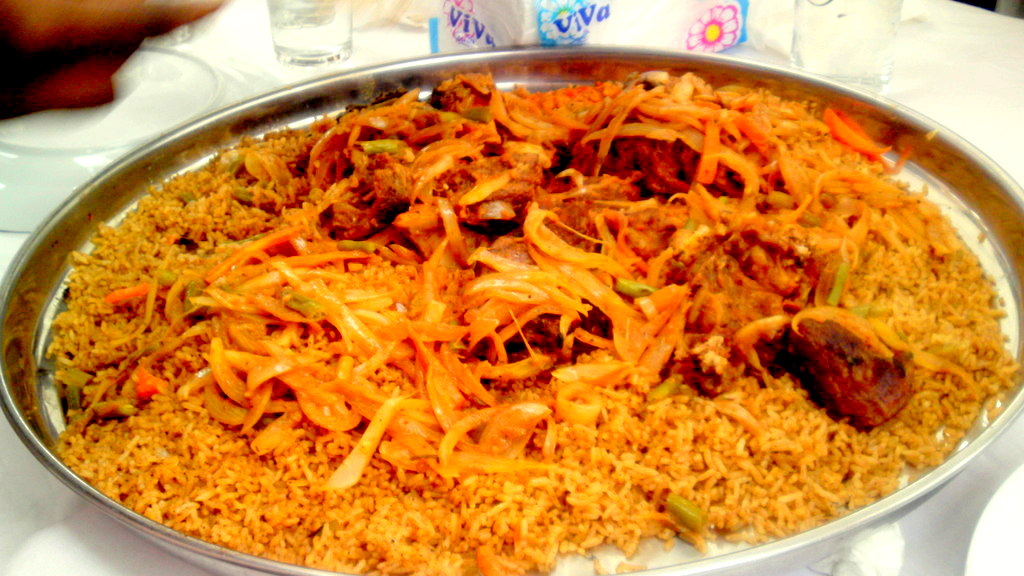 Riz grasMeat
🇧🇫 Burkina Faso and 4 moreWest African rice cooked with meat and vegetables, served hot
Main dish, Lunch, Dinner
Riz grasMeat
🇧🇫 Burkina Faso and 4 moreWest African rice cooked with meat and vegetables, served hot
Main dish, Lunch, Dinner
 ShashlikMeatшашлык
🇷🇺 RussiaSkewered cubes of marinated meat grilled over open coals
Main dish, Dinner, Lunch
ShashlikMeatшашлык
🇷🇺 RussiaSkewered cubes of marinated meat grilled over open coals
Main dish, Dinner, Lunch