
Shashlik
In its own language: шашлык
Skewered cubes of marinated meat grilled over open coals
Shashlik is a dish of meat pieces threaded onto skewers and grilled, with roots in the Caucasus and Eastern Europe. The meat is marinated, often with onions and acidic liquids, and sometimes cooked with vegetables. It is served hot, commonly at gatherings or as street food, and has become popular across Russia and nearby regions.
- Shashlik is cooked on skewers over open coals
- The meat is marinated, often overnight, with onions and acidic liquids
- It became popular in Russia in the late 19th and early 20th centuries
- Vegetables like peppers and tomatoes are sometimes added to the skewers
What is Shashlik?
Shashlik consists of chunks of meat, marinated and then cooked on skewers over a fire. The meat may be lamb, beef, pork, chicken, or other types, depending on the region and local customs. Sometimes, vegetables like peppers, onions, mushrooms, or tomatoes are added between the meat pieces. The marinade usually includes something acidic, such as vinegar or wine, along with onions, garlic, and herbs. When cooked, shashlik has a smoky aroma and a charred exterior, with tender meat inside.
Where does Shashlik come from?
The name shashlik comes from Russian, itself borrowed from Turkic languages, where it means 'for the skewer'. The dish traces its roots to the Caucasus, and was known by other names in Russian before the 18th century. Shashlik began to appear in Moscow in the late 1800s, and by the early 20th century, it was a common sight in Russian cities, especially as a street food. Its spread followed the expansion of the Russian Empire and later the Soviet Union.
How is Shashlik made?
To prepare shashlik, meat is cut into cubes and soaked in a marinade, often overnight. The marinade typically uses an acidic base, such as vinegar or wine, and is flavored with onions, garlic, herbs, and spices. The marinated meat is then threaded onto metal or wooden skewers, sometimes alternating with pieces of fat or vegetables. The skewers are grilled over charcoal or wood until the meat is cooked through and slightly charred on the outside.


How and when is Shashlik eaten?
Shashlik is most often eaten hot, straight from the grill. It is popular at outdoor gatherings, picnics, and social events, much like barbecue in other countries. In many cities, it is also sold by street vendors who cook it over open coals. Shashlik can be served on its own or with bread, salads, or simple sides. It is a common choice for lunch or dinner, especially in informal or festive settings.
Kinds of Shashlik
While lamb was the original meat used, shashlik now appears with beef, pork, chicken, or game, depending on local tastes and dietary rules. Some regions prefer to add vegetables or fat between the meat pieces, while others use only meat. In Iran, the meat is often cut into larger pieces, while elsewhere smaller cubes are standard. The marinade ingredients and spices also vary from place to place.
What Shashlik means
Shashlik has become a staple of social life in Russia and neighboring areas, especially for outdoor meals and street food. Its preparation and sharing are often part of group celebrations or gatherings. The dish is also linked to the broader family of kebabs found across Eurasia, and has influenced or been influenced by similar foods in other countries.
Questions people ask about Shashlik
What is shashlik made of?
Shashlik is made from cubes of meat, such as lamb, beef, pork, or chicken, marinated with onions, acidic liquids like vinegar or wine, and sometimes threaded with vegetables like peppers or tomatoes.
Where does shashlik come from?
Shashlik has its origins in the Caucasus region and spread through Eastern Europe and Russia, becoming widely popular in the Russian Empire and later the Soviet Union.
How is shashlik cooked?
The marinated meat is placed on skewers and grilled over charcoal or wood, often outdoors, until it is cooked through and slightly charred.
Is shashlik always made with the same meat?
No, the type of meat used in shashlik varies by region and preference. Lamb was traditional, but beef, pork, chicken, or game can also be used.
When is shashlik usually eaten?
Shashlik is commonly enjoyed at lunch or dinner, especially at outdoor gatherings, picnics, or as street food.
Good reading and sources
The facts on this page come from the Wikipedia article "Shashlik", written by its contributors and used under the CC BY-SA 4.0 licence, and from its Wikidata record (CC0). Thali rewrote the text in its own words, with AI assistance, and compares every page with the article to make sure no passage is copied. It may be reused under the same CC BY-SA 4.0 licence with a link back.
It may contain mistakes, and it is not dietary or allergy advice: recipes differ from cook to cook. If something is wrong, tell us. Last refreshed 2026-10-03.
More from Russia
All the food of Russia Pancake
🇺🇸 United States and 5 moreFlat cakes made from batter, cooked on a griddle or pan and served sweet or savoury
Main dish, Breakfast, Snacks
Pancake
🇺🇸 United States and 5 moreFlat cakes made from batter, cooked on a griddle or pan and served sweet or savoury
Main dish, Breakfast, Snacks
 Pelmeniпельмени
🇷🇺 RussiaRussian dumplings filled with seasoned meat and wrapped in thin dough
Dumpling, Lunch, Dinner
Pelmeniпельмени
🇷🇺 RussiaRussian dumplings filled with seasoned meat and wrapped in thin dough
Dumpling, Lunch, Dinner
 MeatballMeat
🇮🇹 Italy and 5 moreGround meat shaped into balls and cooked by frying, baking, or braising in sauce
Main dish, Lunch, Dinner
MeatballMeat
🇮🇹 Italy and 5 moreGround meat shaped into balls and cooked by frying, baking, or braising in sauce
Main dish, Lunch, Dinner
 Pâté
🇫🇷 France and 5 moreA smooth or coarse spread made from minced meat, liver, or vegetables
Sauce, pickle or ferment
Pâté
🇫🇷 France and 5 moreA smooth or coarse spread made from minced meat, liver, or vegetables
Sauce, pickle or ferment
Its cousins elsewhere
All main dishes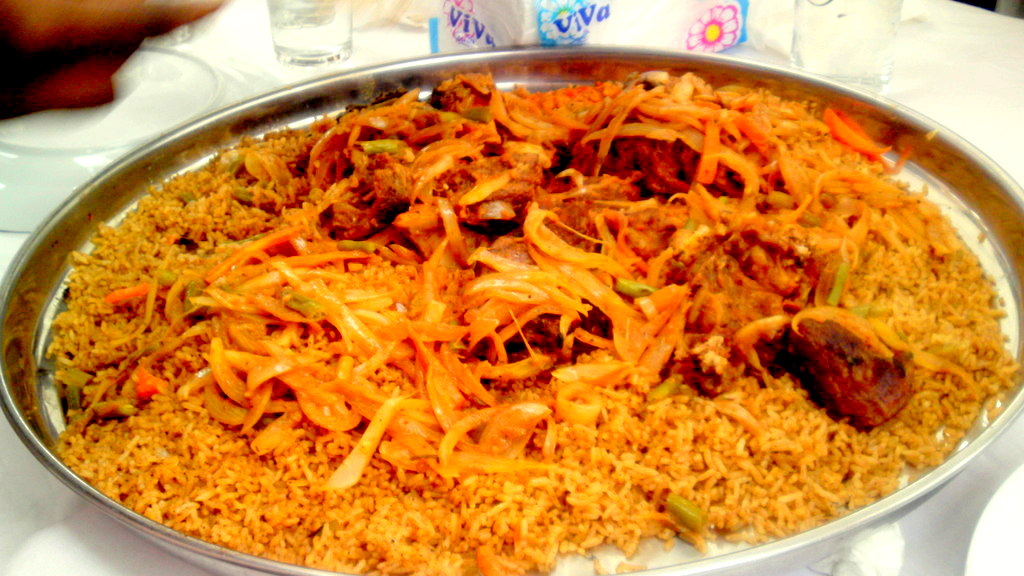 Riz grasMeat
🇧🇫 Burkina Faso and 4 moreWest African rice cooked with meat and vegetables, served hot
Main dish, Lunch, Dinner
Riz grasMeat
🇧🇫 Burkina Faso and 4 moreWest African rice cooked with meat and vegetables, served hot
Main dish, Lunch, Dinner
 SouvlakiMeatσουβλάκι
🇬🇷 Greece and 1 moreGrilled meat skewers, often served in pita with salad and sauce
Main dish, Lunch, Dinner
SouvlakiMeatσουβλάκι
🇬🇷 Greece and 1 moreGrilled meat skewers, often served in pita with salad and sauce
Main dish, Lunch, Dinner
 Hallaca
🇻🇪 Venezuela and 5 moreCorn dough parcels filled with meat stew and wrapped in plantain leaves
Main dish, Dinner
Hallaca
🇻🇪 Venezuela and 5 moreCorn dough parcels filled with meat stew and wrapped in plantain leaves
Main dish, Dinner
 RatatouilleVegan
🇫🇷 FranceA Provençal stew of summer vegetables cooked in olive oil
Main dish, Lunch, Dinner
RatatouilleVegan
🇫🇷 FranceA Provençal stew of summer vegetables cooked in olive oil
Main dish, Lunch, Dinner