
Patjuk
In its own language: 팥죽
Korean red bean and rice porridge, often with chewy rice cake balls
Patjuk is a Korean porridge made from red beans and rice, usually eaten in winter. Traditionally served during the winter solstice, it is believed to ward off bad luck and spirits. The dish is often topped with small glutinous rice cake balls called saealsim and is typically savory, though sweet versions exist.
- Patjuk is eaten during Korea's winter solstice, dongji
- Red beans and rice are its main ingredients
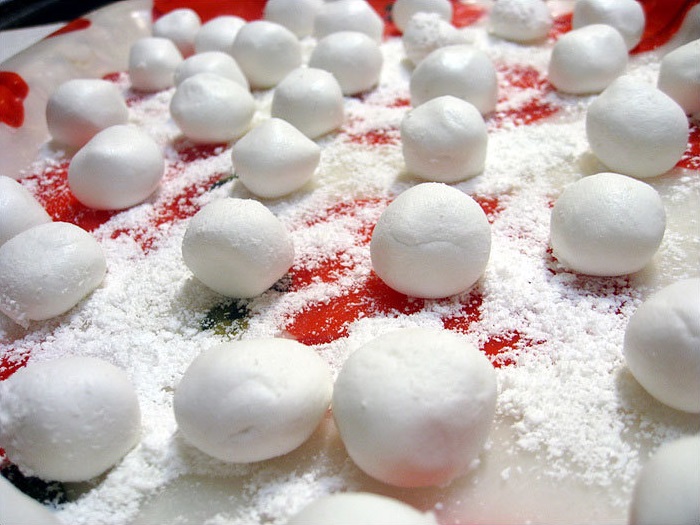
- Saealsim, small rice cake balls, are often added
- The red color is believed to ward off evil spirits
- A sweet version, dan-patjuk, is also popular
What is Patjuk?
Patjuk is a thick Korean porridge made mainly from red beans and rice. The beans are cooked until soft, mashed, and combined with rice to create a hearty, warming dish. Small balls of glutinous rice flour, called saealsim, are often added, giving the porridge a chewy texture. The color is a deep reddish-brown, and the taste is earthy and mild, with a hint of salt. Patjuk is usually served hot and eaten as a meal rather than a dessert.
Where does Patjuk come from?
Patjuk has deep roots in Korean tradition, especially as a winter food. It is closely tied to the winter solstice, called dongji, when it was believed that the red color of the porridge could drive away evil spirits and bad luck. Folklore tells of a spirit who feared red bean porridge, leading people to prepare and eat patjuk on this day. The dish also reflects Korea’s agrarian past, when rice was scarce in winter and red beans provided a nourishing, economical alternative.
How is Patjuk made?
To make patjuk, dried red beans are boiled until soft, then mashed and strained to remove the skins. The bean liquid is used to cook rice, while the mashed beans are set aside. Once the rice is cooked, the mashed beans are stirred back in, and small balls of glutinous rice flour (saealsim) are added. The porridge is finished with a little salt. The number of rice cake balls sometimes matches the eater’s age.


How and when is Patjuk eaten?
Patjuk is most often eaten hot during the cold winter months, especially around the time of the winter solstice. It is served as a meal, not a dessert, and does not usually include sugar. The porridge is filling and can be eaten on its own, without side dishes. In the past, it was also offered to household deities or placed in rooms as part of rituals for protection and good fortune.
Kinds of Patjuk
A sweet version called dan-patjuk is made by sweetening the porridge with sugar or honey and using glutinous rice powder instead of whole rice. Saealsim are also added to this dessert version. Another variation is pat-kal-guksu, where knife-cut wheat noodles replace the rice and rice cake balls, creating a noodle soup with red bean broth.
What Patjuk means
Patjuk is more than just food; it is a symbol of protection and hope for the new year in Korean culture. Eating it at dongji, the winter solstice, is a tradition rooted in beliefs about warding off evil and wishing for a good harvest. While some old customs have faded, patjuk remains a seasonal favorite, connecting modern Koreans to their heritage and the rhythms of the year.
Questions people ask about Patjuk
What is patjuk made of?
Patjuk is made from red beans, rice, water, and salt. Small glutinous rice flour balls called saealsim are often added.
Where does patjuk come from?
Patjuk is a traditional Korean dish, especially popular during the winter season and at the winter solstice.
Is patjuk sweet or savory?
Patjuk is usually savory, but there is a sweet version called dan-patjuk, which is sweetened with sugar or honey.
When is patjuk traditionally eaten?
Patjuk is most commonly eaten in winter, especially on dongji, the winter solstice, as part of seasonal customs.
What are the small balls in patjuk?
They are called saealsim, made from glutinous rice flour and shaped to resemble small bird's eggs.
Good reading and sources
The facts on this page come from the Wikipedia article "Patjuk", written by its contributors and used under the CC BY-SA 4.0 licence, and from its Wikidata record (CC0). Thali rewrote the text in its own words, with AI assistance, and compares every page with the article to make sure no passage is copied. It may be reused under the same CC BY-SA 4.0 licence with a link back.
It may contain mistakes, and it is not dietary or allergy advice: recipes differ from cook to cook. If something is wrong, tell us. Last refreshed 2026-10-03.
More from South Korea
All the food of South Korea KabochaVeganカボチャ
🇯🇵 Japan and 5 moreA sweet, dense winter squash with edible skin, used in Japanese and Asian cooking
Main dish, Lunch, Dinner
KabochaVeganカボチャ
🇯🇵 Japan and 5 moreA sweet, dense winter squash with edible skin, used in Japanese and Asian cooking
Main dish, Lunch, Dinner
 Bibimbap비빔밥
🇰🇷 South Korea and 1 moreKorean rice bowl with mixed vegetables, meat, egg and chili paste
Main dish, Lunch, Dinner
Bibimbap비빔밥
🇰🇷 South Korea and 1 moreKorean rice bowl with mixed vegetables, meat, egg and chili paste
Main dish, Lunch, Dinner
 Udonうどん / 饂飩
🇯🇵 Japan and 4 moreThick wheat noodles served hot or cold in Japanese cooking
Noodle or pasta dish, Lunch, Dinner
Udonうどん / 饂飩
🇯🇵 Japan and 4 moreThick wheat noodles served hot or cold in Japanese cooking
Noodle or pasta dish, Lunch, Dinner
Its cousins elsewhere
All main dishes Paella
🇪🇸 Spain and 1 moreRice cooked with meat, seafood or vegetables in a wide shallow pan from Valencia
Main dish, Lunch
Paella
🇪🇸 Spain and 1 moreRice cooked with meat, seafood or vegetables in a wide shallow pan from Valencia
Main dish, Lunch
 QifqiVegetarian
🇦🇱 AlbaniaHerbed rice balls from Gjirokastër, shaped and fried in a special pan
Main dish, Lunch, Dinner
QifqiVegetarian
🇦🇱 AlbaniaHerbed rice balls from Gjirokastër, shaped and fried in a special pan
Main dish, Lunch, Dinner
 Chicken soupMeat
🇺🇸 United States and 4 moreA hot soup of chicken simmered with vegetables, noodles or grains
Soup, Lunch, Dinner
Chicken soupMeat
🇺🇸 United States and 4 moreA hot soup of chicken simmered with vegetables, noodles or grains
Soup, Lunch, Dinner
 SurströmmingFish or seafood
🇸🇪 SwedenFermented Baltic herring with a famously strong smell, eaten cold in Sweden
Sauce, pickle or ferment, Dinner
SurströmmingFish or seafood
🇸🇪 SwedenFermented Baltic herring with a famously strong smell, eaten cold in Sweden
Sauce, pickle or ferment, Dinner