
Pelau
A one-pot rice and meat dish from the Caribbean, darkened with caramelised sugar
Pelau is a hearty meal from the West Indies, especially Trinidad and Dominica, where rice, meat such as chicken or beef, and pigeon peas or cowpeas are simmered together with coconut milk and a touch of sugar. Spices like cardamom, cloves, cumin, and coriander add warmth, and the dish is known for its deep brown color from caramelising the meat. It is often enjoyed as a main course, sometimes with coleslaw on the sid
- Meat is browned in melted sugar for a deep color and taste
- Coconut milk gives the dish a creamy texture
- Spices like cardamom and clove add warmth
- Pelau is a staple in Trinidad and Dominica
- Often served with coleslaw as a side
What is Pelau?
Pelau is a savoury dish where grains of rice, pieces of meat, and peas or beans are cooked together in one pot. The meat, often chicken or beef, is browned in sugar until it takes on a rich color and flavor. Coconut milk gives the dish a creamy texture, while spices such as cardamom, cloves, cumin, and coriander provide depth. The result is a dark, aromatic stew with tender meat and soft rice, sometimes accompanied by vegetables or served with coleslaw.
Where does Pelau come from?
Pelau has roots in the Caribbean, particularly Trinidad and Dominica, and reflects a blend of culinary influences. Its method of caramelising meat comes from African cooking traditions, while the idea of cooking rice with meat and spices traces back to pilaf, a dish found across Central Asia, the Middle East, and Spain. The recipe evolved during Trinidad's colonial era, shaped by Indian indentured workers and African cooks, resulting in the Creole style seen today.
How is Pelau made?
To make pelau, cooks start by heating sugar in a pot until it melts and darkens, then add meat to brown it in the caramel. Onion and garlic are added for flavor, followed by rice, peas or beans, and coconut milk. Spices like cardamom, cloves, cumin, and coriander go in next. Everything simmers together until the rice is soft and the flavors are well blended. Some versions use an oven to finish the dish after sautéing the meat and precooking the rice.

How and when is Pelau eaten?
Pelau is typically served hot as a main meal, often at lunch or dinner. It is a common everyday dish in Trinidad and Dominica, enjoyed by families and at gatherings. People may eat it on its own or with a simple side like coleslaw. The dish is valued for being filling and for bringing together a variety of flavors in one pot, making it practical for feeding a group.
Kinds of Pelau
While chicken is the most popular meat, beef is also used. Some cooks add extra vegetables or change the type of peas or beans, using what is available locally. There are versions called curry pelau, where curry spices are included. The method can also vary, with some preferring to bake the assembled dish after sautéing the ingredients.
What Pelau means
Pelau is a symbol of Creole cooking in the Caribbean and represents the region’s history of blending different food traditions. Its preparation and taste reflect African, Indian, and European influences. The dish is part of everyday life and is often made for family meals or shared at social events, showing its place in the local food culture.
Questions people ask about Pelau
What is pelau made of?
Pelau combines rice, meat such as chicken or beef, pigeon peas or cowpeas, coconut milk, sugar, and a mix of spices like cardamom, cloves, cumin, and coriander.
Where does pelau come from?
Pelau is a traditional dish from the Caribbean, especially Trinidad and Dominica, and reflects African, Indian, and European influences.
How is pelau cooked?
The meat is first browned in caramelised sugar, then cooked with rice, peas or beans, coconut milk, and spices in one pot until everything is tender and flavorful.
When do people eat pelau?
Pelau is usually eaten as a main meal at lunch or dinner and is a common everyday food in its home countries.
Are there different types of pelau?
Yes, variations include using different meats, adding vegetables, or making curry pelau by including curry spices. Some versions are finished in the oven.
Good reading and sources
The facts on this page come from the Wikipedia article "Pelau", written by its contributors and used under the CC BY-SA 4.0 licence, and from its Wikidata record (CC0). Thali rewrote the text in its own words, with AI assistance, and compares every page with the article to make sure no passage is copied. It may be reused under the same CC BY-SA 4.0 licence with a link back.
It may contain mistakes, and it is not dietary or allergy advice: recipes differ from cook to cook. If something is wrong, tell us. Last refreshed 2026-10-03.
More from Trinidad and Tobago
All the food of Trinidad and Tobago Roti
🇮🇳 India and 5 moreUnleavened flatbread made from whole-wheat flour, common across South Asia and beyond
Bread, Breakfast, Lunch
Roti
🇮🇳 India and 5 moreUnleavened flatbread made from whole-wheat flour, common across South Asia and beyond
Bread, Breakfast, Lunch
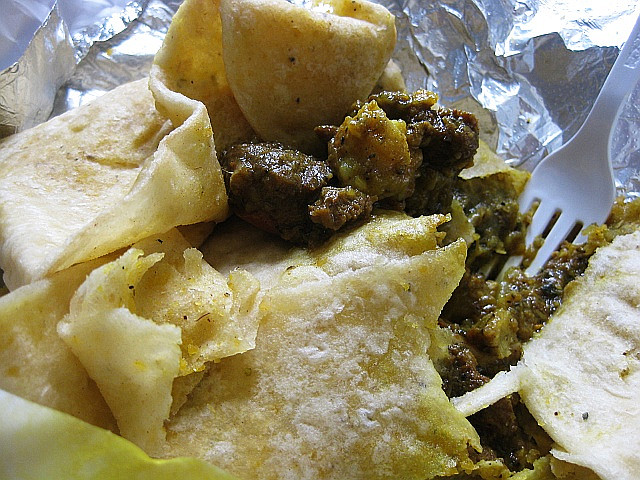 Roti
🇹🇹 Trinidad and Tobago and 4 moreCurried meat or vegetables wrapped in a Caribbean flatbread
Main dish, Lunch, Dinner
Roti
🇹🇹 Trinidad and Tobago and 4 moreCurried meat or vegetables wrapped in a Caribbean flatbread
Main dish, Lunch, Dinner
 Oil DownMeat
🇬🇩 Grenada and 3 moreGrenada’s national stew of breadfruit, salted meat, and coconut milk
Stew or curry, Lunch, Dinner
Oil DownMeat
🇬🇩 Grenada and 3 moreGrenada’s national stew of breadfruit, salted meat, and coconut milk
Stew or curry, Lunch, Dinner
 Chutney
🇮🇳 India and 5 moreA spiced relish or sauce made from fruits, vegetables, herbs and spices
Sauce, pickle or ferment
Chutney
🇮🇳 India and 5 moreA spiced relish or sauce made from fruits, vegetables, herbs and spices
Sauce, pickle or ferment
Its cousins elsewhere
All main dishes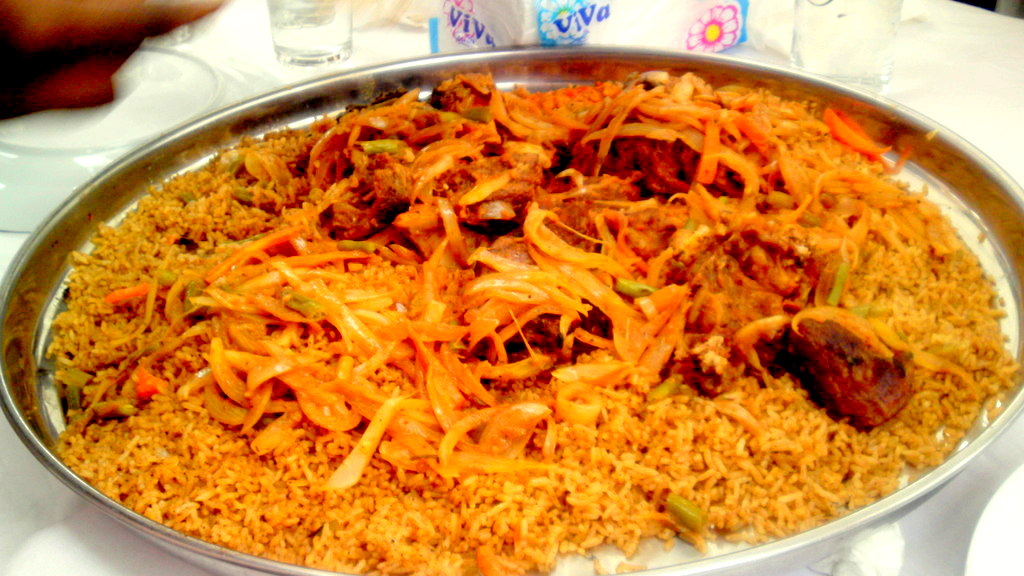 Riz grasMeat
🇧🇫 Burkina Faso and 4 moreWest African rice cooked with meat and vegetables, served hot
Main dish, Lunch, Dinner
Riz grasMeat
🇧🇫 Burkina Faso and 4 moreWest African rice cooked with meat and vegetables, served hot
Main dish, Lunch, Dinner
 Kabsaكبسة
🇸🇦 Saudi Arabia and 4 moreRice and meat cooked with aromatic spices, a staple of the Arabian Peninsula
Main dish, Lunch, Dinner
Kabsaكبسة
🇸🇦 Saudi Arabia and 4 moreRice and meat cooked with aromatic spices, a staple of the Arabian Peninsula
Main dish, Lunch, Dinner
 Phat kaphraoผัดกะเพรา
🇹🇭 Thailand and 2 moreThai stir-fry of meat or seafood with holy basil, served over rice
Main dish, Lunch, Dinner
Phat kaphraoผัดกะเพรา
🇹🇭 Thailand and 2 moreThai stir-fry of meat or seafood with holy basil, served over rice
Main dish, Lunch, Dinner
 Nasi kuningVegetarian
🇮🇩 Indonesia and 5 moreRice cooked with coconut milk and turmeric, served for celebrations across Indonesia
Rice dish, Breakfast, Lunch
Nasi kuningVegetarian
🇮🇩 Indonesia and 5 moreRice cooked with coconut milk and turmeric, served for celebrations across Indonesia
Rice dish, Breakfast, Lunch