
Phirni
Chilled ground rice pudding flavored with cardamom, saffron, and rose water
Phirni is a dessert made by simmering ground rice or rice flour in milk, then chilling it and serving it in small clay bowls. This sweet pudding is flavored with spices such as cardamom and saffron, often garnished with nuts and rose petals. It is popular in India, Afghanistan, and Iran, especially during festivals like Eid.
- Phirni is served chilled in small clay bowls called shikoras
- It is flavored with cardamom, saffron, and rose water
- Phirni is popular during Eid and other festivals
- Afghan firnee is often made with cornstarch
- Phirni was featured among the world's top 100 desserts
What is Phirni?
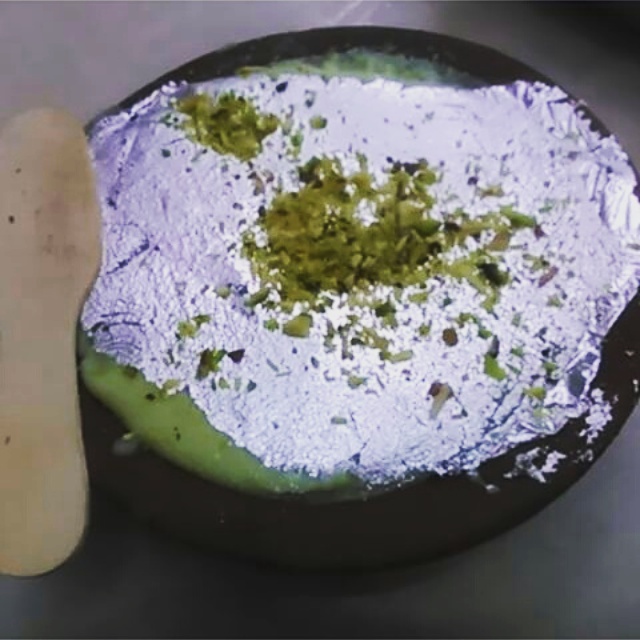
Phirni is a creamy dessert where ground rice or rice flour is slowly cooked in milk until thick. The mixture is sweetened and scented with cardamom, saffron, and rose water, then poured into small clay bowls called shikoras to set and chill. It is usually topped with slivers of almond and pistachio, sometimes decorated with rose petals or edible silver leaf. The result is a smooth, aromatic pudding, served cold.
Where does Phirni come from?
Phirni traces its history to the Mughal era in India, where it was enjoyed as a royal sweet. The word 'phirni' comes from Persian 'firni', meaning rice pudding, reflecting its roots in Persianate cuisine. Over time, it spread across the Indian subcontinent and into regions like Iran and Afghanistan, each adapting the dish to local tastes and ingredients. In Afghanistan, for example, firnee is often made with cornstarch instead of rice.
How is Phirni made?
To make phirni, ground rice or rice flour is gently simmered in milk until it thickens. Aromatic spices such as cardamom and saffron are added for flavor, along with rose water. Once sweetened, the mixture is poured into clay bowls and left to cool and set. Before serving, it is garnished with nuts like almonds and pistachios, and sometimes rose petals or edible silver.


How and when is Phirni eaten?
Phirni is enjoyed as a dessert, especially after festive meals or during celebrations like Eid. It is always served chilled, often in individual clay bowls that help keep it cool and add a subtle earthy aroma. People may eat it plain or with extra garnishes. Its smooth, creamy texture and delicate flavors make it a popular choice for special occasions as well as everyday treats.
Kinds of Phirni
Different regions have their own takes on phirni. In Kashmir, it is known as firin and often uses rose water or kewra essence for fragrance. Afghan firnee is typically made with cornstarch and comes in flavors like rose water or banana. Across the Middle East and Iran, similar desserts exist under names like muhallabia and fereni, with slight changes in ingredients and flavorings.
What Phirni means
Phirni is closely tied to celebrations and is a traditional sweet during festivals such as Eid. Its association with royalty and history as a Mughal dessert adds to its cultural appeal. It has been recognized internationally, featuring in lists of top desserts and rice puddings. Serving phirni in clay bowls is a custom that enhances its presentation and connects it to tradition.
Questions people ask about Phirni
What is phirni made of?
Phirni is made by cooking ground rice or rice flour in milk, then flavoring it with cardamom, saffron, and rose water. It is sweetened and garnished with nuts such as almonds and pistachios.
Where does phirni come from?
Phirni originated in India during the Mughal era, with its name derived from the Persian word for rice pudding. It is also found in Afghanistan and Iran, with local variations.
How is phirni served?
Phirni is served cold, traditionally in small clay bowls called shikoras. It is often topped with nuts, rose petals, or edible silver leaf.
When is phirni usually eaten?
Phirni is commonly eaten as a dessert, especially during festivals such as Eid, but it is also enjoyed as an everyday sweet.
Are there different types of phirni?
Yes, regional versions exist. In Kashmir, it is called firin and uses rose water or kewra. Afghan firnee is made with cornstarch and comes in flavors like rose water or banana.
Good reading and sources
The facts on this page come from the Wikipedia article "Phirni", written by its contributors and used under the CC BY-SA 4.0 licence, and from its Wikidata record (CC0). Thali rewrote the text in its own words, with AI assistance, and compares every page with the article to make sure no passage is copied. It may be reused under the same CC BY-SA 4.0 licence with a link back.
It may contain mistakes, and it is not dietary or allergy advice: recipes differ from cook to cook. If something is wrong, tell us. Last refreshed 2026-10-03.
More from India
All the food of India Ice cream
🇺🇸 United States and 5 moreA frozen dessert made from sweetened, flavoured milk or cream
Sweet or dessert, Snacks
Halvaحَلَاوَة
🇮🇷 Iran and 5 moreDense sweet made from seeds, grains, or vegetables, found across Asia, Africa, and Europe
Sweet or dessert, Snacks, Tea time
Ice cream
🇺🇸 United States and 5 moreA frozen dessert made from sweetened, flavoured milk or cream
Sweet or dessert, Snacks
Halvaحَلَاوَة
🇮🇷 Iran and 5 moreDense sweet made from seeds, grains, or vegetables, found across Asia, Africa, and Europe
Sweet or dessert, Snacks, Tea time
 Candy
🇺🇸 United States and 5 moreSmall sweet treats made mainly from sugar or sweeteners
Sweet or dessert, Snacks
Candy
🇺🇸 United States and 5 moreSmall sweet treats made mainly from sugar or sweeteners
Sweet or dessert, Snacks
 French toast
🇫🇷 France and 5 moreBread soaked in egg and milk, pan-fried and served sweet or savoury
Main dish, Breakfast, Snacks
French toast
🇫🇷 France and 5 moreBread soaked in egg and milk, pan-fried and served sweet or savoury
Main dish, Breakfast, Snacks
Its cousins elsewhere
All sweets and desserts Qatayefقطايف
🇪🇬 Egypt and 5 moreSweet stuffed pancakes, folded and filled with nuts or cream, served for Ramadan
Sweet or dessert, Snacks, Tea time
Qatayefقطايف
🇪🇬 Egypt and 5 moreSweet stuffed pancakes, folded and filled with nuts or cream, served for Ramadan
Sweet or dessert, Snacks, Tea time
 Cardamom breadVegetarian
🇫🇮 Finland and 3 moreEnriched Nordic sweet bread scented with cardamom, served with coffee or tea
Bread, Snacks, Tea time
Cardamom breadVegetarian
🇫🇮 Finland and 3 moreEnriched Nordic sweet bread scented with cardamom, served with coffee or tea
Bread, Snacks, Tea time
 AmygdalotaVegetarianΑμυγδαλωτά
🇬🇷 GreeceAlmond cookies from the Cyclades, often shaped into pears or balls
Sweet or dessert, Snacks, Tea time
AmygdalotaVegetarianΑμυγδαλωτά
🇬🇷 GreeceAlmond cookies from the Cyclades, often shaped into pears or balls
Sweet or dessert, Snacks, Tea time
 GloggGlögg
🇸🇪 Sweden and 2 moreNordic spiced mulled wine, served warm at Christmas
Drink, Tea time, Snacks
GloggGlögg
🇸🇪 Sweden and 2 moreNordic spiced mulled wine, served warm at Christmas
Drink, Tea time, Snacks