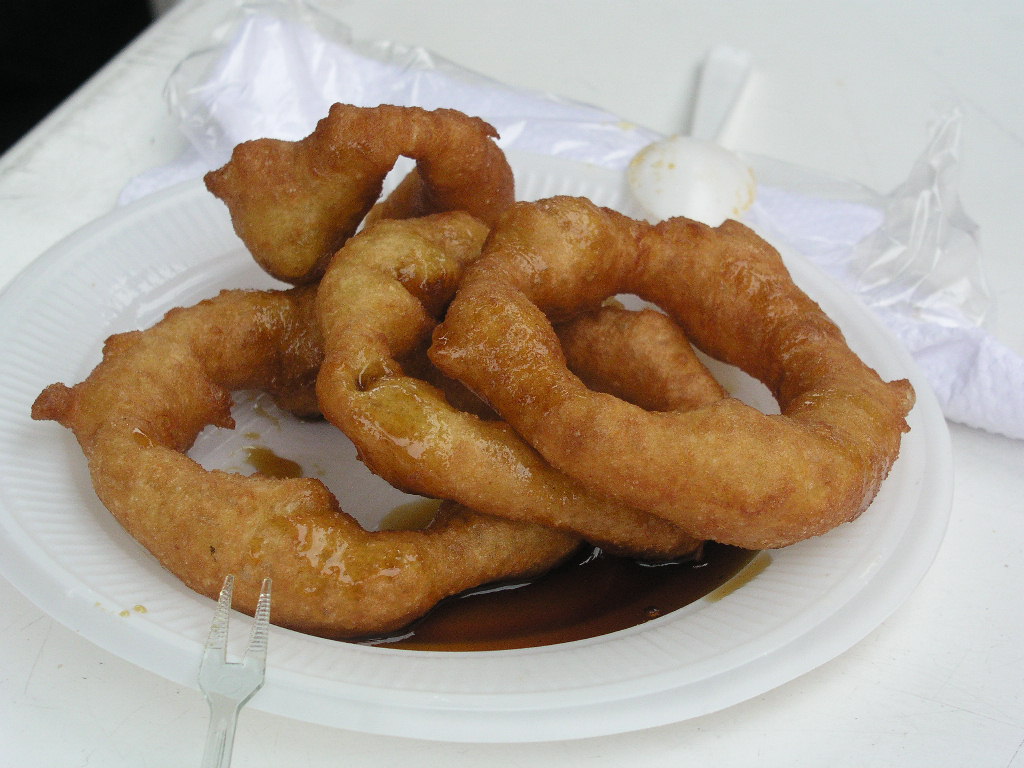
Picarones
Peruvian doughnuts made from squash and sweet potato, served with chancaca syrup
Picarones are Peruvian doughnuts shaped from a dough of squash and sweet potato, fried and served with a syrup made from chancaca, a type of solidified molasses. Originating in Lima during the colonial era, they are a popular dessert and often appear alongside anticuchos, another traditional dish.
- Made from squash and sweet potato
- Served with chancaca, a molasses syrup
- Originated in Lima during colonial times
- Often eaten with anticuchos
- Mentioned in classic Peruvian literature
What is Picarones?
Picarones are ring-shaped doughnuts from Peru, made by mixing squash and sweet potato into a soft dough. The dough is shaped into rings and deep-fried until golden. Once cooked, they are coated in a syrup made from chancaca, which is a solid form of molasses, sometimes flavored with fig. The result is a dessert with a crisp outside, tender inside, and a sweet, sticky glaze. Their color is usually a warm golden brown, and the taste combines earthy sweetness from the vegetables with the rich flavor of the syrup.
Where does Picarones come from?
Picarones trace their roots to Lima during the colonial period, when cooks sought a less expensive alternative to buñuelos, a Spanish-style doughnut. By using local ingredients like squash and sweet potato, they created a new dessert that became popular in Peru. The dish is mentioned in classic Peruvian literature and has appeared in Chilean memoirs describing its presence in Santiago before 1810. Over time, picarones have become a staple of Peruvian sweets and are recognized in traditional music and poetry.
How is Picarones made?
To make picarones, squash and sweet potato are cooked and mashed, then mixed with wheat flour to form a dough. The dough is shaped into rings, which are then deep-fried until crisp and golden. After frying, the hot doughnuts are dipped or drizzled with chancaca syrup. Chancaca is made by melting panela (unrefined cane sugar) with water and sometimes fig, creating a thick, dark syrup that soaks into the doughnuts.


How and when is Picarones eaten?
Picarones are usually enjoyed as a snack or with afternoon tea. They are often served at gatherings where anticuchos, a grilled meat skewer, are also prepared. The doughnuts are eaten warm, freshly coated in syrup, and are commonly found at street stalls or markets in Peru. They are a popular treat for both everyday enjoyment and special occasions, often shared with friends or family.
Kinds of Picarones
While the classic picarón uses squash and sweet potato, some versions may include other local ingredients or slight changes in the syrup, such as adding fig for extra flavor. In Chile, historical accounts mention picarones being eaten in Santiago, suggesting some regional adaptation. However, the basic method and ingredients remain consistent, keeping the dessert closely tied to its Peruvian roots.
What Picarones means
Picarones hold a special place in Peruvian culture, often associated with gatherings and traditional foods like anticuchos. They are referenced in literature and music, highlighting their role in everyday life and celebrations. The dessert is a symbol of local ingenuity, using native produce to create a sweet that is now a beloved part of Peru’s culinary heritage.
Questions people ask about Picarones
What are picarones made of?
Picarones are made from a dough combining squash, sweet potato, and wheat flour, then fried and coated with a syrup made from chancaca, which is solidified molasses.
Where do picarones come from?
Picarones originated in Lima, Peru, during the colonial era, and have since become a traditional dessert in Peruvian cuisine.
How are picarones served?
They are served as ring-shaped doughnuts, fried until golden and then covered in a sweet chancaca syrup, often eaten warm.
Are picarones vegetarian?
Yes, picarones are vegetarian, as they are made from squash, sweet potato, flour, and a syrup from unrefined cane sugar.
When are picarones usually eaten?
They are commonly enjoyed as a snack or with afternoon tea, and are often served alongside anticuchos at gatherings.
Good reading and sources
The facts on this page come from the Wikipedia article "Picarones", written by its contributors and used under the CC BY-SA 4.0 licence, and from its Wikidata record (CC0). Thali rewrote the text in its own words, with AI assistance, and compares every page with the article to make sure no passage is copied. It may be reused under the same CC BY-SA 4.0 licence with a link back.
It may contain mistakes, and it is not dietary or allergy advice: recipes differ from cook to cook. If something is wrong, tell us. Last refreshed 2026-10-03.
More from Peru
All the food of Peru Churrochurros
🇪🇸 Spain and 5 moreRidged, deep-fried dough sticks often eaten hot with chocolate or coffee
Sweet or dessert, Breakfast, Snacks
Churrochurros
🇪🇸 Spain and 5 moreRidged, deep-fried dough sticks often eaten hot with chocolate or coffee
Sweet or dessert, Breakfast, Snacks
 PanettoneVegetarian
🇮🇹 Italy and 2 moreTall, sweet Italian bread with candied fruit, eaten at Christmas and New Year
Sweet or dessert, Breakfast, Tea time
PanettoneVegetarian
🇮🇹 Italy and 2 moreTall, sweet Italian bread with candied fruit, eaten at Christmas and New Year
Sweet or dessert, Breakfast, Tea time
 Eggnog
🇺🇸 United States and 5 moreA creamy, sweet drink of milk, eggs, sugar and spirits, served at Christmas
Drink, Snacks
Eggnog
🇺🇸 United States and 5 moreA creamy, sweet drink of milk, eggs, sugar and spirits, served at Christmas
Drink, Snacks
 TurrónVegetarian
🇪🇸 Spain and 5 moreHoney and nut nougat, shaped into bars or cakes, enjoyed at Christmas in Spain and Italy
Sweet or dessert, Snacks
TurrónVegetarian
🇪🇸 Spain and 5 moreHoney and nut nougat, shaped into bars or cakes, enjoyed at Christmas in Spain and Italy
Sweet or dessert, Snacks
Its cousins elsewhere
All sweets and desserts Doughnut
🇺🇸 United States and 5 moreSweet fried or baked rings or balls, often glazed or filled
Sweet or dessert, Breakfast, Snacks
Doughnut
🇺🇸 United States and 5 moreSweet fried or baked rings or balls, often glazed or filled
Sweet or dessert, Breakfast, Snacks
 Crêpe
🇫🇷 FranceThin French pancakes, served sweet or savoury with a range of fillings
Main dish, Breakfast, Lunch
Crêpe
🇫🇷 FranceThin French pancakes, served sweet or savoury with a range of fillings
Main dish, Breakfast, Lunch
 Cinnamon rollVegetarian
🇸🇪 Sweden and 4 moreA sweet rolled bun with cinnamon and sugar, baked and often topped with icing
Sweet or dessert, Breakfast, Tea time
Cinnamon rollVegetarian
🇸🇪 Sweden and 4 moreA sweet rolled bun with cinnamon and sugar, baked and often topped with icing
Sweet or dessert, Breakfast, Tea time
 Pain au chocolatVegetarian
🇫🇷 France and 2 moreA flaky pastry filled with bars of dark chocolate
Pie or savoury pastry, Breakfast, Snacks
Pain au chocolatVegetarian
🇫🇷 France and 2 moreA flaky pastry filled with bars of dark chocolate
Pie or savoury pastry, Breakfast, Snacks