Next: 8 Feb to 9 Mar 2027
Ramadan
A month of fasting from dawn to sunset, broken each evening with dates, water and a shared meal.

What is eaten for Ramadan
In Ramadan Muslims fast from first light to sunset, with no food or drink. The day is framed by two meals. Suhoor is eaten before dawn. Iftar breaks the fast at sunset, and following the example of the Prophet it begins with dates and water. What follows depends on the country: harira soup in Morocco, haleem and fried snacks in South Asia, lentil soup and stuffed pastries in the Levant, sweet kolak in Indonesia. Sweets such as qatayef are made only in this month. Feeding others at iftar is counted a great merit.
The dishes
 HariraTomato, lentil and chickpea soup that opens iftar in Morocco.
 HaleemSlow-cooked wheat, lentils and meat, an iftar dish in South Asia.
 SamosaFried filled pastry on iftar tables from Africa to Asia.
 QatayefStuffed pancakes made only in Ramadan in the Arab world.
 Rooh AfzaRose syrup drink that breaks the fast in South Asia.
 Qamar al-DinApricot drink of Ramadan in Egypt and the Levant.
 KolakIndonesian sweet of banana and palm sugar in coconut milk.
Also part of it, and being written: Date palm (Dates are the first thing eaten at sunset, as the Prophet did.).
More dishes made for Ramadan
 JalebiVegetarian
🇮🇳 India and 6 moreDeep-fried spirals of batter soaked in syrup, enjoyed across Asia and Africa
Pie or savoury pastry, Breakfast, Snacks
JalebiVegetarian
🇮🇳 India and 6 moreDeep-fried spirals of batter soaked in syrup, enjoyed across Asia and Africa
Pie or savoury pastry, Breakfast, Snacks
 Kala bhunaMeat
🇧🇩 BangladeshA dark, richly spiced beef curry from Chittagong, Bangladesh
Main dish, Lunch, Dinner
Kala bhunaMeat
🇧🇩 BangladeshA dark, richly spiced beef curry from Chittagong, Bangladesh
Main dish, Lunch, Dinner
 BorhaniVegetarianবোরহানী
🇧🇩 BangladeshA spiced yoghurt drink from Bangladesh, often served at weddings and festivals
Drink, Dinner, Snacks
BorhaniVegetarianবোরহানী
🇧🇩 BangladeshA spiced yoghurt drink from Bangladesh, often served at weddings and festivals
Drink, Dinner, Snacks
 Börek
🇹🇷 Turkey and 5 moreFlaky pastry filled with cheese, meat or vegetables, baked or fried
Pie or savoury pastry, Breakfast, Lunch
Börek
🇹🇷 Turkey and 5 moreFlaky pastry filled with cheese, meat or vegetables, baked or fried
Pie or savoury pastry, Breakfast, Lunch
 SharbatVeganشربت
🇮🇷 Iran and 5 moreSweet fruit or flower drink, served chilled or as a syrup
Drink, Snacks
SharbatVeganشربت
🇮🇷 Iran and 5 moreSweet fruit or flower drink, served chilled or as a syrup
Drink, Snacks
 KnafehVegetarianكنافة
🇵🇸 Palestine and 5 moreShredded pastry layered with cheese and soaked in sweet syrup
Sweet or dessert, Breakfast, Snacks
KnafehVegetarianكنافة
🇵🇸 Palestine and 5 moreShredded pastry layered with cheese and soaked in sweet syrup
Sweet or dessert, Breakfast, Snacks
 Korma
🇮🇳 India and 4 moreA rich curry of meat or vegetables simmered in yogurt and spices
Stew or curry, Lunch, Dinner
Korma
🇮🇳 India and 4 moreA rich curry of meat or vegetables simmered in yogurt and spices
Stew or curry, Lunch, Dinner
 Tulumba
🇪🇬 Egypt and 5 moreDeep-fried batter sticks soaked in sweet syrup
Sweet or dessert, Snacks
Tulumba
🇪🇬 Egypt and 5 moreDeep-fried batter sticks soaked in sweet syrup
Sweet or dessert, Snacks
 Muhallebiمهلبی
🇮🇷 Iran and 5 moreA smooth milk pudding thickened with rice flour or starch, served cold
Sweet or dessert
Muhallebiمهلبی
🇮🇷 Iran and 5 moreA smooth milk pudding thickened with rice flour or starch, served cold
Sweet or dessert
 LokmaVegan
🇮🇶 Iraq and 4 moreSmall fried dough pieces sweetened with syrup or honey
Sweet or dessert, Snacks, Tea time
LokmaVegan
🇮🇶 Iraq and 4 moreSmall fried dough pieces sweetened with syrup or honey
Sweet or dessert, Snacks, Tea time
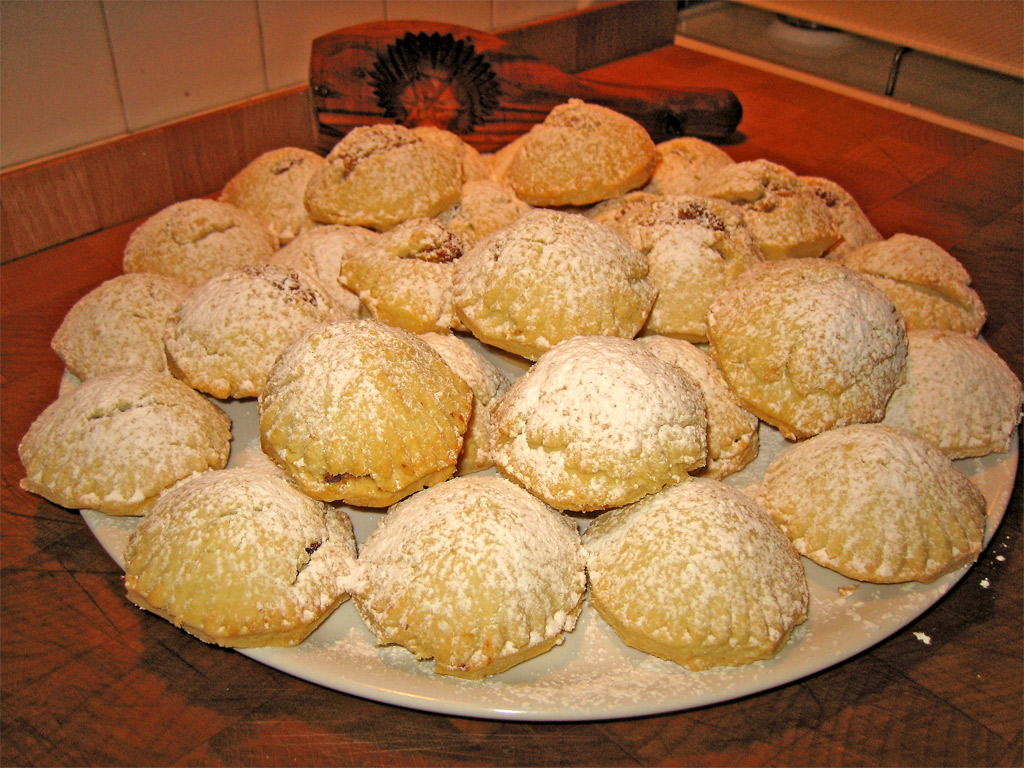 Ma'amoulVegetarianمعمول
🇸🇾 Syria and 4 moreSemolina cookies filled with dates or nuts, shaped in moulds for festive occasions
Sweet or dessert, Snacks, Tea time
Ma'amoulVegetarianمعمول
🇸🇾 Syria and 4 moreSemolina cookies filled with dates or nuts, shaped in moulds for festive occasions
Sweet or dessert, Snacks, Tea time
 BaghrirVegetarianالبغرير
🇩🇿 Algeria and 2 moreSpongy semolina pancakes from the Maghreb, full of tiny holes for soaking up sauces
Bread, Breakfast, Snacks
BaghrirVegetarianالبغرير
🇩🇿 Algeria and 2 moreSpongy semolina pancakes from the Maghreb, full of tiny holes for soaking up sauces
Bread, Breakfast, Snacks
 HareesMeat
🇦🇲 Armenia and 5 moreWheat and meat cooked to a soft, porridge-like dish for festive and religious meals
Main dish, Dinner, Lunch
HareesMeat
🇦🇲 Armenia and 5 moreWheat and meat cooked to a soft, porridge-like dish for festive and religious meals
Main dish, Dinner, Lunch
 Umm AliVegetarianأم علي
🇪🇬 Egypt and 2 moreEgyptian dessert of soaked pastry, milk, nuts and sugar, baked until golden
Sweet or dessert, Dinner, Snacks
Umm AliVegetarianأم علي
🇪🇬 Egypt and 2 moreEgyptian dessert of soaked pastry, milk, nuts and sugar, baked until golden
Sweet or dessert, Dinner, Snacks
 MalpuaVegetarian
🇮🇳 India and 3 moreSweet deep-fried pancakes from the Indian subcontinent, often dipped in syrup
Sweet or dessert, Breakfast, Snacks
MalpuaVegetarian
🇮🇳 India and 3 moreSweet deep-fried pancakes from the Indian subcontinent, often dipped in syrup
Sweet or dessert, Breakfast, Snacks
 Onde-ondeVegan
🇮🇩 Indonesia and 3 moreSweet rice flour balls with palm sugar and coconut, common in Southeast Asia
Sweet or dessert, Snacks
Onde-ondeVegan
🇮🇩 Indonesia and 3 moreSweet rice flour balls with palm sugar and coconut, common in Southeast Asia
Sweet or dessert, Snacks
 Briouatبريوات
🇲🇦 MoroccoMoroccan turnovers with sweet or savory fillings, wrapped in thin pastry
Pie or savoury pastry, Snacks
Briouatبريوات
🇲🇦 MoroccoMoroccan turnovers with sweet or savory fillings, wrapped in thin pastry
Pie or savoury pastry, Snacks
 ShiroVegan
🇪🇹 Ethiopia and 1 moreChickpea or broad bean stew, a staple in Ethiopian and Eritrean meals
Stew or curry, Lunch, Dinner
ShiroVegan
🇪🇹 Ethiopia and 1 moreChickpea or broad bean stew, a staple in Ethiopian and Eritrean meals
Stew or curry, Lunch, Dinner
Written by the Thali desk with AI assistance. Background: "Ramadan" on Wikipedia. Customs differ from family to family and place to place. If this is your tradition and we have it wrong, tell us.
Photo credits on this page
The small pictures above come from Wikimedia Commons under free licences. Some are cropped to fit.
- Jalebi: Gpkp, CC BY-SA 4.0, source
- Qamar al-Din: Galjundi7, CC BY-SA 4.0, source
- Lokma: Benreis, CC BY 3.0, source
- Samosa: kspoddar, CC BY-SA 2.0, source
- Tulumba: The original uploader was ChildofMidnight at English Wikipedia ., CC BY 2.0, source
- Harira: وهراني, CC BY-SA 3.0, source
- Korma: Miansari66, CC0, source
- Shiro: Temesgen Woldezion; edited by Merhawie Woldezion, CC BY-SA 2.5, source
- Sharbat: fa:User:دانقولا, Public domain, source
- Baghrir: Tamorlan, CC BY 3.0, source
- Briouat: Christian Muise, CC BY-SA 2.0, source
- Muhallebi: E4024, CC BY-SA 4.0, source
- Haleem: Miansari66, Public domain, source
- Borhani: DarkSpartan, CC BY-SA 4.0, source
- Kala bhuna: Dolon Prova, CC BY-SA 4.0, source
- Malpua: Senjuti Dey, CC BY-SA 4.0, source
- Börek: Silar, CC BY-SA 4.0, source
- Knafeh: elif ayse, CC BY 2.0, source
- Onde-onde: Yun Huang Yong, CC BY-SA 2.0, source
- Qatayef: Fjmustak, CC BY-SA 4.0, source
- Ma'amoul: fugzu, CC BY 2.0, source
- Kolak: Nurhafizah at English Wikipedia, CC BY-SA 3.0, source
- Harees: Krista, CC BY 2.0, source
- Rooh Afza: Divas Grover, CC BY-SA 4.0, source
- Umm Ali: روتانا, CC BY 4.0, source