
Shumai
In its own language: 烧卖 / 燒賣
Chinese dumplings filled with seasoned meat, often served as dim sum
Shumai are Chinese dumplings with a thin wrapper and a savory filling, most often ground pork, sometimes with shrimp or mushroom. Originating in China, they are a staple of Cantonese dim sum and have spread across East and Southeast Asia, with each region adapting the filling and serving style. Shumai are usually eaten as a snack or part of a meal, often with soy sauce or other dips.
- Cantonese shumai is a dim sum staple with pork, shrimp, and mushroom filling
- Hohhot shumai uses mutton, scallion, and ginger in a thin wrapper
- Indonesian siomay is made with fish and served with peanut sauce
- Japanese shūmai is topped with a green pea and uses pork and onion
- Shumai is recognized as intangible cultural heritage in Hohhot
What is Shumai?
Shumai are small, open-topped dumplings with a thin wrapper and a savory filling. The classic Cantonese version combines ground pork, shrimp, Chinese black mushroom, scallion, and ginger, seasoned with soy sauce, sesame oil, and rice wine. The wrapper is often yellow or white, made from lye water dough, and the top is sometimes decorated with crab roe, carrot, or a green pea. Other Chinese varieties use mutton, beef, or glutinous rice, with regional spices and vegetables. Shumai are steamed or sometimes pan-fried, and served hot.
Where does Shumai come from?
Shumai originated in China, with historical records showing it was first sold as a sideline in tea houses, accompanying tea. The name comes from a term meaning 'sold as a sideline.' It spread widely, especially through merchants from Shanxi, and evolved in name and form. Hohhot in Inner Mongolia and Guangzhou in Guangdong are both known for their distinct shumai traditions. The craft of making shumai in Hohhot has been recognized as a non-material cultural heritage.
How is Shumai made?
To make shumai, a thin round dough wrapper is filled with a seasoned mixture, which varies by region. Cantonese shumai typically use ground pork, shrimp, mushrooms, and aromatics, while Hohhot versions use mutton, scallion, and ginger. The filling is placed in the center, and the wrapper is gathered loosely at the top, leaving it open. The dumplings are then steamed, and sometimes pan-fried. In some places, the top is garnished for decoration.


How and when is Shumai eaten?
Shumai are most commonly eaten as part of dim sum, a meal of small dishes served with tea, especially in southern China. In Hohhot, they are a breakfast staple and can be served with vinegar and tea. In Southeast Asia, shumai is often sold as street food, sometimes with peanut sauce or chili oil. In the Philippines, it is served with soy sauce and calamansi. Shumai can be eaten with chopsticks, toothpicks, or even wrapped in bread in Vietnam.
Kinds of Shumai
Many regions have their own shumai styles. Cantonese shumai is filled with pork and shrimp, while Hohhot's uses mutton. Jiangnan shumai includes glutinous rice and pork, and Hunan's version is spicy and flower-shaped. In Japan, shūmai uses pork and onion, topped with a green pea. Indonesia's siomay is often made with fish and served with vegetables and peanut sauce. The Philippines' siomai may be steamed or fried, with various fillings.
What Shumai means
Shumai is a classic dish in Cantonese dim sum, considered one of the 'Four Heavenly Kings' alongside har gow, char siu bao, and egg tarts. In Hohhot, it is a local specialty and part of breakfast culture. Shumai is also eaten during Chinese New Year in some regions. The making of shumai in Hohhot has been recognized as part of China's intangible cultural heritage.
When Shumai is on the table
Questions people ask about Shumai
What is shumai made of?
Shumai is usually made with a thin dough wrapper filled with ground pork, sometimes shrimp, mushrooms, scallion, and ginger. Other regional versions use mutton, beef, or fish, along with various vegetables and seasonings.
Where does shumai come from?
Shumai originated in China, with notable varieties from Guangdong (Cantonese) and Hohhot, Inner Mongolia. It has spread across East and Southeast Asia, with each region adapting the recipe.
How is shumai served?
Shumai is typically steamed and served hot, often as part of dim sum with soy sauce or other dips. In some regions, it is eaten with vinegar, chili oil, or peanut sauce, and may be served as street food or with rice.
Are there vegetarian or non-pork versions of shumai?
Yes, some regional versions use mutton, beef, fish, or even glutinous rice as the main filling. Indonesian siomay, for example, is often made with fish instead of pork.
Is shumai eaten for special occasions?
Shumai is an everyday food but is also eaten during festivals like Chinese New Year in some regions. It is a key dish in dim sum culture.
Good reading and sources
The facts on this page come from the Wikipedia article "Shumai", written by its contributors and used under the CC BY-SA 4.0 licence, and from its Wikidata record (CC0). Thali rewrote the text in its own words, with AI assistance, and compares every page with the article to make sure no passage is copied. It may be reused under the same CC BY-SA 4.0 licence with a link back.
It may contain mistakes, and it is not dietary or allergy advice: recipes differ from cook to cook. If something is wrong, tell us. Last refreshed 2026-10-03.
More from China
All the food of China Chuanr串
🇨🇳 ChinaGrilled skewers of meat, seafood or vegetables from northern China
Grill or roast, Dinner, Snacks
Chuanr串
🇨🇳 ChinaGrilled skewers of meat, seafood or vegetables from northern China
Grill or roast, Dinner, Snacks
 Tofu skin roll
🇨🇳 ChinaTofu skin wrapped around a savoury filling, served steamed or fried as dim sum
Main dish, Lunch, Dinner
Tofu skin roll
🇨🇳 ChinaTofu skin wrapped around a savoury filling, served steamed or fried as dim sum
Main dish, Lunch, Dinner
 Fried rice
🇨🇳 China and 5 moreCooked rice stir-fried with eggs, vegetables, meat or seafood, and seasonings
Main dish, Breakfast, Lunch
Fried rice
🇨🇳 China and 5 moreCooked rice stir-fried with eggs, vegetables, meat or seafood, and seasonings
Main dish, Breakfast, Lunch
Its cousins elsewhere
All dumplings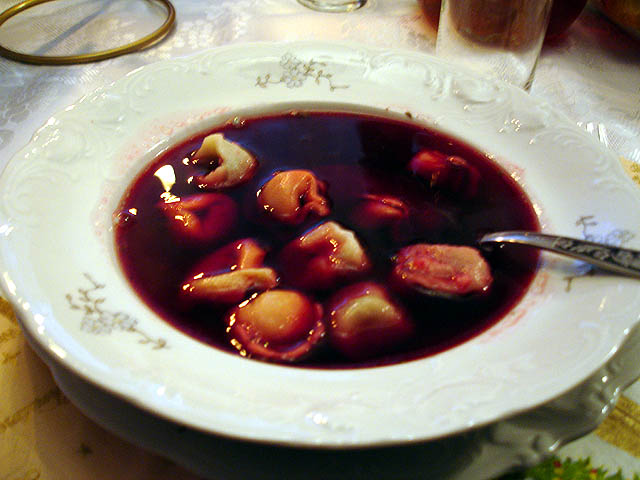 Uszka
🇵🇱 Poland and 2 moreSmall twisted dumplings filled with mushrooms or meat, often served in borscht
Dumpling, Dinner
Pierogi
🇵🇱 Poland and 6 moreDumplings of unleavened dough filled with savory or sweet mixtures
Dumpling, Lunch, Dinner
Uszka
🇵🇱 Poland and 2 moreSmall twisted dumplings filled with mushrooms or meat, often served in borscht
Dumpling, Dinner
Pierogi
🇵🇱 Poland and 6 moreDumplings of unleavened dough filled with savory or sweet mixtures
Dumpling, Lunch, Dinner
 Varenykyвареники
🇺🇦 Ukraine and 1 moreUkrainian dumplings filled with sweet or savoury ingredients
Dumpling, Lunch, Dinner
Varenykyвареники
🇺🇦 Ukraine and 1 moreUkrainian dumplings filled with sweet or savoury ingredients
Dumpling, Lunch, Dinner
 Cepelinai
🇱🇹 Lithuania and 1 moreLithuanian potato dumplings filled with meat, cheese or mushrooms
Dumpling, Lunch, Dinner
Cepelinai
🇱🇹 Lithuania and 1 moreLithuanian potato dumplings filled with meat, cheese or mushrooms
Dumpling, Lunch, Dinner