
Simnel cake
Fruitcake with a marzipan layer and marzipan balls, linked to Easter and Lent
Simnel cake is a light fruitcake from the United Kingdom, marked by a layer of marzipan in the middle and another on top, finished with eleven marzipan balls. Traditionally eaten during Lent and Easter, especially on Mothering Sunday, it includes dried fruit, spices, and candied peel. The cake is closely tied to British springtime celebrations.
- Decorated with 11 marzipan balls for the apostles, leaving out Judas
- Traditionally eaten at Easter and on Mothering Sunday in the UK
- Contains a layer of marzipan inside and on top
- Known since medieval times in England
- Includes dried fruit, spices, and candied peel
What is Simnel cake?
Simnel cake is a British fruitcake, lighter than many Christmas cakes, and filled with dried fruit, spices, and bits of candied peel. Its most distinctive feature is the use of marzipan (a sweet almond paste), which forms a layer inside the cake and a topping. Eleven small marzipan balls are arranged on top, representing the apostles except Judas. The cake is often round, with a golden-brown crust and a sweet, nutty aroma from the marzipan.
Where does Simnel cake come from?
Simnel cakes have roots going back to medieval England, with early references to a fine white bread called 'simnel.' The name likely comes from the Latin for fine flour. By the 17th century, the cake was linked to Mothering Sunday, when people visited their home churches and families, often bringing this cake as a gift. Over time, it became a symbol of Easter. There are old stories about the cake being both boiled and baked, reflecting earlier cooking methods.
How is Simnel cake made?
To make a Simnel cake, bakers combine flour, butter, eggs, sugar, spices, dried fruits, and citrus peel. A layer of marzipan is placed in the middle of the batter before baking, and another sheet of marzipan is added on top after baking. The cake is then decorated with eleven marzipan balls. Some versions use orange flower water or brandy for extra flavor. Traditionally, the cake is baked slowly to keep it moist and prevent the marzipan from burning.


How and when is Simnel cake eaten?
Simnel cake is most often enjoyed in the spring, particularly during Lent and at Easter gatherings. In the United Kingdom, it is closely linked to Mothering Sunday, when it is given as a treat or shared with family over tea. It is served sliced, often as part of a festive tea spread, and can be eaten as a snack or dessert. The marzipan balls are sometimes shared among guests.
Kinds of Simnel cake
Different regions in England developed their own Simnel cake recipes. Bury and Shrewsbury are known for their versions, with Shrewsbury’s cakes once made with saffron for a yellow color and boiled before baking. Some cakes were shaped differently or had a harder crust. Today, most Simnel cakes follow the Bury style, with the signature marzipan layers and balls.
What Simnel cake means
Simnel cake is a symbol of springtime and renewal in Britain, tied to both religious and family traditions. The marzipan balls are a visual reminder of the apostles, and the cake’s place at Easter and Mothering Sunday makes it part of annual celebrations. Its history reflects changes in British baking and customs, and it remains a familiar sight in bakeries and homes during the Easter season.
When Simnel cake is on the table
Questions people ask about Simnel cake
What is Simnel cake made of?
Simnel cake is made from flour, butter, eggs, sugar, dried fruit, spices, candied peel, and marzipan, with marzipan layers inside and on top.
Where does Simnel cake come from?
Simnel cake comes from the United Kingdom, with a long history in English baking and traditions.
When is Simnel cake usually eaten?
It is most often eaten during Lent and Easter, especially on Mothering Sunday, as part of spring celebrations.
Why are there marzipan balls on top?
The eleven marzipan balls on top stand for the apostles, leaving out Judas, as a traditional decoration.
Is Simnel cake vegetarian?
Yes, Simnel cake is vegetarian, as it contains no meat or fish, but does include eggs and dairy.
Good reading and sources
The facts on this page come from the Wikipedia article "Simnel cake", written by its contributors and used under the CC BY-SA 4.0 licence, and from its Wikidata record (CC0). Thali rewrote the text in its own words, with AI assistance, and compares every page with the article to make sure no passage is copied. It may be reused under the same CC BY-SA 4.0 licence with a link back.
It may contain mistakes, and it is not dietary or allergy advice: recipes differ from cook to cook. If something is wrong, tell us. Last refreshed 2026-10-03.
More from the United Kingdom
All the food of the United Kingdom Ice cream
🇺🇸 United States and 5 moreA frozen dessert made from sweetened, flavoured milk or cream
Sweet or dessert, Snacks
Ice cream
🇺🇸 United States and 5 moreA frozen dessert made from sweetened, flavoured milk or cream
Sweet or dessert, Snacks
 Candy
🇺🇸 United States and 5 moreSmall sweet treats made mainly from sugar or sweeteners
Sweet or dessert, Snacks
Candy
🇺🇸 United States and 5 moreSmall sweet treats made mainly from sugar or sweeteners
Sweet or dessert, Snacks
 French toast
🇫🇷 France and 5 moreBread soaked in egg and milk, pan-fried and served sweet or savoury
Main dish, Breakfast, Snacks
French toast
🇫🇷 France and 5 moreBread soaked in egg and milk, pan-fried and served sweet or savoury
Main dish, Breakfast, Snacks
 Pancake
🇺🇸 United States and 5 moreFlat cakes made from batter, cooked on a griddle or pan and served sweet or savoury
Main dish, Breakfast, Snacks
Pancake
🇺🇸 United States and 5 moreFlat cakes made from batter, cooked on a griddle or pan and served sweet or savoury
Main dish, Breakfast, Snacks
Its cousins elsewhere
All sweets and desserts Rum cakeVegetarian
🇬🇾 Guyana and 4 moreA rich cake made with rum-soaked fruits, enjoyed at holidays and celebrations
Sweet or dessert
Rum cakeVegetarian
🇬🇾 Guyana and 4 moreA rich cake made with rum-soaked fruits, enjoyed at holidays and celebrations
Sweet or dessert
 Love cakeVegetarian
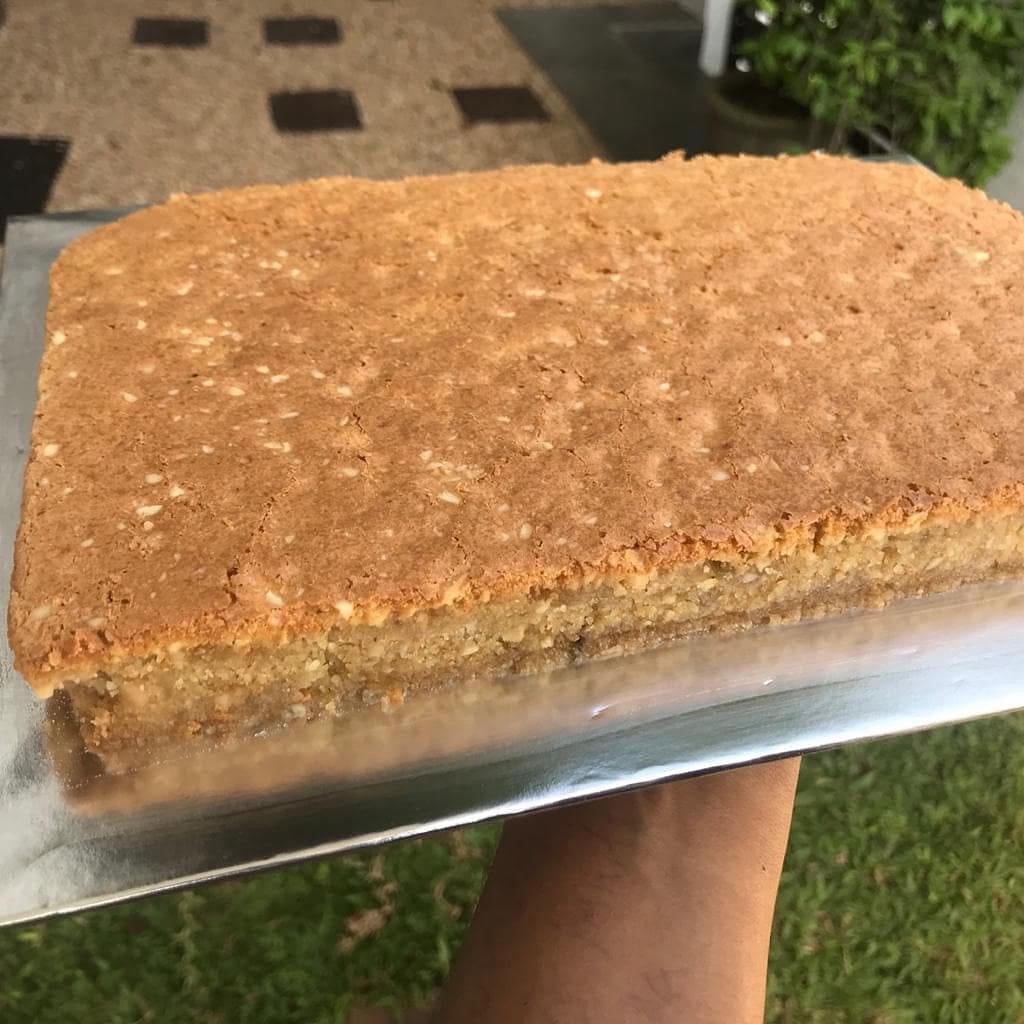
🇱🇰 Sri LankaSri Lankan semolina cake with cashews, pumpkin preserve, and aromatic spices
Sweet or dessert
Love cakeVegetarian
🇱🇰 Sri LankaSri Lankan semolina cake with cashews, pumpkin preserve, and aromatic spices
Sweet or dessert
 Chocolate brownieVegetarianBrownie
🇺🇸 United States and 2 moreDense chocolate squares baked as a bar, often served warm or with toppings
Sweet or dessert, Snacks, Tea time
Chocolate brownieVegetarianBrownie
🇺🇸 United States and 2 moreDense chocolate squares baked as a bar, often served warm or with toppings
Sweet or dessert, Snacks, Tea time
 Boortsog
🇰🇿 Kazakhstan and 5 moreGolden fried dough pieces from Central Asia and Mongolia, often served with tea or honey
Sweet or dessert, Snacks, Tea time
Boortsog
🇰🇿 Kazakhstan and 5 moreGolden fried dough pieces from Central Asia and Mongolia, often served with tea or honey
Sweet or dessert, Snacks, Tea time