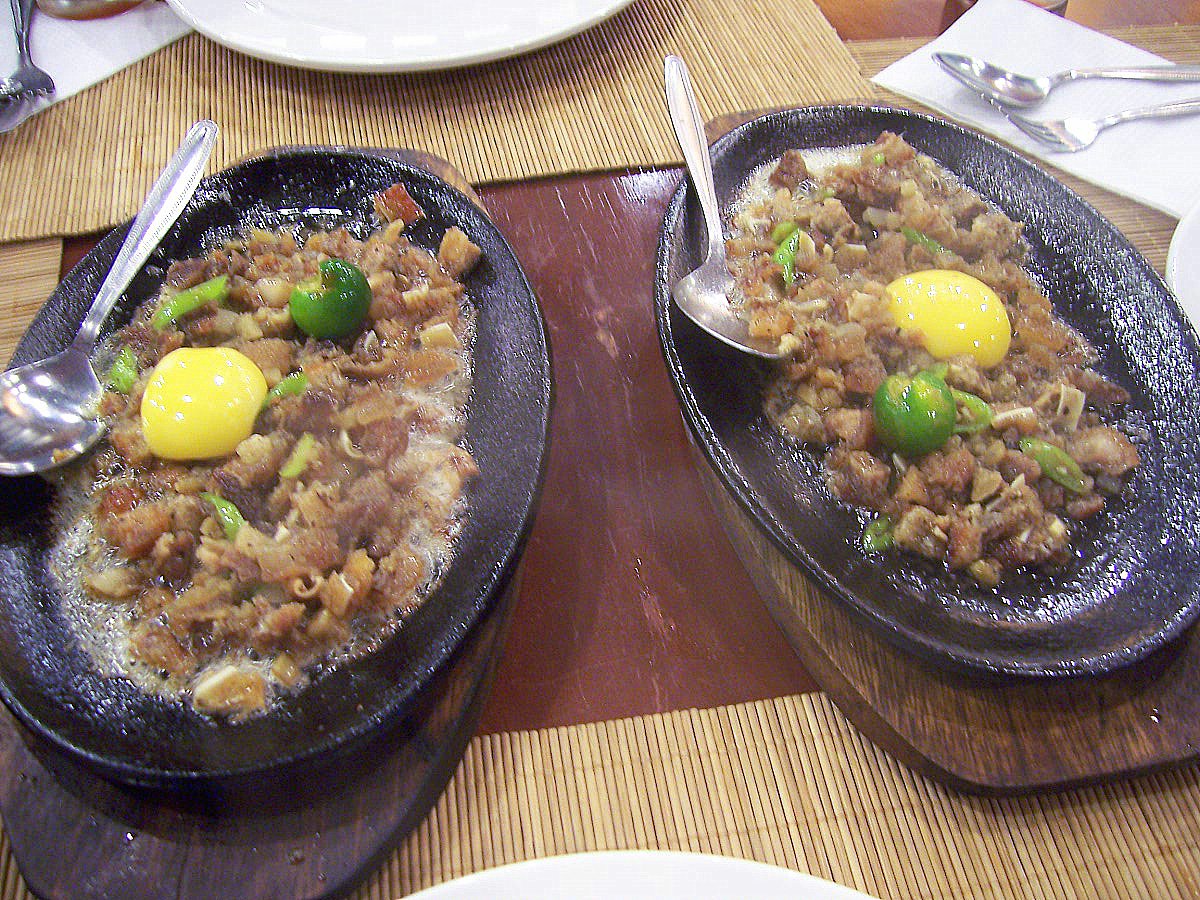
Sisig
In its own language: sísig
Chopped grilled pork, onions and chili served sizzling hot
Sisig is a Filipino dish from Pampanga, made with chopped pork jowl and ears, onions, and chili, often seasoned with calamansi. Traditionally served on a sizzling plate, it is a mainstay of Kapampangan cuisine and has inspired many variations using other meats or seafood.
- Sisig is a specialty of Pampanga in the Philippines
- Made from grilled pork jowl and ears, onions, and chili
- Traditionally served sizzling hot on a metal plate
- Lucia Cunanan popularized the modern version in Angeles
- Celebrated with an annual Sisig Festival in Angeles
What is Sisig?
Sisig is a dish of chopped pork, usually from the pig’s jowl and ears, mixed with onions and chili. The meat is grilled or broiled, then combined with seasonings like calamansi (a citrus fruit) and vinegar. It is served hot, often on a sizzling metal plate, which crisps the meat and releases a savory aroma. The taste is tangy, spicy, and rich, with a mix of textures from the tender pork and crunchy onions.
Where does Sisig come from?
Sisig comes from Pampanga in the Philippines and is central to Kapampangan cooking. The word 'sisig' was first recorded in 1732, describing a sour salad of green fruit with vinegar. Over time, the term shifted to mean a method of preparing meat or fish with a sour marinade. The modern sizzling pork version is credited to Lucia Cunanan of Angeles, who popularized it in the 1970s using grilled pig’s head, a cut made available by nearby US military bases.
How is Sisig made?
To make sisig, pork head parts are first boiled to remove hair and soften the meat. The jowl and ears are then grilled or broiled for a smoky flavor, chopped into small pieces, and mixed with onions, chili, and sometimes chicken liver. The mixture is seasoned with calamansi juice and vinegar, then served on a hot plate. Some versions add eggs, mayonnaise, or pork cracklings, but these are not traditional.


How and when is Sisig eaten?
Sisig is enjoyed as a main dish or snack, often shared at gatherings or with drinks. It is usually brought to the table sizzling hot, sometimes topped with an egg that cooks in the heat of the plate. People eat it with rice or as a bar snack. In Pampanga, it is a point of pride and a symbol of local food culture, featured at festivals and family meals.
Kinds of Sisig
While pork is the classic base, sisig now appears in many forms. Chicken, beef, squid, tuna, and even tofu are used as alternatives. Some cooks add eggs, ox brain, or mayonnaise, though purists in Pampanga prefer the original pork and simple seasonings. Sisig has also been adapted as a salad, taco filling, or even as a topping for other dishes.
What Sisig means
Sisig is celebrated in Angeles with an annual festival and has been declared a tangible heritage of the city. The dish is a symbol of Kapampangan creativity and resilience, with its roots in making use of less popular pork cuts. Sisig Day is marked on January 3, and the Sisig Festival features cooking contests and showcases the dish’s many forms.
Questions people ask about Sisig
What is sisig made of?
Sisig is made from chopped pork jowl and ears, mixed with onions, chili, and seasoned with calamansi and vinegar. Some versions include chicken liver or other additions, but the classic recipe focuses on pork and fresh aromatics.
Where does sisig come from?
Sisig comes from Pampanga, a region in Luzon, Philippines. It is a central part of Kapampangan cuisine and is especially associated with the city of Angeles.
How is sisig served?
Sisig is usually served hot on a sizzling metal plate, which crisps the pork and keeps the dish warm. It is often enjoyed with rice or as a snack with drinks.
Are there different types of sisig?
Yes, while pork is traditional, there are versions made with chicken, beef, squid, tuna, or tofu. Some modern recipes add eggs, mayonnaise, or pork cracklings, though these are not part of the original style.
Is sisig eaten for special occasions?
Sisig is eaten both as an everyday dish and during festivals. Angeles City hosts an annual Sisig Festival, and January 3 is celebrated as Sisig Day.
Good reading and sources
The facts on this page come from the Wikipedia article "Sisig", written by its contributors and used under the CC BY-SA 4.0 licence, and from its Wikidata record (CC0). Thali rewrote the text in its own words, with AI assistance, and compares every page with the article to make sure no passage is copied. It may be reused under the same CC BY-SA 4.0 licence with a link back.
It may contain mistakes, and it is not dietary or allergy advice: recipes differ from cook to cook. If something is wrong, tell us. Last refreshed 2026-10-03.
More from the Philippines
All the food of the Philippines SpaghettiVegan
🇮🇹 Italy and 2 moreLong, thin pasta strands made from durum wheat and water
Noodle or pasta dish, Lunch, Dinner
SpaghettiVegan
🇮🇹 Italy and 2 moreLong, thin pasta strands made from durum wheat and water
Noodle or pasta dish, Lunch, Dinner
 Paella
🇪🇸 Spain and 1 moreRice cooked with meat, seafood or vegetables in a wide shallow pan from Valencia
Main dish, Lunch
Paella
🇪🇸 Spain and 1 moreRice cooked with meat, seafood or vegetables in a wide shallow pan from Valencia
Main dish, Lunch
 Rice pudding
🇮🇳 India and 4 moreSweetened rice cooked in milk, found in many forms worldwide
Sweet or dessert, Breakfast, Lunch
Rice pudding
🇮🇳 India and 4 moreSweetened rice cooked in milk, found in many forms worldwide
Sweet or dessert, Breakfast, Lunch
 Oxtail stewMeat
🇮🇹 Italy and 4 moreStew made with oxtail, found in many world cuisines
Stew or curry, Lunch, Dinner
Oxtail stewMeat
🇮🇹 Italy and 4 moreStew made with oxtail, found in many world cuisines
Stew or curry, Lunch, Dinner
Its cousins elsewhere
All main dishes Hot dogMeat
🇺🇸 United States and 2 moreA sausage in a sliced bun, topped with condiments and eaten hot
Street food, Lunch, Dinner
Hot dogMeat
🇺🇸 United States and 2 moreA sausage in a sliced bun, topped with condiments and eaten hot
Street food, Lunch, Dinner
 SauerbratenMeat
🇩🇪 Germany and 1 moreGerman pot roast marinated in vinegar or wine and spices, served with rich gravy
Main dish, Dinner, Lunch
Lomo saltadoMeat
🇵🇪 PeruPeruvian stir-fried beef with onions, tomatoes, fries and rice
Main dish, Lunch, Dinner
SauerbratenMeat
🇩🇪 Germany and 1 moreGerman pot roast marinated in vinegar or wine and spices, served with rich gravy
Main dish, Dinner, Lunch
Lomo saltadoMeat
🇵🇪 PeruPeruvian stir-fried beef with onions, tomatoes, fries and rice
Main dish, Lunch, Dinner
 Locro
🇦🇷 Argentina and 5 moreA thick Andean stew of squash, corn, potato and meat, eaten across South America
Stew or curry, Lunch, Dinner
Locro
🇦🇷 Argentina and 5 moreA thick Andean stew of squash, corn, potato and meat, eaten across South America
Stew or curry, Lunch, Dinner