
Stroganina
In its own language: строганина
Frozen raw fish sliced thin and served cold in Arctic Russia
Stroganina is a specialty from northern Russia and Arctic Siberia, made by slicing frozen freshwater fish into thin ribbons. It is eaten raw and cold, especially among native Siberian groups, and is most often prepared from fish like nelma, muksun, chir, or omul caught in icy waters.
- Made from raw, thin-sliced frozen fish
- Popular among native Siberian peoples
- Usually served with salt and black pepper
- Eaten by hand while still frozen
- Yakutsk hosts festivals for stroganina
What is Stroganina?
Stroganina is a dish of thin, curling strips of frozen raw fish, served cold and eaten by hand. The fish used are typically freshwater species from Siberian Arctic rivers, such as nelma, muksun, chir, and omul. Sometimes sturgeon or, in Kaliningrad, Sarda is used. The slices are delicate and icy, with a clean taste that highlights the freshness of the fish. Salt and black pepper are usually sprinkled on top just before eating.
Where does Stroganina come from?
This dish comes from the northern regions of Russia and Arctic Siberia, where cold climates and ice fishing shape local food traditions. Stroganina is especially common among indigenous Siberian peoples and is part of Yakutian, Komi, Eskimo, and Yamal cuisines. Around Lake Baikal, it is called raskolotka. Its preparation and enjoyment are closely linked to the availability of fresh, frozen fish during the late autumn and winter.
How is Stroganina made?
To make stroganina, fish caught by ice fishing are quickly frozen whole, sometimes glazed with cold water to protect the flesh. The skin is removed in strips from the back and belly, and the fillet is sliced lengthwise into long, thin ribbons using a sharp knife. The slices are cut while the fish is still frozen, and are served immediately on chilled, non-metallic plates or in cold bowls to keep them from thawing.
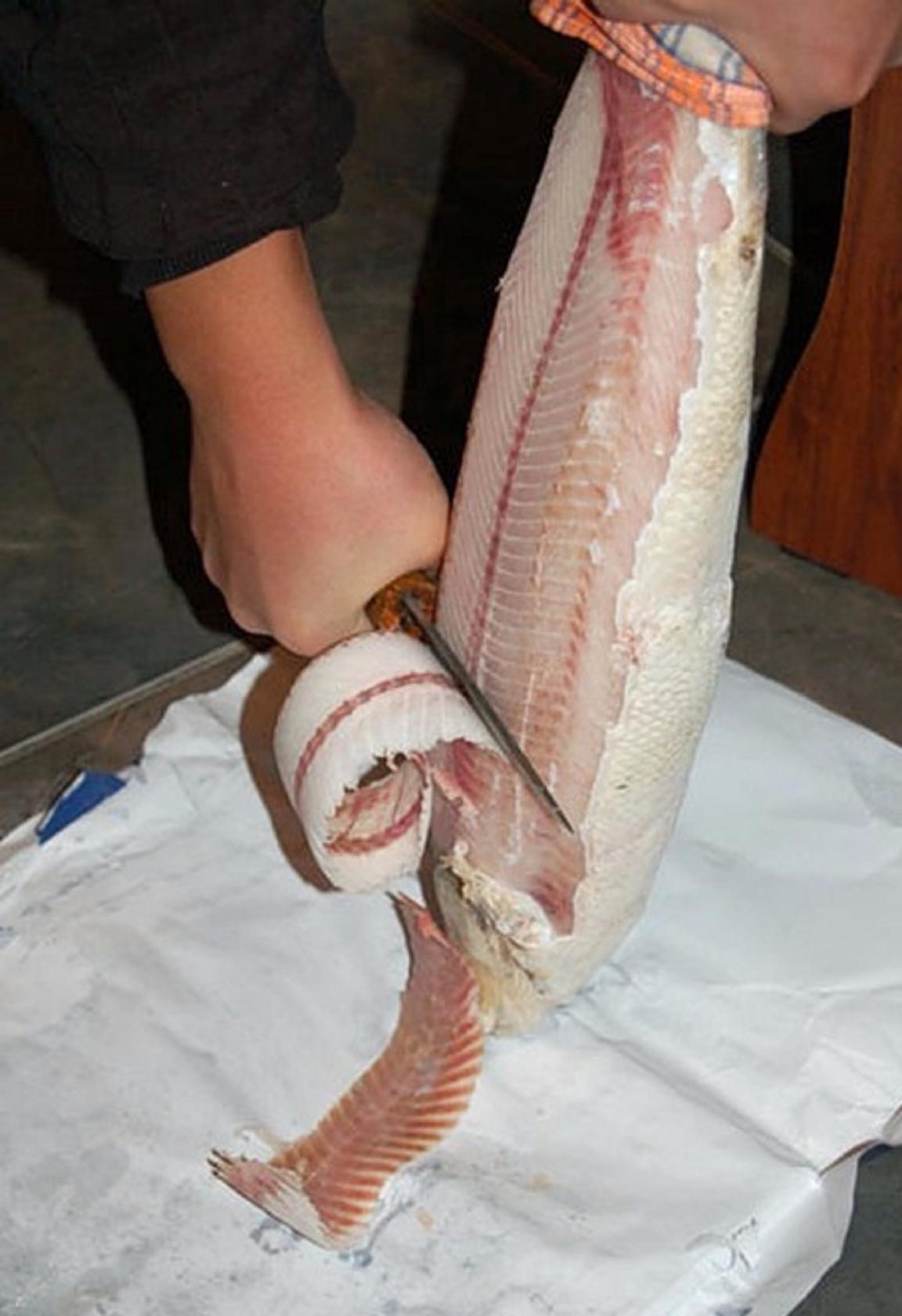
How and when is Stroganina eaten?
Stroganina is eaten as soon as it is sliced, while still frozen. It is typically served with a pinch of salt and black pepper, and is picked up and eaten by hand. The dish is a regular part of meals in northern Siberia, especially in communities near rivers and lakes. It is enjoyed for its freshness and simplicity, often as a shared food among family or friends.
Kinds of Stroganina
Some versions use reindeer meat instead of fish, but the most common stroganina is made with Arctic fish. Another variation, called milky stroganina, combines frozen fish with fresh frozen milk. In Kaliningrad, a local fish called Sarda is used. The name stroganina can refer to any similar preparation using thinly sliced frozen meat or fish.
What Stroganina means
Stroganina is celebrated in Yakutsk with festivals dedicated to this local delicacy. It is a symbol of northern Russian and Siberian food culture, and some restaurants, like the Stroganina Bar in Moscow, specialize in serving it. The dish is a point of regional pride and reflects the resourcefulness of Arctic communities.
Questions people ask about Stroganina
What is stroganina made of?
Stroganina is made from frozen freshwater fish, most often nelma, muksun, chir, or omul. The fish is sliced thin while still frozen and served raw, usually with salt and black pepper.
Where does stroganina come from?
Stroganina comes from northern Russia and Arctic Siberia. It is a traditional food among indigenous peoples in these regions and is especially common in Yakutian, Komi, Eskimo, and Yamal cuisines.
How is stroganina prepared?
The fish is caught and frozen whole, then skinned and sliced into long, thin ribbons while still frozen. The slices are served immediately on cold plates or bowls to keep them icy.
How is stroganina eaten?
Stroganina is eaten raw and cold, picked up by hand, and usually sprinkled with salt and black pepper just before eating.
Are there different kinds of stroganina?
Yes, besides the classic fish version, there are types made with reindeer meat or with frozen milk added. Around Lake Baikal, it is called raskolotka.
Good reading and sources
The facts on this page come from the Wikipedia article "Stroganina", written by its contributors and used under the CC BY-SA 4.0 licence, and from its Wikidata record (CC0). Thali rewrote the text in its own words, with AI assistance, and compares every page with the article to make sure no passage is copied. It may be reused under the same CC BY-SA 4.0 licence with a link back.
It may contain mistakes, and it is not dietary or allergy advice: recipes differ from cook to cook. If something is wrong, tell us. Last refreshed 2026-10-03.
More from Russia
All the food of Russia Pancake
🇺🇸 United States and 5 moreFlat cakes made from batter, cooked on a griddle or pan and served sweet or savoury
Main dish, Breakfast, Snacks
Pancake
🇺🇸 United States and 5 moreFlat cakes made from batter, cooked on a griddle or pan and served sweet or savoury
Main dish, Breakfast, Snacks
 Pelmeniпельмени
🇷🇺 RussiaRussian dumplings filled with seasoned meat and wrapped in thin dough
Dumpling, Lunch, Dinner
Pelmeniпельмени
🇷🇺 RussiaRussian dumplings filled with seasoned meat and wrapped in thin dough
Dumpling, Lunch, Dinner
 MeatballMeat
🇮🇹 Italy and 5 moreGround meat shaped into balls and cooked by frying, baking, or braising in sauce
Main dish, Lunch, Dinner
MeatballMeat
🇮🇹 Italy and 5 moreGround meat shaped into balls and cooked by frying, baking, or braising in sauce
Main dish, Lunch, Dinner
 Pâté
🇫🇷 France and 5 moreA smooth or coarse spread made from minced meat, liver, or vegetables
Sauce, pickle or ferment
Pâté
🇫🇷 France and 5 moreA smooth or coarse spread made from minced meat, liver, or vegetables
Sauce, pickle or ferment
Its cousins elsewhere
All main dishes KebapcheMeatкебапче
🇧🇬 BulgariaGrilled minced meat shaped like a sausage, a staple in Bulgaria
Grill or roast, Lunch, Dinner
KebapcheMeatкебапче
🇧🇬 BulgariaGrilled minced meat shaped like a sausage, a staple in Bulgaria
Grill or roast, Lunch, Dinner
 QifqiVegetarian
🇦🇱 AlbaniaHerbed rice balls from Gjirokastër, shaped and fried in a special pan
Main dish, Lunch, Dinner
QifqiVegetarian
🇦🇱 AlbaniaHerbed rice balls from Gjirokastër, shaped and fried in a special pan
Main dish, Lunch, Dinner
 CarbonaraMeatpasta alla carbonara
🇮🇹 Italy and 1 morePasta tossed with eggs, hard cheese, cured pork and black pepper
Main dish, Lunch, Dinner
CarbonaraMeatpasta alla carbonara
🇮🇹 Italy and 1 morePasta tossed with eggs, hard cheese, cured pork and black pepper
Main dish, Lunch, Dinner
 PljeskavicaMeatпљескавица
🇷🇸 Serbia and 5 moreGrilled Balkan patty of spiced minced meats, served hot with sides or in flatbread
Main dish, Lunch, Dinner
PljeskavicaMeatпљескавица
🇷🇸 Serbia and 5 moreGrilled Balkan patty of spiced minced meats, served hot with sides or in flatbread
Main dish, Lunch, Dinner