
Surimi
In its own language: 擂り身
Cured and seasoned fish paste shaped to imitate shellfish
Surimi is a seasoned paste made from washed, finely ground fish or meat that cures into an elastic gel when heated. Originating in Japan, it forms the basis of everyday fishcakes, soups, and shellfish substitutes across East Asia and worldwide markets.
- First documented in Japan around 1115 to produce kamaboko loaves
- Between two and three percent of the global fishing catch is turned into surimi
- Heating activates fish muscle proteins, creating a firm and bouncy gel texture
- Adding sugars and sorbitol prevents frozen fish paste from losing its elasticity
What is Surimi?
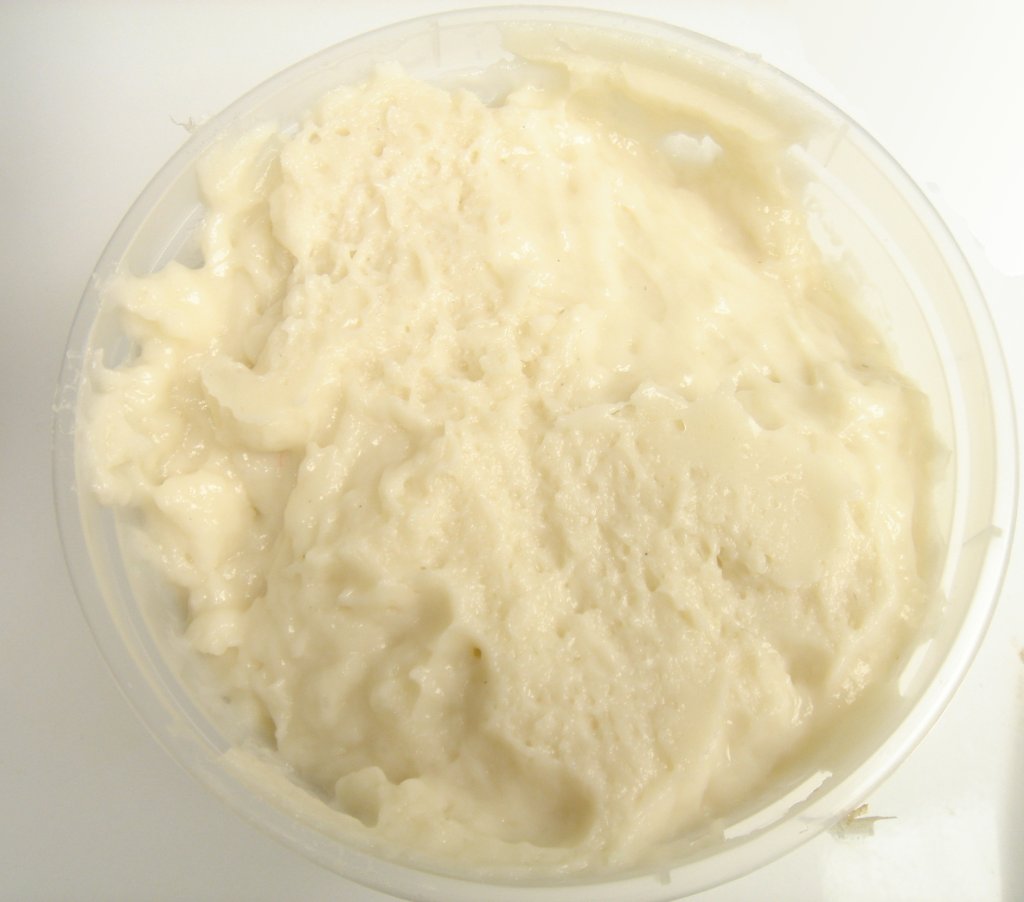
Surimi is a thick, pale paste created by grinding lean fish flesh or other meats. In its raw form, it has a smooth, pliable consistency. When cooked, the proteins knit together, producing a firm, springy texture that holds distinct shapes. The paste itself has a mild, clean seafood taste and carries little fat. Manufacturers frequently tint the outer surface with red dye or season the interior to resemble genuine seafood like crab, lobster, or eel. Beyond imitation shellfish, it appears in everyday cooking as steamed loaves, skewered rounds, or hollow cylinders with a gentle chew.
Where does Surimi come from?
Japanese cooks were already turning minced fish into steamed loaves known as kamaboko as early as 1115. Fish pastes also developed early across China, where cooks pounded fillets for broths and round dumplings. In northern Japan, massive post-war hauls of Alaska pollock taken for their roe produced huge piles of surplus meat. To prevent the fish from turning mushy upon freezing, researchers in Hokkaido discovered that blending salt into the paste protected its texture. By 1969, scientists introduced sugars and sorbitol to safeguard the proteins even better, which allowed factory ships to process and freeze catches directly at sea.
How is Surimi made?
Filleted white fish, most commonly Alaska pollock, is repeatedly washed in cold water to strip away fats and unwanted minerals. Machines press out moisture to leave behind concentrated, protein-rich muscle. Workers blend this clean mince with curing agents like salt, as well as cryoprotectants such as sugar or sorbitol to stabilize the proteins for cold storage. When prepared for market, food makers shape the paste into logs, sticks, or noodles, sometimes blending in polyphosphate for extra elasticity. Applying heat causes the fish myosin proteins to knit into a dense, resilient gel.


How and when is Surimi eaten?
Across East Asia, surimi appears in quick lunches, slow-simmered hot pots, and evening snacks. Chinese cooks drop buoyant surimi spheres into bowls of clear noodle soup or stir them into thick broths called geng. In Japan, slices of cured loaves accompany soba noodles, fill lunch boxes, or simmer alongside radishes in warm winter broths. Western diners most often encounter surimi pre-cooked and chilled, shredded into cold salad spreads, tucked inside sushi rolls, or enjoyed straight from the package as a light snack.
Kinds of Surimi
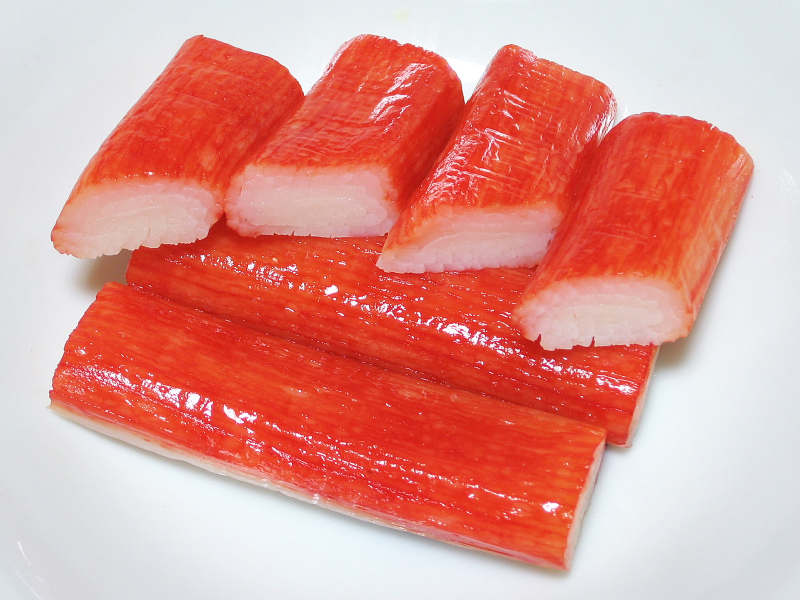
Before modern freezing arose, Japanese makers crafted distinct regional styles like cylindrical chikuwa, fluffy hanpen puffed with mountain yam, and fried satsumaage patties. Chinese regional cooking features bouncy fish balls, historically kept tender with borax before strict bans prompted modern phosphate alternatives. In the 1970s, Japanese manufacturers invented imitation crab sticks. These red-edged, pull-apart sticks spread worldwide, eventually prompting British regulators to mandate the neutral label of seafood sticks because the recipe contains no actual crustacean.
What Surimi means
Surimi represents an immense branch of global food production, utilizing two to three percent of the world fishery catch every year. In post-war Japan, surimi sausages provided affordable, shelf-stable protein for growing cities. Although consumer preference later drifted toward imported beef and pork, surimi remains deeply rooted in traditional street markets and holiday platters. In recent decades, soaring raw material costs and shifts in generational eating habits led older artisan makers to close, encouraging modern factories to upgrade recovery systems and reduce food waste.
Questions people ask about Surimi
What is surimi made of?
Surimi is made primarily from washed, finely minced fish fillets, most often Alaska pollock, though other meats can be used. Salt, sugars like sucrose or sorbitol, and phosphates are mixed in to bind moisture and stabilize the protein.
Where does surimi come from?
Surimi originates in Japan, where records of fish paste date to 1115. Ground fish traditions also developed early in China. Modern industrial frozen surimi techniques were perfected in Hokkaido during the mid-twentieth century.
Does surimi contain real crab?
Surimi-based crab sticks do not contain real crab. They are made from white fish meat seasoned, molded, and tinted red to imitate the color, texture, and flavor of crustacean meat.
Why does surimi have a bouncy texture?
Washing the fish concentrates myosin, a muscle protein. When the salted paste is heated, these proteins link into an elastic gel network that produces a characteristic springy bite.
Good reading and sources
The facts on this page come from the Wikipedia article "Surimi", written by its contributors and used under the CC BY-SA 4.0 licence, and from its Wikidata record (CC0). EveryThali rewrote the text in its own words, with AI assistance, and compares every page with the article to make sure no passage is copied. It may be reused under the same CC BY-SA 4.0 licence with a link back.
It may contain mistakes, and it is not dietary or allergy advice: recipes differ from cook to cook. If something is wrong, tell us. Last refreshed 2026-10-04.
More from Japan
All the food of Japan TeaVegan茶
🇨🇳 China and 5 moreA drink made by soaking tea leaves in hot or cold water
Drink
TeaVegan茶
🇨🇳 China and 5 moreA drink made by soaking tea leaves in hot or cold water
Drink
 Pizza
🇮🇹 Italy and 4 moreFlatbread topped with tomato, cheese and baked at high heat
Main dish, Lunch, Dinner
Pizza
🇮🇹 Italy and 4 moreFlatbread topped with tomato, cheese and baked at high heat
Main dish, Lunch, Dinner
 Ice cream
🇺🇸 United States and 5 moreA frozen dessert made from sweetened, flavoured milk or cream
Sweet or dessert, Snacks
Ice cream
🇺🇸 United States and 5 moreA frozen dessert made from sweetened, flavoured milk or cream
Sweet or dessert, Snacks
 Sushi寿司
🇯🇵 JapanVinegared rice with seafood, vegetables or other toppings, from Japan
Main dish, Lunch, Dinner
Sushi寿司
🇯🇵 JapanVinegared rice with seafood, vegetables or other toppings, from Japan
Main dish, Lunch, Dinner
Its cousins elsewhere
All sausages and cured foods Corned beefMeat
🇮🇪 Ireland and 5 moreSalt-cured beef, often pink, eaten fresh or canned in many countries
Main dish, Breakfast, Lunch
Corned beefMeat
🇮🇪 Ireland and 5 moreSalt-cured beef, often pink, eaten fresh or canned in many countries
Main dish, Breakfast, Lunch
 Pickled herringFish or seafood
🇳🇱 Netherlands and 5 moreHerring preserved in salt and vinegar, eaten across Northern and Eastern Europe
Sausage or cured food, Snacks, Lunch
Pickled herringFish or seafood
🇳🇱 Netherlands and 5 moreHerring preserved in salt and vinegar, eaten across Northern and Eastern Europe
Sausage or cured food, Snacks, Lunch
 SaucissonMeat
🇫🇷 France and 1 moreThick, dry-cured French sausage made mostly from pork
Sausage or cured food, Snacks
SaucissonMeat
🇫🇷 France and 1 moreThick, dry-cured French sausage made mostly from pork
Sausage or cured food, Snacks
 Longaniza
🇪🇸 Spain and 5 moreA seasoned sausage with many regional styles across Spain, Latin America, and the Philippines
Sausage or cured food, Breakfast, Lunch
Longaniza
🇪🇸 Spain and 5 moreA seasoned sausage with many regional styles across Spain, Latin America, and the Philippines
Sausage or cured food, Breakfast, Lunch