Guagua de pan
Sweet bread shaped like a child, made for ancestral Andean festivals
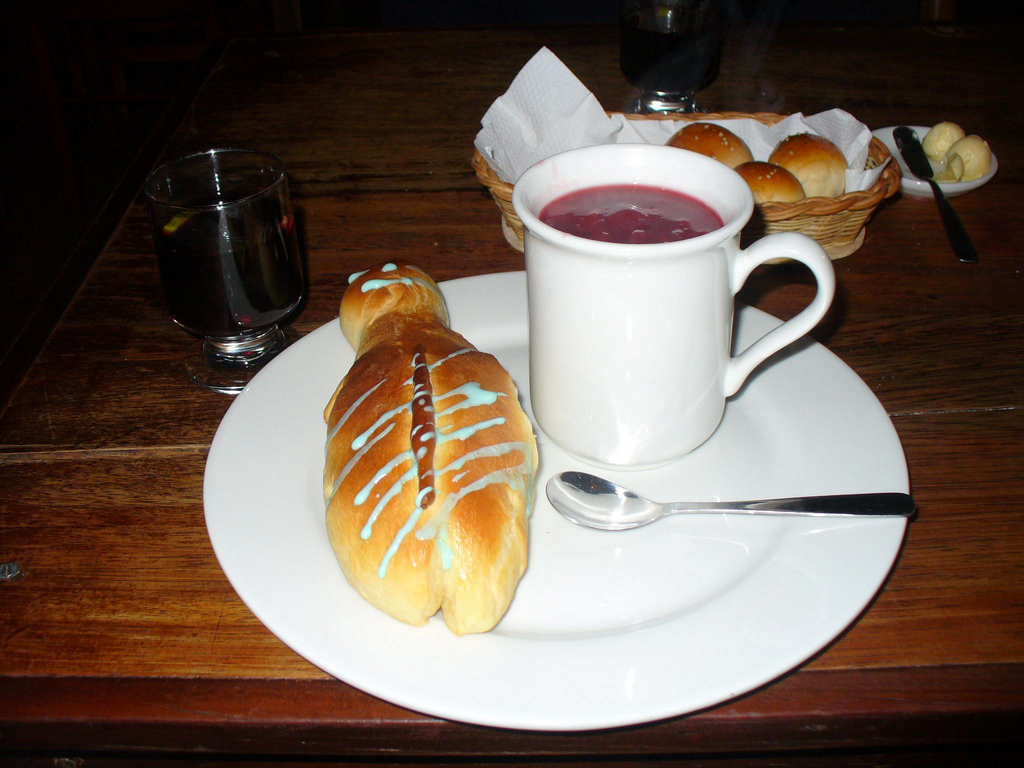
Guagua de pan is a sweet bread from the Andes, shaped and decorated to look like a child. It is made mainly from wheat flour and sometimes has a sweet filling. This bread is prepared and shared during All Souls' Day and other festivals in Ecuador, Peru, and Bolivia, often as part of family and community rituals.
- Bread shaped and decorated to look like a child
- Made for All Souls' Day and other Andean festivals
- Often exchanged among families and given to godchildren
- Sometimes filled with something sweet
- Served with colada morada in Ecuador
What is Guagua de pan?
Guagua de pan is a sweet bread shaped and decorated to resemble a small child or baby. The dough is made mainly from wheat flour and may have a sweet filling inside. The surface is often decorated with colorful icing or other adornments to highlight the figure. These breads are usually medium-sized and easily recognized by their human-like shape. The taste is sweet, and the bread is soft, sometimes with a hint of the filling inside.
Where does Guagua de pan come from?
This bread comes from the Andean regions of Ecuador, Peru, and Bolivia. Its name comes from the Aymara and Quechua words for 'bread' and 'child.' The tradition of making bread in the shape of a child is tied to ancestral rites and has been part of local customs for generations. It is especially linked to All Souls' Day, when families honor and remember their ancestors, but is also present at other festivals.
How is Guagua de pan made?
The dough is prepared from wheat flour, sometimes enriched with a sweet filling. It is shaped by hand into a figure that resembles a child, then decorated with icing or colored toppings to create facial features and clothing. The breads are baked until soft and lightly golden. The decoration is an important part of the process, making each bread unique and festive.
How and when is Guagua de pan eaten?
Guagua de pan is eaten during All Souls' Day and other festivals. In Ecuador, it is often served with colada morada, a spiced purple drink. Families make the bread at home, exchange it with friends and relatives, and give it to godchildren. In some rural areas, the bread is used as an offering at cemeteries during ceremonies to honor ancestors.
Kinds of Guagua de pan
Different regions have their own styles of guagua de pan. In Ecuador, the bread is widely made and exchanged, and is part of ceremonies in indigenous communities. In Peru, it is especially popular in regions like Ayacucho, Junin, and Cusco. The shape, size, and decoration can vary, as can the type of sweet filling used.
What Guagua de pan means
Guagua de pan is more than just a food; it is a symbol of remembrance and community. It plays a central role in ancestral rites and is closely tied to the celebration of All Souls' Day. The act of making, sharing, and offering the bread helps connect families and communities with their heritage and with each other.
When Guagua de pan is on the table
Questions people ask about Guagua de pan
What is guagua de pan made of?
It is made mainly from wheat flour and sometimes contains a sweet filling. The dough is shaped and decorated to look like a child.
Where does guagua de pan come from?
Guagua de pan comes from the Andean regions of Ecuador, Peru, and Bolivia, where it is tied to ancestral and festival traditions.
When is guagua de pan eaten?
It is mostly eaten during All Souls' Day, but also appears at agricultural festivals, carnivals, and Christmas.
How is guagua de pan served?
In Ecuador, it is often served with colada morada, a spiced purple drink. It is shared among family and friends and sometimes offered at cemeteries.
Why is guagua de pan shaped like a child?
The bread is shaped like a child as part of ancestral rites, symbolizing remembrance and connection with ancestors.
Good reading and sources
The facts on this page come from the Wikipedia article "T'anta wawa", written by its contributors and used under the CC BY-SA 4.0 licence, and from its Wikidata record (CC0). Thali rewrote the text in its own words, with AI assistance, and compares every page with the article to make sure no passage is copied. It may be reused under the same CC BY-SA 4.0 licence with a link back.
It may contain mistakes, and it is not dietary or allergy advice: recipes differ from cook to cook. If something is wrong, tell us. Last refreshed 2026-10-03.
More from Ecuador
All the food of Ecuador Chocolate
🇨🇮 Ivory Coast and 5 moreA sweet or bitter food made from processed cocoa beans, enjoyed in many forms worldwide
Sweet or dessert, Snacks
Chocolate
🇨🇮 Ivory Coast and 5 moreA sweet or bitter food made from processed cocoa beans, enjoyed in many forms worldwide
Sweet or dessert, Snacks
 Arepa
🇨🇴 Colombia and 5 moreCornmeal flatbread from Colombia and Venezuela, often split and filled
Bread, Breakfast, Lunch
Arepa
🇨🇴 Colombia and 5 moreCornmeal flatbread from Colombia and Venezuela, often split and filled
Bread, Breakfast, Lunch
 HorchataVegan
🇪🇸 Spain and 5 moreSweet plant-based drink made from rice, tiger nuts or seeds
Drink, Snacks
HorchataVegan
🇪🇸 Spain and 5 moreSweet plant-based drink made from rice, tiger nuts or seeds
Drink, Snacks
 PachamancaMeat
🇵🇪 Peru and 1 moreAndean meats and vegetables slow-cooked with hot stones in an earthen oven
Main dish, Lunch, Dinner
PachamancaMeat
🇵🇪 Peru and 1 moreAndean meats and vegetables slow-cooked with hot stones in an earthen oven
Main dish, Lunch, Dinner
Its cousins elsewhere
All sweets and desserts Doughnut
🇺🇸 United States and 5 moreSweet fried or baked rings or balls, often glazed or filled
Sweet or dessert, Breakfast, Snacks
Doughnut
🇺🇸 United States and 5 moreSweet fried or baked rings or balls, often glazed or filled
Sweet or dessert, Breakfast, Snacks
 Crêpe
🇫🇷 FranceThin French pancakes, served sweet or savoury with a range of fillings
Main dish, Breakfast, Lunch
Crêpe
🇫🇷 FranceThin French pancakes, served sweet or savoury with a range of fillings
Main dish, Breakfast, Lunch
 Cinnamon rollVegetarian
🇸🇪 Sweden and 4 moreA sweet rolled bun with cinnamon and sugar, baked and often topped with icing
Sweet or dessert, Breakfast, Tea time
Cinnamon rollVegetarian
🇸🇪 Sweden and 4 moreA sweet rolled bun with cinnamon and sugar, baked and often topped with icing
Sweet or dessert, Breakfast, Tea time
 Pain au chocolatVegetarian
🇫🇷 France and 2 moreA flaky pastry filled with bars of dark chocolate
Pie or savoury pastry, Breakfast, Snacks
Pain au chocolatVegetarian
🇫🇷 France and 2 moreA flaky pastry filled with bars of dark chocolate
Pie or savoury pastry, Breakfast, Snacks