
Uttapam
A thick South Indian pancake topped with vegetables
Uttapam is a South Indian dish made from a fermented batter of rice and urad dal, cooked thick and topped with vegetables. Unlike the crisp dosa, uttapam is soft and pancake-like, often served for breakfast with sambar and chutney in Tamil Nadu and other southern regions of India.
- Uttapam is a thick, savory pancake from South India
- Made from fermented rice and urad dal batter
- Topped with vegetables like onion, tomato, and chilli
- Mentioned in ancient Tamil literature
- Usually served with sambar and chutney
What is Uttapam?
Uttapam is a thick, round pancake from South India, made with a fermented batter of rice and urad dal (a type of split lentil). It is cooked on a flat pan and topped with chopped vegetables such as onion, tomato, green chilli, and capsicum. The finished uttapam is golden on the outside and soft inside, with the toppings cooked into the surface. It is usually savory and has a tangy flavor from fermentation.
Where does Uttapam come from?
Uttapam comes from South India, especially Tamil Nadu, where it is mentioned in ancient Tamil literature. The name combines Tamil words for 'appam' (a kind of pancake) and 'utthia' or 'uttria', meaning 'poured', describing how the batter is spread on a flat skillet. It is a staple in Tamil breakfasts, often eaten alongside idli and dosa.
How is Uttapam made?
To make uttapam, rice and urad dal are soaked, ground into a batter, and left to ferment until it rises. The batter is ladled onto a hot flat pan, spread thick, and topped with vegetables. Oil is drizzled around the edge, and the uttapam is cooked until golden, flipped, and cooked again to ensure both sides are done. It is then served hot.

How and when is Uttapam eaten?
Uttapam is most often eaten for breakfast in South India. It is commonly served with sambar, a spicy lentil stew, and coconut or other chutneys. People eat it hot, fresh off the pan, often as part of a larger breakfast spread that may include idli and dosa. It is enjoyed at home and in restaurants.
Kinds of Uttapam
While the classic uttapam is topped with onion, tomato, and green chilli, other vegetables like capsicum, grated carrot, beetroot, and coconut are also used. Some versions use different types of rice or add millet to the batter. The toppings and batter can vary by region and personal taste.
What Uttapam means
Uttapam is a familiar breakfast in Tamil homes and restaurants. It is part of the daily routine in South India and is often eaten with family. Its mention in ancient Tamil texts shows its long history. Though not tied to any festival or religious event, it is a symbol of South Indian comfort food.
Questions people ask about Uttapam
What is uttapam made of?
Uttapam is made from a fermented batter of rice and urad dal, and is topped with vegetables such as onion, tomato, and green chilli before cooking.
Where does uttapam come from?
Uttapam comes from South India, especially Tamil Nadu, and is a traditional breakfast dish mentioned in ancient Tamil literature.
How is uttapam different from dosa?
Unlike dosa, which is thin and crisp, uttapam is thicker and soft, with vegetables cooked into the surface. Both use a similar batter, but uttapam is more like a pancake.
When is uttapam usually eaten?
Uttapam is most often eaten for breakfast in South India, typically served with sambar and chutney.
What are common toppings for uttapam?
Common toppings include onion, tomato, green chilli, capsicum, grated carrot, beetroot, and coconut.
Good reading and sources
The facts on this page come from the Wikipedia article "Uttapam", written by its contributors and used under the CC BY-SA 4.0 licence, and from its Wikidata record (CC0). Thali rewrote the text in its own words, with AI assistance, and compares every page with the article to make sure no passage is copied. It may be reused under the same CC BY-SA 4.0 licence with a link back.
It may contain mistakes, and it is not dietary or allergy advice: recipes differ from cook to cook. If something is wrong, tell us. Last refreshed 2026-10-03.
More from India
All the food of India Kebabكَبَاب
🇹🇷 Turkey and 5 moreGrilled or roasted meat, often on skewers, found across the Middle East and beyond
Main dish, Lunch, Dinner
Kebabكَبَاب
🇹🇷 Turkey and 5 moreGrilled or roasted meat, often on skewers, found across the Middle East and beyond
Main dish, Lunch, Dinner
 Biryani
🇮🇳 India and 5 moreRice and spiced meat or vegetables layered and cooked together
Main dish, Lunch, Dinner
Biryani
🇮🇳 India and 5 moreRice and spiced meat or vegetables layered and cooked together
Main dish, Lunch, Dinner
 French toast
🇫🇷 France and 5 moreBread soaked in egg and milk, pan-fried and served sweet or savoury
Main dish, Breakfast, Snacks
Naanनान
🇮🇳 India and 5 moreLeavened flatbread baked in a tandoor or on a pan, soft and spotted with golden brown
Bread, Lunch, Dinner
French toast
🇫🇷 France and 5 moreBread soaked in egg and milk, pan-fried and served sweet or savoury
Main dish, Breakfast, Snacks
Naanनान
🇮🇳 India and 5 moreLeavened flatbread baked in a tandoor or on a pan, soft and spotted with golden brown
Bread, Lunch, Dinner
Its cousins elsewhere
All main dishes HamburgerMeat
🇺🇸 United States and 1 moreA hot ground meat patty in a sliced bun, often with salad and sauces
Main dish, Lunch, Dinner
HamburgerMeat
🇺🇸 United States and 1 moreA hot ground meat patty in a sliced bun, often with salad and sauces
Main dish, Lunch, Dinner
 RatatouilleVegan
🇫🇷 FranceA Provençal stew of summer vegetables cooked in olive oil
Main dish, Lunch, Dinner
RatatouilleVegan
🇫🇷 FranceA Provençal stew of summer vegetables cooked in olive oil
Main dish, Lunch, Dinner
 Moussakaμουσακάς
🇬🇷 Greece and 5 moreBaked casserole of eggplant or potato, often layered with meat and sauce
Main dish, Lunch, Dinner
Moussakaμουσακάς
🇬🇷 Greece and 5 moreBaked casserole of eggplant or potato, often layered with meat and sauce
Main dish, Lunch, Dinner
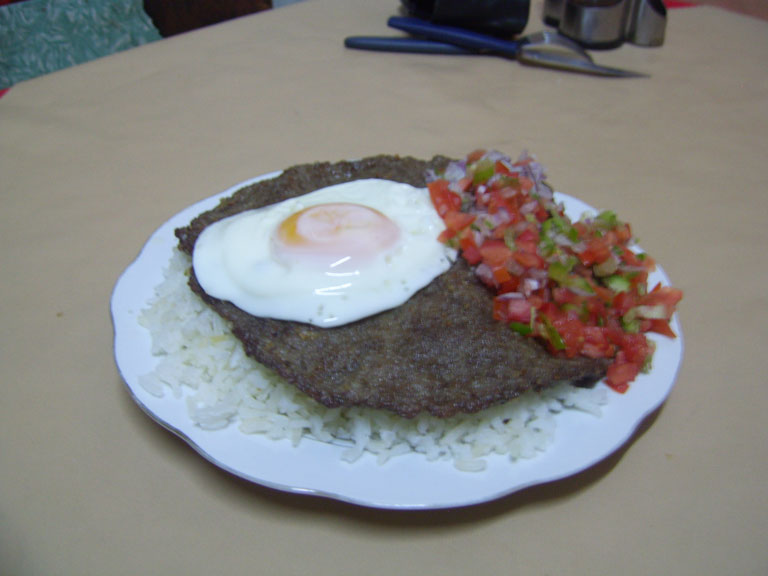 SilpanchoMeatSillp'anchu
🇧🇴 BoliviaLayered Bolivian meal with rice, potatoes, breaded meat, and fried eggs
Main dish, Lunch, Dinner
SilpanchoMeatSillp'anchu
🇧🇴 BoliviaLayered Bolivian meal with rice, potatoes, breaded meat, and fried eggs
Main dish, Lunch, Dinner