
Wagasi
Mild, soft cheese from cow's milk, made and eaten across northern Benin
Wagasi is a soft, mild cheese made from cow's milk, most common in northern Benin and found across West Africa. It is often cooked in stews or served with staple starches like pounded yam or millet porridge, and can be fried or boiled. Wagasi is a popular protein source in local cooking.
- Made from cow's milk and curdled with an acidic leaf
- Commonly produced and sold in Parakou, Benin
- Often coated in red wax for preservation
- Used as a substitute for fish or meat in stews
- Known by many names in different West African languages
What is Wagasi?
Wagasi is a cheese made from cow's milk, known for its soft texture and mild taste. The cheese is shaped into round wheels and often coated in a red wax made from local leaves to help it keep longer. It is commonly used as a protein in meals, especially in stews or sauces, and sometimes replaces fish or meat. Wagasi is widely available in markets, especially in Parakou, and is a familiar ingredient in northern Beninese cooking.
Where does Wagasi come from?
Wagasi comes from northern Benin and is also found in other West African countries, particularly in regions with savanna landscapes. It is known by several names in local languages, reflecting its spread among different ethnic groups. The cheese is made and sold in abundance in Parakou, a central city in Benin. Its production uses traditional methods passed down in the region, making it a staple of local diets.
How is Wagasi made?
To make wagasi, cow's milk is gently heated and then mixed with an acidic substance, often a leaf from the Bombax ceiba tree or similar plants, to curdle the milk. The curds are separated and pressed into round forms. These cheese wheels are dipped in a red wax made from another type of leaf, which helps preserve them. The finished cheese can be cooked in various ways, such as frying or boiling.

How and when is Wagasi eaten?
Wagasi is often cooked in a sauce and eaten with staple starches like pounded yam or pâte, a thick porridge made from millet or maize. It is also eaten fried, sometimes served with pepper for dipping, especially as a snack while traveling. In meals, wagasi is used as a substitute for fish or meat, making it an important protein source in vegetarian dishes.
Kinds of Wagasi
Wagasi is known by different names depending on the language and region, such as amo, wara, warakashi, gasaru, and wagashi. While the basic method of making the cheese is similar, the way it is prepared and eaten can vary. Some prefer it fried, others boiled, and it may be served in different sauces or with various local starches.
What Wagasi means
Wagasi is a staple in northern Beninese cooking and is widely recognized in West Africa. Its presence in markets and daily meals highlights its role as a key protein source. The cheese is not tied to any specific festival or religious practice but is valued for its versatility and accessibility in everyday life.
Questions people ask about Wagasi
What is wagasi made of?
Wagasi is made from cow's milk. The milk is curdled using an acidic leaf or substance, then pressed into round cheese wheels.
Where does wagasi come from?
Wagasi is most commonly made in northern Benin, especially in Parakou, and is also found in other West African countries.
How is wagasi usually eaten?
Wagasi is often cooked in a sauce and eaten with staple starches like pounded yam or millet porridge. It can also be fried and served with pepper as a snack.
What does wagasi taste like?
Wagasi has a mild flavor and a soft texture, making it suitable for a variety of dishes and easy to pair with sauces and starches.
Are there different names for wagasi?
Yes, wagasi is also called amo, wara, warakashi, gasaru, and wagashi, depending on the language and region.
Good reading and sources
The facts on this page come from the Wikipedia article "Wagasi", written by its contributors and used under the CC BY-SA 4.0 licence, and from its Wikidata record (CC0). Thali rewrote the text in its own words, with AI assistance, and compares every page with the article to make sure no passage is copied. It may be reused under the same CC BY-SA 4.0 licence with a link back.
It may contain mistakes, and it is not dietary or allergy advice: recipes differ from cook to cook. If something is wrong, tell us. Last refreshed 2026-10-03.
More from Benin
All the food of Benin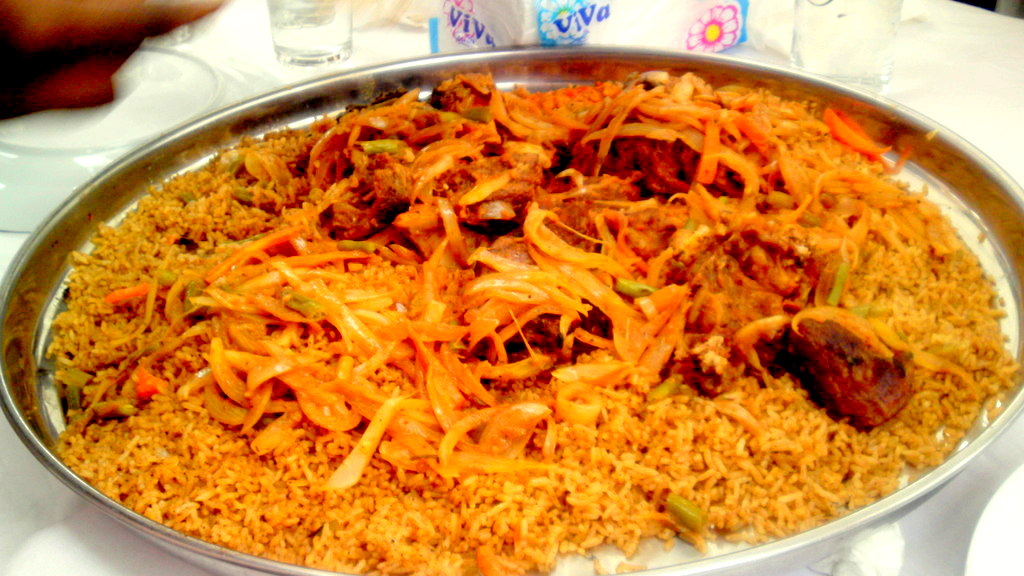 Riz grasMeat
🇧🇫 Burkina Faso and 4 moreWest African rice cooked with meat and vegetables, served hot
Main dish, Lunch, Dinner
Riz grasMeat
🇧🇫 Burkina Faso and 4 moreWest African rice cooked with meat and vegetables, served hot
Main dish, Lunch, Dinner
 AkpanVegetarian
🇧🇯 Benin and 2 moreFermented maize and milk dessert from Benin and Togo
Sweet or dessert, Snacks
AkpanVegetarian
🇧🇯 Benin and 2 moreFermented maize and milk dessert from Benin and Togo
Sweet or dessert, Snacks
 GnamakoudjiVegan
🇨🇮 Ivory Coast and 4 moreWest African drink made from ginger juice, often with pineapple, lemon, or mint
Drink
GnamakoudjiVegan
🇨🇮 Ivory Coast and 4 moreWest African drink made from ginger juice, often with pineapple, lemon, or mint
Drink
 FufuVegan
🇬🇭 Ghana and 4 moreA soft, starchy dough made by pounding cassava, plantain or cocoyam, eaten with soups
Main dish, Lunch, Dinner
FufuVegan
🇬🇭 Ghana and 4 moreA soft, starchy dough made by pounding cassava, plantain or cocoyam, eaten with soups
Main dish, Lunch, Dinner
Its cousins elsewhere
All cheese and dairy Mozzarella
🇮🇹 ItalySemi-soft Italian cheese made by stretching and kneading curd
Cheese or dairy food
Mozzarella
🇮🇹 ItalySemi-soft Italian cheese made by stretching and kneading curd
Cheese or dairy food
 ParmesanVegetarianParmigiano Reggiano
🇮🇹 ItalyA hard, aged Italian cheese made from cow's milk in Emilia-Romagna
Cheese or dairy food
ParmesanVegetarianParmigiano Reggiano
🇮🇹 ItalyA hard, aged Italian cheese made from cow's milk in Emilia-Romagna
Cheese or dairy food
 BrieVegetarian
🇫🇷 France and 3 moreSoft French cheese with a white edible rind and creamy interior
Cheese or dairy food, Lunch, Dinner
BrieVegetarian
🇫🇷 France and 3 moreSoft French cheese with a white edible rind and creamy interior
Cheese or dairy food, Lunch, Dinner
 HandkäseVegetarian
🇩🇪 GermanySmall sour milk cheese from Hesse, Germany, often served with onions and caraway
Cheese or dairy food, Snacks
HandkäseVegetarian
🇩🇪 GermanySmall sour milk cheese from Hesse, Germany, often served with onions and caraway
Cheese or dairy food, Snacks