
Gnamakoudji
West African drink made from ginger juice, often with pineapple, lemon, or mint
Gnamakoudji is a cold drink from Ivory Coast and West Africa, made by straining ginger juice and mixing it with ingredients like pineapple juice, lemon, mint, sugar, or vanilla. It is enjoyed in several West African countries and sometimes used as a base for cocktails or mocktails.
- Made by straining ginger juice through cheesecloth
- Often mixed with pineapple juice, lemon, mint, sugar, or vanilla
- Originates from Ivory Coast and popular across West Africa
- Served cold and sometimes used in cocktails or mocktails
- Used in folk medicine in the region
What is Gnamakoudji?
Gnamakoudji is a refreshing beverage based on ginger juice, which is strained to remove solids and create a smooth liquid. It is usually blended with pineapple juice, lemon, mint, sugar, or vanilla, giving it a balance of spicy, sweet, and tangy flavors. The drink is served cold and is popular for its strong ginger taste, often softened by the addition of fruit juices and herbs. Its appearance is typically a pale yellow or golden color, depending on the mix.
Where does Gnamakoudji come from?
Gnamakoudji comes from Ivory Coast and is part of West African food traditions. It has spread to neighboring countries such as Benin, Burkina Faso, Mali, and Senegal, where it is also commonly enjoyed. The drink is similar to tangawisi, a ginger-based beverage from Congo. Gnamakoudji is also known for its use in folk medicine, reflecting the long-standing appreciation for ginger's properties in the region.
How is Gnamakoudji made?
To make gnamakoudji, fresh ginger is juiced and then strained through cheesecloth to remove any fibrous pieces. The resulting ginger juice is mixed with other ingredients such as pineapple juice, lemon, mint, sugar, or vanilla, depending on taste. The drink is chilled before serving, making it especially suited to hot climates. It is sometimes used as a base for both alcoholic and non-alcoholic mixed drinks.
How and when is Gnamakoudji eaten?
Gnamakoudji is typically served cold, making it a popular choice for refreshment throughout the day. It is enjoyed on its own or as a base for cocktails and mocktails. The drink is not tied to any particular meal or time of day and is consumed as an everyday beverage in homes and at gatherings. Its strong ginger flavor can be adjusted with fruit juices and sweeteners to suit different tastes.
Kinds of Gnamakoudji
While the classic version uses ginger juice, pineapple juice, lemon, mint, sugar, and vanilla, the proportions and combination of these ingredients can vary by region and personal preference. Some versions may use more pineapple juice for sweetness, while others highlight the sharpness of ginger. The drink is closely related to tangawisi from Congo, showing regional variations in ginger-based drinks across Africa.
What Gnamakoudji means
Gnamakoudji holds a place in West African daily life as a refreshing homemade beverage and is sometimes valued in folk medicine for its ginger content. It is not specifically linked to festivals or religious occasions but is part of the everyday food culture in Ivory Coast and neighboring countries. Its use as a cocktail or mocktail base shows its adaptability in both traditional and modern settings.
Questions people ask about Gnamakoudji
What is gnamakoudji made of?
Gnamakoudji is made from strained ginger juice, often mixed with pineapple juice, lemon, mint, sugar, or vanilla.
Where does gnamakoudji come from?
Gnamakoudji originates in Ivory Coast and is also enjoyed in Benin, Burkina Faso, Mali, and Senegal.
How is gnamakoudji served?
It is served cold, making it a refreshing drink, and can be used as a base for cocktails or mocktails.
Is gnamakoudji used for anything besides drinking?
Yes, gnamakoudji is sometimes used in folk medicine in West Africa.
What does gnamakoudji taste like?
It has a strong ginger flavor, often balanced with sweet and tangy notes from fruit juices and herbs.
Good reading and sources
The facts on this page come from the Wikipedia article "Gnamakoudji", written by its contributors and used under the CC BY-SA 4.0 licence, and from its Wikidata record (CC0). Thali rewrote the text in its own words, with AI assistance, and compares every page with the article to make sure no passage is copied. It may be reused under the same CC BY-SA 4.0 licence with a link back.
It may contain mistakes, and it is not dietary or allergy advice: recipes differ from cook to cook. If something is wrong, tell us. Last refreshed 2026-10-03.
More from Ivory Coast
All the food of Ivory Coast Chocolate
🇨🇮 Ivory Coast and 5 moreA sweet or bitter food made from processed cocoa beans, enjoyed in many forms worldwide
Sweet or dessert, Snacks
Chocolate
🇨🇮 Ivory Coast and 5 moreA sweet or bitter food made from processed cocoa beans, enjoyed in many forms worldwide
Sweet or dessert, Snacks
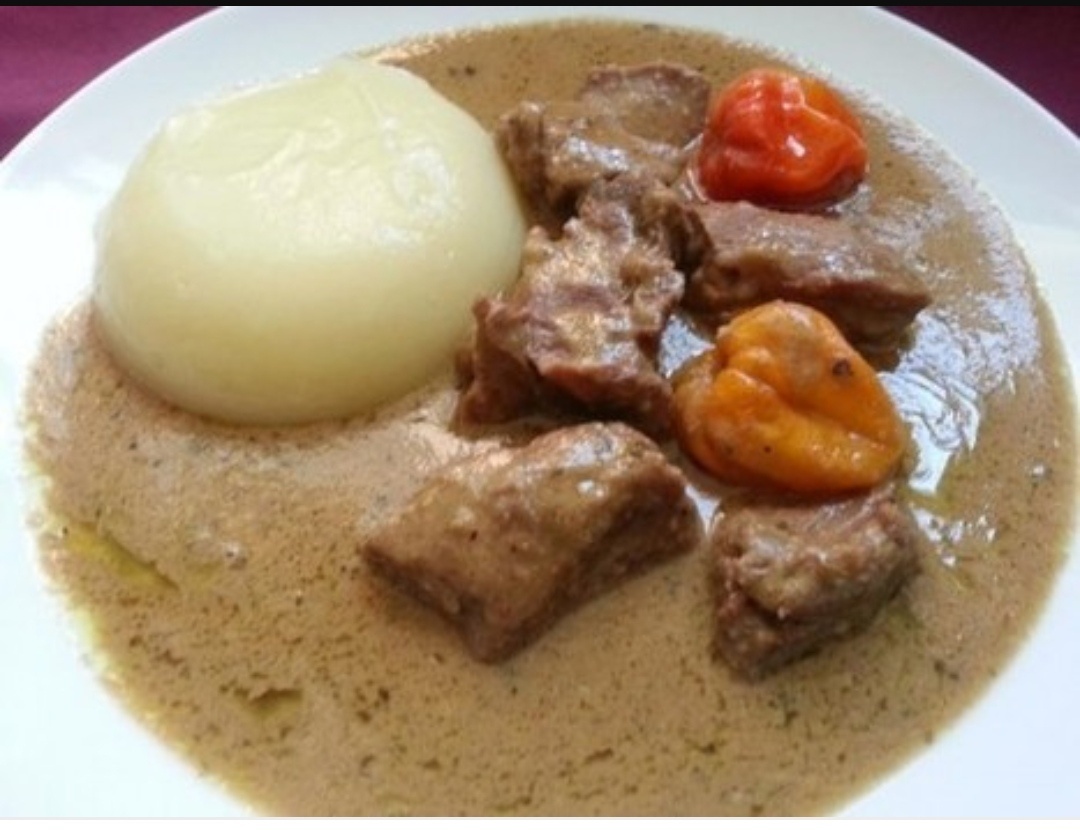 Peanut stew
🇸🇳 Senegal and 5 moreA rich West African stew of meat and vegetables in a spiced peanut sauce
Stew or curry, Lunch, Dinner
Peanut stew
🇸🇳 Senegal and 5 moreA rich West African stew of meat and vegetables in a spiced peanut sauce
Stew or curry, Lunch, Dinner
 Palm nut soup
🇳🇬 Nigeria and 4 moreA rich, red soup made from palm fruit, meat, fish and spices
Soup, Lunch, Dinner
Palm nut soup
🇳🇬 Nigeria and 4 moreA rich, red soup made from palm fruit, meat, fish and spices
Soup, Lunch, Dinner
 KenkeyVegan
🇬🇭 Ghana and 3 moreFermented maize dough dumpling, steamed and served with spicy sides
Main dish, Lunch, Dinner
KenkeyVegan
🇬🇭 Ghana and 3 moreFermented maize dough dumpling, steamed and served with spicy sides
Main dish, Lunch, Dinner
Its cousins elsewhere
All drinks BhangVeganभांग
🇮🇳 IndiaCannabis leaf paste used in drinks and sweets, central to Indian spring festivals
Drink, Snacks
BhangVeganभांग
🇮🇳 IndiaCannabis leaf paste used in drinks and sweets, central to Indian spring festivals
Drink, Snacks
 SimaVegan
🇫🇮 FinlandFinnish sparkling lemon drink, lightly fermented and sweet
Drink, Snacks
SimaVegan
🇫🇮 FinlandFinnish sparkling lemon drink, lightly fermented and sweet
Drink, Snacks
 KahwahVegan
🇮🇳 India and 2 moreA spiced green tea from Kashmir, often served with saffron and nuts
Drink
KahwahVegan
🇮🇳 India and 2 moreA spiced green tea from Kashmir, often served with saffron and nuts
Drink
 Mulled wineGlühwein
🇬🇧 United Kingdom and 5 moreRed wine heated with spices and fruit, served hot at Christmas and winter gatherings
Drink, Tea time, Dinner
Mulled wineGlühwein
🇬🇧 United Kingdom and 5 moreRed wine heated with spices and fruit, served hot at Christmas and winter gatherings
Drink, Tea time, Dinner