
Fufu
A soft, starchy dough made by pounding cassava, plantain or cocoyam, eaten with soups
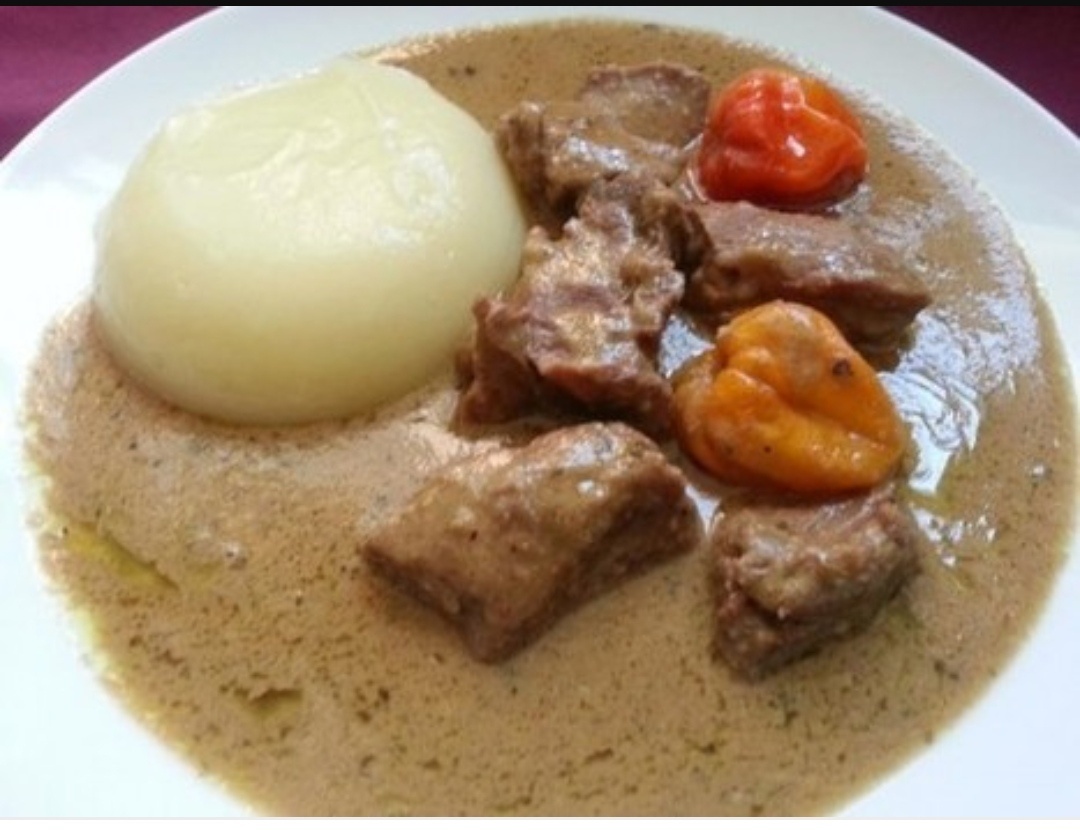
Fufu is a staple West African dish made by pounding boiled cassava, plantain, or cocoyam into a smooth, elastic dough. It is most common in Ghana and Nigeria, but found across West and Central Africa and in the Caribbean. Fufu is usually eaten with the fingers, dipped into soups or stews, and is a central part of everyday meals.
- Made by pounding boiled cassava, plantain, or cocoyam into a smooth dough
- Eaten with the fingers, dipped into soups or stews
- Staple food in Ghana, Nigeria, and across West Africa
- Known by many names, including fufuo, foufou, foutou, and sakora
- Caribbean and Central American versions use local roots and plantains
What is Fufu?
Fufu is a soft, stretchy dough made by pounding boiled starchy roots such as cassava, plantain, or cocoyam. The finished dough is pale in color, with a smooth and elastic texture. It is usually served as a mound or slab, and eaten by pinching off small pieces with the fingers. Fufu itself is bland, but it is always paired with richly flavored soups or stews, which provide most of the taste and aroma.
Where does Fufu come from?
Fufu is believed to have originated among the Akan people in what is now Ghana. The name comes from the Twi language, where it means 'white', likely referring to the color of the cassava version. Before cassava was brought from Brazil in the 16th century, fufu was made from yams, plantain, or cocoyam. Over time, the dish spread across West and Central Africa, with each region adapting the method and ingredients to local crops and tastes.
How is Fufu made?
To make fufu, cassava, plantain, or cocoyam is peeled, boiled, and then pounded in a large wooden mortar with a pestle until it becomes smooth and stretchy. Water is added gradually to reach the desired consistency. In some places, flour made from these roots is mixed with water and stirred over heat. In Nigeria, fufu is often made from fermented cassava, which gives it a stronger aroma and a slightly sour taste. The dough is shaped into balls or slabs for serving.


How and when is Fufu eaten?
Fufu is eaten by hand, usually at lunch or dinner. Diners pinch off a small ball, press it with their fingers, and use it to scoop up soup or stew. It is rarely eaten alone; common accompaniments include light soup, palm nut soup, peanut butter soup, or okra soup. In Ghana and Nigeria, fufu is a daily staple, eaten at home or in restaurants, and often shared among family or friends.
Kinds of Fufu
Across West Africa and the Caribbean, fufu takes many forms. In Ghana, it is often made with a mix of cassava and plantain. Nigerian fufu is usually made from only fermented cassava. In Côte d'Ivoire, 'foutou' is made from yams, cassava, or plantain. In the Caribbean, similar dishes use breadfruit or cornmeal. Modern versions may use wheat or maize flour, especially in urban areas or among the African diaspora.
What Fufu means
Fufu is deeply woven into the daily life and identity of many West African communities. It is mentioned in classic literature and was a key food of the Ashanti Empire. Making fufu by hand is a communal activity, though machines are now sometimes used. The dish is a symbol of home for many in the African diaspora, and its many regional names and methods reflect the diversity of African food culture.
Questions people ask about Fufu
What is fufu made of?
Fufu is made by pounding boiled cassava, plantain, or cocoyam into a smooth, elastic dough. In some regions, it is made from flour of these roots mixed with water.
Where does fufu come from?
Fufu originated with the Akan people in Ghana and is now common across West and Central Africa, as well as in the Caribbean.
How is fufu eaten?
Fufu is eaten with the fingers. Small pieces are pinched off and dipped into soups or stews, such as light soup, palm nut soup, or okra soup.
Are there different types of fufu?
Yes, fufu varies by region. Ghanaian fufu often mixes cassava and plantain, while Nigerian fufu is usually made from fermented cassava. Other countries use yams, cocoyam, or breadfruit.
Is fufu vegan?
Traditional fufu is vegan, as it is made from starchy roots and water. The soups served with it may contain meat or fish.
Good reading and sources
- Encyclopaedia BritannicaArticle
- BBC NEWS | AfricaBBC, Article
- A review of cassava in Africawith country case studies on Nigeria, Ghana,the United Republic of Tanzania, Uganda and BeninFAO, Article
The facts on this page come from the Wikipedia article "Fufu", written by its contributors and used under the CC BY-SA 4.0 licence, and from its Wikidata record (CC0). Thali rewrote the text in its own words, with AI assistance, and compares every page with the article to make sure no passage is copied. It may be reused under the same CC BY-SA 4.0 licence with a link back.
It may contain mistakes, and it is not dietary or allergy advice: recipes differ from cook to cook. If something is wrong, tell us. Last refreshed 2026-10-03.
More from Ghana
All the food of Ghana Kpekpele
🇬🇭 GhanaSteamed and fermented cornmeal eaten with palm nut soup and smoked fish
Main dish
Kpekpele
🇬🇭 GhanaSteamed and fermented cornmeal eaten with palm nut soup and smoked fish
Main dish
 Peanut stew
🇸🇳 Senegal and 5 moreA rich West African stew of meat and vegetables in a spiced peanut sauce
Stew or curry, Lunch, Dinner
Jollof rice
🇸🇳 Senegal and 5 moreWest African rice simmered in tomato, chili and spices, often served with meat or fish
Main dish, Lunch, Dinner
Peanut stew
🇸🇳 Senegal and 5 moreA rich West African stew of meat and vegetables in a spiced peanut sauce
Stew or curry, Lunch, Dinner
Jollof rice
🇸🇳 Senegal and 5 moreWest African rice simmered in tomato, chili and spices, often served with meat or fish
Main dish, Lunch, Dinner
 AkaraVeganàkàrà
🇳🇬 Nigeria and 5 moreWest African bean fritters, deep-fried and eaten hot as street food or breakfast
Street food, Breakfast, Snacks
AkaraVeganàkàrà
🇳🇬 Nigeria and 5 moreWest African bean fritters, deep-fried and eaten hot as street food or breakfast
Street food, Breakfast, Snacks
Its cousins elsewhere
All main dishes Pasta
🇮🇹 Italy and 1 moreUnleavened dough shaped and cooked, a staple of Italian cuisine
Main dish, Lunch, Dinner
Pasta
🇮🇹 Italy and 1 moreUnleavened dough shaped and cooked, a staple of Italian cuisine
Main dish, Lunch, Dinner
 SpaghettiVegan
🇮🇹 Italy and 2 moreLong, thin pasta strands made from durum wheat and water
Noodle or pasta dish, Lunch, Dinner
SpaghettiVegan
🇮🇹 Italy and 2 moreLong, thin pasta strands made from durum wheat and water
Noodle or pasta dish, Lunch, Dinner
 GoulashMeatgulyás
🇭🇺 Hungary and 5 moreA paprika-spiced meat and vegetable soup from Hungary
Soup, Lunch, Dinner
GoulashMeatgulyás
🇭🇺 Hungary and 5 moreA paprika-spiced meat and vegetable soup from Hungary
Soup, Lunch, Dinner
 PolentaVegan
🇮🇹 Italy and 5 moreBoiled cornmeal porridge from northern Italy, served soft or set and sliced
Main dish
PolentaVegan
🇮🇹 Italy and 5 moreBoiled cornmeal porridge from northern Italy, served soft or set and sliced
Main dish