Shared tables and spreads
Kamayan and the boodle fight
The Filipino way of eating with the hands, at its fullest in the boodle fight: a long table covered in banana leaves, rice and food.
Presented by ClearTrust Free for cooks, travellers and the curious.
Kamayan means by hand in Tagalog. It is the old everyday way of eating in the Philippines, and it is also the name for a feast with no plates and no cutlery. Food is piled down the middle of a table lined with banana leaves, and everyone stands or sits shoulder to shoulder and eats from the part in front of them.

What it is
A kamayan spread starts with a long mound of steamed rice along the centre of the table. On and around it go grilled fish and pork, fried chicken, prawns, noodles, spring rolls, salted eggs with tomato, green mango, grilled aubergine and small bowls of vinegar, soy and fermented shrimp paste for dipping. There are no serving dishes. The banana leaf is the plate, and the stretch of table before you is your portion. It is a format for birthdays, reunions, beach trips and fiestas.
Where it comes from
Eating with the hands was the norm across the islands long before Spanish and American rule brought the spoon and fork. The boodle fight is a newer military version. It is linked to the cadets and soldiers of the Philippine armed forces, who ate together from one table, standing, regardless of rank, as a show of brotherhood. Boodle is cadet slang for treats or contraband food. Civilian restaurants adopted the format, and Filipino communities abroad have made it a point of pride.
How it works
Everyone washes their hands first. In a military boodle fight a signal is given and all begin at once, eating fast. A family kamayan is slower. The technique is simple. You gather a little rice and a piece of fish or meat with your fingertips, press it into a small mound, lift it and push it into your mouth with your thumb. The palm should stay clean. Dips are shared, so you spoon sauce onto your own food.
How to do it
- Wash your hands well before you come to the table.
- Use your right hand, fingertips only.
- Pinch rice and a bit of meat or fish together into a small mound.
- Lift it and push it into your mouth with your thumb.
- Eat from the section in front of you.
Good manners
- Do not reach across the table into someone else's section.
- Do not lick your fingers and then go back to shared food.
- Wait for the host to start, or for the signal in a boodle fight.
What is eaten
 Suckling pigWhole roasted piglet, prized for its tender meat and crisp skin
 PancitA family of Filipino noodle dishes with many local styles and toppings
 LumpiaThin spring rolls with savory or sweet fillings, fried or fresh
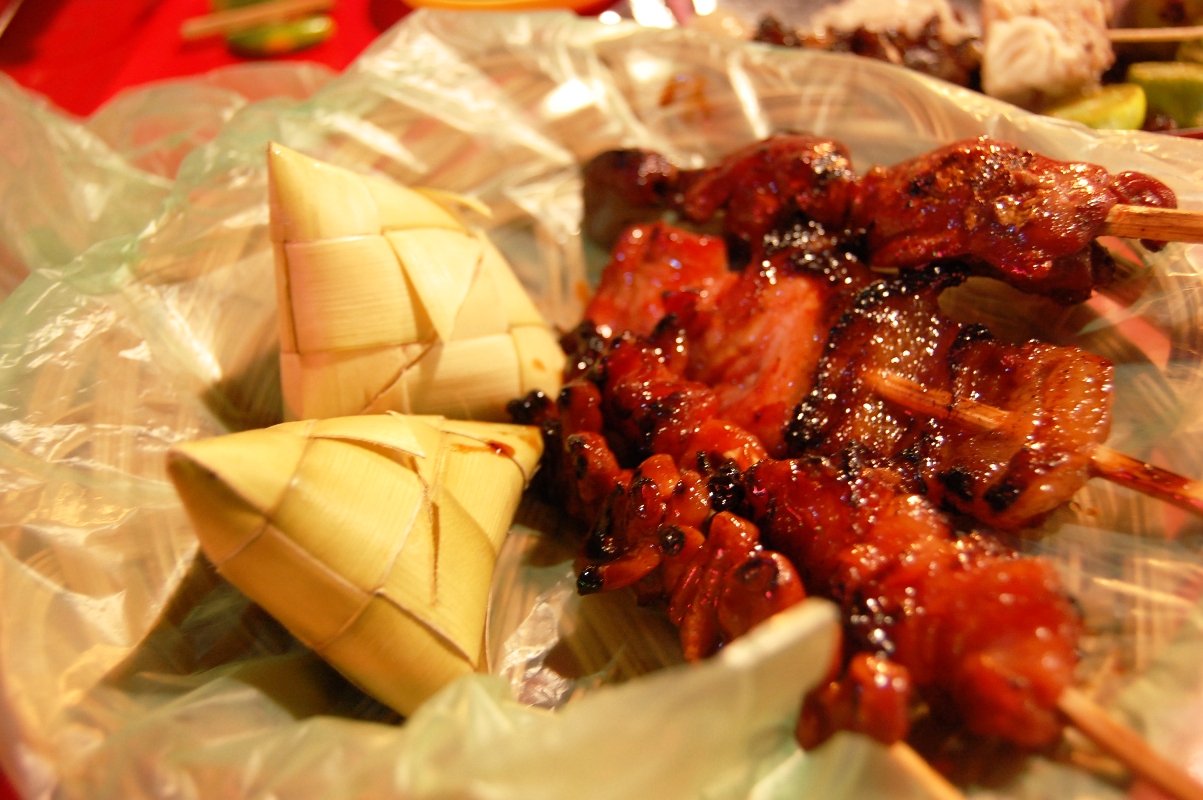 InihawGrilled meats and seafood, often on skewers, from the Philippines
 AdoboMeat, seafood, or vegetables simmered in vinegar, soy sauce, garlic and spices
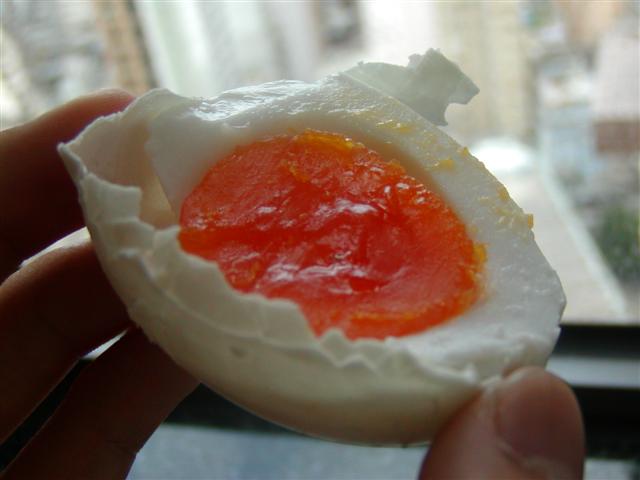 Salted duck eggDuck eggs preserved in salt, prized for their rich, orange-red yolks
 BagoongFermented fish or shrimp paste used as a salty Filipino condiment
Also part of it, and being written: Longaniza, Sinangag.
Sources and further reading
- Kamayan on Wikipedia
- Philippines.travel: official tourism site
- Department of Tourism, Republic of the Philippines
Original text by the Thali desk, written with AI assistance and checked against the sources above. Customs vary from place to place. If we have something wrong, tell us.
Photo credits on this page
The small pictures above come from Wikimedia Commons under free licences. Some are cropped to fit.
- Pancit: bingbing, CC BY 2.0, source
- Inihaw: George Parrilla, CC BY 2.0, source
- Adobo: dbgg1979 on flickr, CC BY 2.0, source
- Salted duck egg: No machine-readable author provided. Kok69~commonswiki assumed (based, Public domain, source
- Suckling pig: Joan Sebastián Araújo Arena, CC BY-SA 2.0, source
- Bagoong: Judgefloro, CC0, source
- Lumpia: tofuprod, CC BY-SA 2.0, source