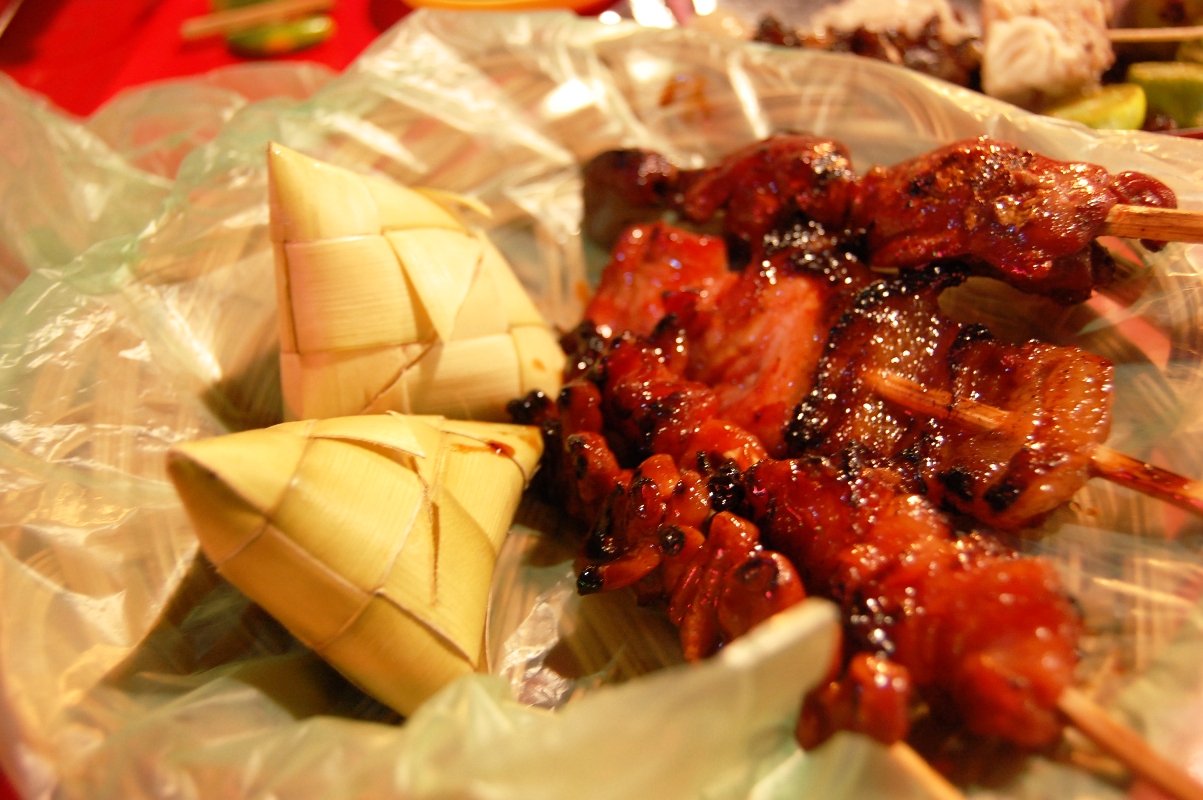
Inihaw
Grilled meats and seafood, often on skewers, from the Philippines
Inihaw is a Filipino term for grilled or roasted dishes, most often made with pork, chicken, beef, or seafood. These foods are cooked over charcoal, sometimes marinated or basted, and served on skewers or in pieces, usually with rice. Inihaw is popular as street food and at gatherings across the Philippines.
- Inihaw means 'grilled' in Tagalog
- Commonly made with pork, chicken, beef, or seafood
- Often served on bamboo skewers at street stalls
- Marinades use soy sauce, vinegar, and local spices
- Rice, sometimes cooked in coconut leaves, is a typical side
What is Inihaw?
Inihaw refers to a range of Filipino dishes where meat or seafood is grilled over hot coals. Pork and chicken are most common, but beef, fish, and shellfish are also used. Pieces may be threaded onto bamboo sticks or cooked whole, resulting in a smoky, charred outside and juicy interior. Marinades and basting sauces often include soy sauce, vinegar, calamansi (a local citrus), and sometimes banana ketchup or annatto oil, which can give a reddish color. Offal such as intestines or blood cubes are also popular, especially as street snacks. Inihaw is typically served with rice, sometimes wrapped in coconut leaves.
Where does Inihaw come from?
The word 'inihaw' comes from Tagalog, meaning 'grilled' or 'roasted.' Similar terms appear in other Philippine languages, like 'sinugba' in Cebuano and 'inasal' in Hiligaynon. Grilling over charcoal is a longstanding cooking method in the Philippines, and inihaw has become a staple at both casual street stalls and family gatherings. The style is flexible, adapting to local ingredients and tastes, and has developed regional names and variations across the country.
How is Inihaw made?
To prepare inihaw, cooks often marinate the meat or seafood in a mix of soy sauce, vinegar, citrus, and spices. The food is then placed over a charcoal fire, sometimes on skewers, and turned until it is cooked through and slightly charred. Some versions are basted with sweetened sauces, such as those made with banana ketchup and annatto oil, which add color and flavor. Offal, like intestines or blood, may be cleaned, seasoned, and grilled in the same way.


How and when is Inihaw eaten?
Inihaw is enjoyed at many times of day, often as a main dish for lunch or dinner, or as a snack from street vendors. It is commonly paired with plain white rice or with pusô, which is rice packed and cooked in woven coconut leaves. Dipping sauces, usually based on soy sauce and vinegar with onions, chilies, or calamansi, are served on the side. In gatherings, inihaw is shared among family and friends, and it is also a popular choice at roadside eateries.
Kinds of Inihaw
There are many types of inihaw, from whole roasted pig (lechón) to skewered chicken (inasal) and offal like isaw (grilled intestines). Some regions serve satti, a version with a peanut-based sauce, especially in Mindanao. Lechon manok is spit-roasted chicken, often stuffed with lemongrass. Street stalls offer creative names for offal skewers, such as 'betamax' for blood cubes and 'adidas' for chicken feet. Each area puts its own spin on marinades and accompaniments.
What Inihaw means
Inihaw is deeply woven into Filipino daily life, found everywhere from busy city streets to rural celebrations. It is a symbol of gatherings and communal eating, often featured at parties and casual get-togethers. The dish reflects the Philippines’ love for grilled flavors and adaptability, with countless local versions. Inihaw is also a point of pride, showing the resourcefulness and creativity of Filipino cooks.
Questions people ask about Inihaw
What is inihaw made of?
Inihaw can be made from pork, chicken, beef, seafood, or even offal like intestines and blood. The meat is often marinated in a mixture of soy sauce, vinegar, and spices before grilling.
Where does inihaw come from?
Inihaw comes from the Philippines and is found throughout the country, with each region having its own versions and names for grilled dishes.
How is inihaw cooked?
The food is grilled over charcoal, sometimes after marinating, and may be basted with sauces during cooking. It can be cooked on skewers or as whole cuts.
What do people eat with inihaw?
Inihaw is typically served with white rice or pusô, which is rice cooked in coconut leaves. Dipping sauces made from soy sauce, vinegar, onions, and chilies are common accompaniments.
Is inihaw always made with meat?
While pork and chicken are most common, beef, seafood, and offal are also used. The dish can vary widely depending on local preferences and available ingredients.
Good reading and sources
The facts on this page come from the Wikipedia article "Inihaw", written by its contributors and used under the CC BY-SA 4.0 licence, and from its Wikidata record (CC0). Thali rewrote the text in its own words, with AI assistance, and compares every page with the article to make sure no passage is copied. It may be reused under the same CC BY-SA 4.0 licence with a link back.
It may contain mistakes, and it is not dietary or allergy advice: recipes differ from cook to cook. If something is wrong, tell us. Last refreshed 2026-10-03.
More from the Philippines
All the food of the Philippines SpaghettiVegan
🇮🇹 Italy and 2 moreLong, thin pasta strands made from durum wheat and water
Noodle or pasta dish, Lunch, Dinner
SpaghettiVegan
🇮🇹 Italy and 2 moreLong, thin pasta strands made from durum wheat and water
Noodle or pasta dish, Lunch, Dinner
 Paella
🇪🇸 Spain and 1 moreRice cooked with meat, seafood or vegetables in a wide shallow pan from Valencia
Main dish, Lunch
Paella
🇪🇸 Spain and 1 moreRice cooked with meat, seafood or vegetables in a wide shallow pan from Valencia
Main dish, Lunch
 Rice pudding
🇮🇳 India and 4 moreSweetened rice cooked in milk, found in many forms worldwide
Sweet or dessert, Breakfast, Lunch
Rice pudding
🇮🇳 India and 4 moreSweetened rice cooked in milk, found in many forms worldwide
Sweet or dessert, Breakfast, Lunch
 Oxtail stewMeat
🇮🇹 Italy and 4 moreStew made with oxtail, found in many world cuisines
Stew or curry, Lunch, Dinner
Oxtail stewMeat
🇮🇹 Italy and 4 moreStew made with oxtail, found in many world cuisines
Stew or curry, Lunch, Dinner
Its cousins elsewhere
All main dishes Tamaletamal
🇲🇽 Mexico and 5 moreCorn dough filled and steamed in a leaf wrapper, with many regional fillings
Main dish, Breakfast, Lunch
Tamaletamal
🇲🇽 Mexico and 5 moreCorn dough filled and steamed in a leaf wrapper, with many regional fillings
Main dish, Breakfast, Lunch
 Pot-au-feu
🇫🇷 FranceFrench boiled meat and vegetable stew served in two courses
Stew or curry, Lunch, Dinner
Lomo saltadoMeat
🇵🇪 PeruPeruvian stir-fried beef with onions, tomatoes, fries and rice
Main dish, Lunch, Dinner
Pot-au-feu
🇫🇷 FranceFrench boiled meat and vegetable stew served in two courses
Stew or curry, Lunch, Dinner
Lomo saltadoMeat
🇵🇪 PeruPeruvian stir-fried beef with onions, tomatoes, fries and rice
Main dish, Lunch, Dinner
 Arroz chaufa
🇵🇪 PeruPeruvian fried rice with meat, egg, vegetables and soy sauce
Main dish, Lunch, Dinner
Arroz chaufa
🇵🇪 PeruPeruvian fried rice with meat, egg, vegetables and soy sauce
Main dish, Lunch, Dinner