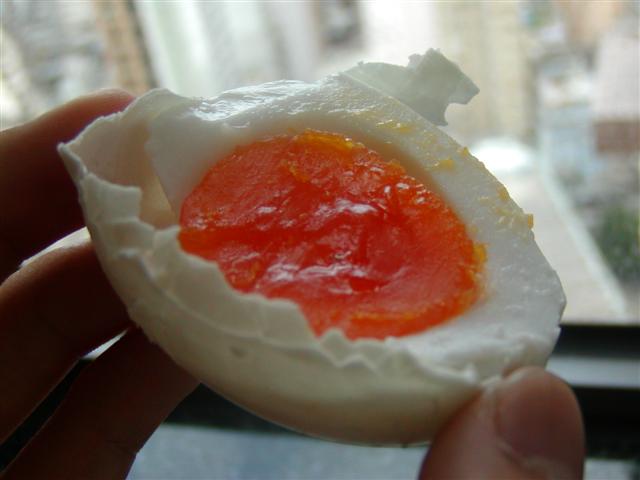
Salted duck egg
Duck eggs preserved in salt, prized for their rich, orange-red yolks
Salted duck egg is a preserved food made by curing duck eggs in brine or salted charcoal. Originating in China, it is known for its salty egg white and rich, orange-red yolk. Eaten boiled or steamed, it is used as a condiment or flavoring, and is popular in the Philippines and Thailand with local variations.
- Made by curing duck eggs in brine or salted charcoal
- Egg white is salty and gelatin-like; yolk is rich and orange-red
- Used in Chinese mooncakes to symbolize the moon
- Philippine version is dyed red to set it apart from fresh eggs
- Chicken eggs can also be used, but taste and texture differ
What is Salted duck egg?
Salted duck egg is a preserved food made by curing whole duck eggs in a salty solution or packing them in salted charcoal. The process gives the egg white a firm, gelatin-like texture and a sharp, salty taste, while the yolk turns a deep orange-red, becomes rich and fatty, and is less salty than the white. The eggs are usually boiled or steamed before eating. The yolk is highly valued and is often used in other foods, such as mooncakes, for its color and flavor. In the Philippines, salted duck eggs are dyed red to set them apart from fresh eggs.
Where does Salted duck egg come from?
Salted duck eggs have their roots in Chinese cuisine, where they are a traditional way to preserve duck eggs. The method involves curing the eggs in brine or packing them in salted charcoal. Over time, the practice spread to other countries in Southeast Asia, including the Philippines and Thailand, each developing their own techniques and names for the food. In the Philippines, the eggs are called 'itlog na maalat' or 'itlog na pula', and are often dyed red. In Thailand, a related product called khai khrop uses only the yolks.
How is Salted duck egg made?
To make salted duck eggs, fresh duck eggs are either soaked in a salty brine or covered in a paste of damp, salted charcoal. In the Philippines, a mixture of clay, salt, and water is used to coat the eggs, which are then stored for up to two weeks to cure. After curing, the eggs are cleaned and boiled or steamed before eating. The curing process allows salt to penetrate the shell, firming up the egg white and transforming the yolk into a dense, flavorful center. In Thailand, some versions use only the yolks, preserved in brine inside the shell.


How and when is Salted duck egg eaten?
Salted duck eggs are commonly eaten boiled or steamed, often as a side to congee (rice porridge) or with rice. The eggs can also be used as a flavoring in other dishes. In China, the yolk is especially prized and is used in mooncakes. In the Philippines, the red-dyed eggs are a familiar everyday food, eaten with tomatoes or as part of salads. In Thailand, the yolk-only version is served with rice or added to other foods. Salted duck eggs are valued for their salty, rich taste and are eaten at any meal.
Kinds of Salted duck egg
While duck eggs are traditional, chicken eggs can also be salted, though the flavor and yolk texture are less rich. In the Philippines, the eggs are dyed red to distinguish them from fresh eggs, and the curing process uses a clay and salt mixture. Thailand's khai khrop uses only yolks, which are brined and then steamed. Salted eggs may be sold coated in charcoal paste, or cleaned and vacuum-packed. Each country has its own preferred method and presentation.
What Salted duck egg means
Salted duck eggs hold a special place in Chinese food culture, where the yolk is used in mooncakes to symbolize the moon. In the Philippines, red-dyed salted eggs are a common sight and are part of daily meals. The eggs are also found in Thailand, with local adaptations. The preservation method reflects traditional ways of extending the shelf life of eggs and adds a distinct flavor that is appreciated in various Asian cuisines.
Questions people ask about Salted duck egg
What is a salted duck egg made of?
A salted duck egg is made by preserving whole duck eggs in a salty brine or packing them in salted charcoal. The main ingredients are duck eggs, salt, and water.
Where does the salted duck egg come from?
Salted duck eggs originated in China and have become popular in other Asian countries such as the Philippines and Thailand, each with their own local variations.
What does a salted duck egg taste like?
The egg white is sharp and salty with a firm, gelatin-like texture, while the yolk is rich, fatty, and less salty, with a distinctive orange-red color.
How are salted duck eggs eaten?
They are usually boiled or steamed, then eaten with rice or congee, or used as a flavoring in other dishes. The yolk is also used in mooncakes and other foods.
Are there different versions of salted duck eggs?
Yes. In the Philippines, the eggs are dyed red and cured with a clay and salt mixture. In Thailand, a version called khai khrop uses only the yolks. Chicken eggs can also be used, but the taste is different.
Good reading and sources
- Salted duck egg on WikipediaEncyclopedia
- More photos on Wikimedia CommonsPhotos
- Wikidata recordOpen data
The facts on this page come from the Wikipedia article "Salted duck egg", written by its contributors and used under the CC BY-SA 4.0 licence, and from its Wikidata record (CC0). Thali rewrote the text in its own words, with AI assistance, and compares every page with the article to make sure no passage is copied. It may be reused under the same CC BY-SA 4.0 licence with a link back.
It may contain mistakes, and it is not dietary or allergy advice: recipes differ from cook to cook. If something is wrong, tell us. Last refreshed 2026-10-03.
More from China
All the food of China Laba garlicVegan
🇨🇳 ChinaGarlic cloves pickled in vinegar for the Laba Festival in northern China
Sauce, pickle or ferment
Laba garlicVegan
🇨🇳 ChinaGarlic cloves pickled in vinegar for the Laba Festival in northern China
Sauce, pickle or ferment
 Foie grasMeat
🇫🇷 France and 5 moreFattened duck or goose liver, a French delicacy served whole or as a spread
Main dish, Lunch, Dinner
Foie grasMeat
🇫🇷 France and 5 moreFattened duck or goose liver, a French delicacy served whole or as a spread
Main dish, Lunch, Dinner
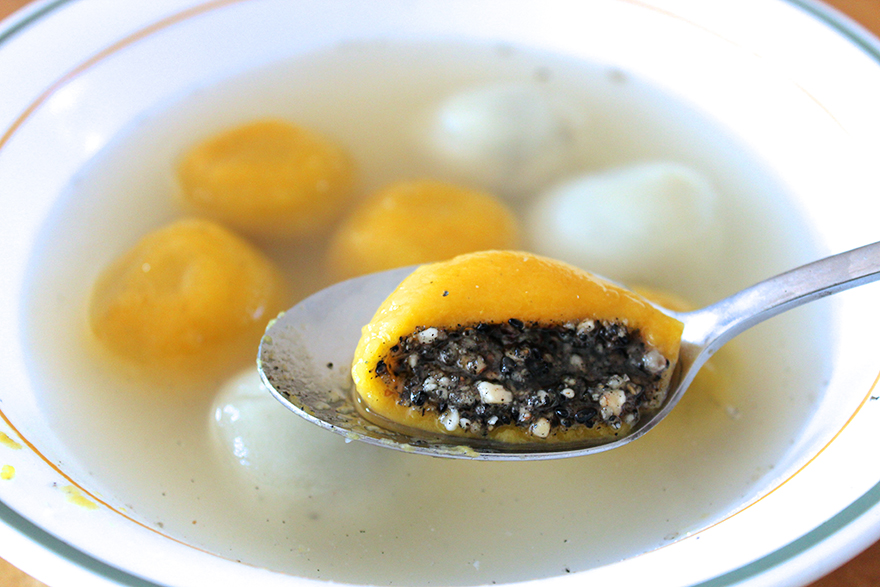 Tangyuan汤圆 / 湯圓
🇨🇳 China and 5 moreGlutinous rice balls, often filled, served in sweet or savory broth
Sweet or dessert, Snacks
Tangyuan汤圆 / 湯圓
🇨🇳 China and 5 moreGlutinous rice balls, often filled, served in sweet or savory broth
Sweet or dessert, Snacks
Its cousins elsewhere
All sauces, pickles and ferments SauerkrautVegan
🇩🇪 Germany and 5 moreFinely shredded cabbage preserved by natural fermentation in salt
Sauce, pickle or ferment, Lunch, Dinner
SauerkrautVegan
🇩🇪 Germany and 5 moreFinely shredded cabbage preserved by natural fermentation in salt
Sauce, pickle or ferment, Lunch, Dinner
 SurströmmingFish or seafood
🇸🇪 SwedenFermented Baltic herring with a famously strong smell, eaten cold in Sweden
Sauce, pickle or ferment, Dinner
SurströmmingFish or seafood
🇸🇪 SwedenFermented Baltic herring with a famously strong smell, eaten cold in Sweden
Sauce, pickle or ferment, Dinner
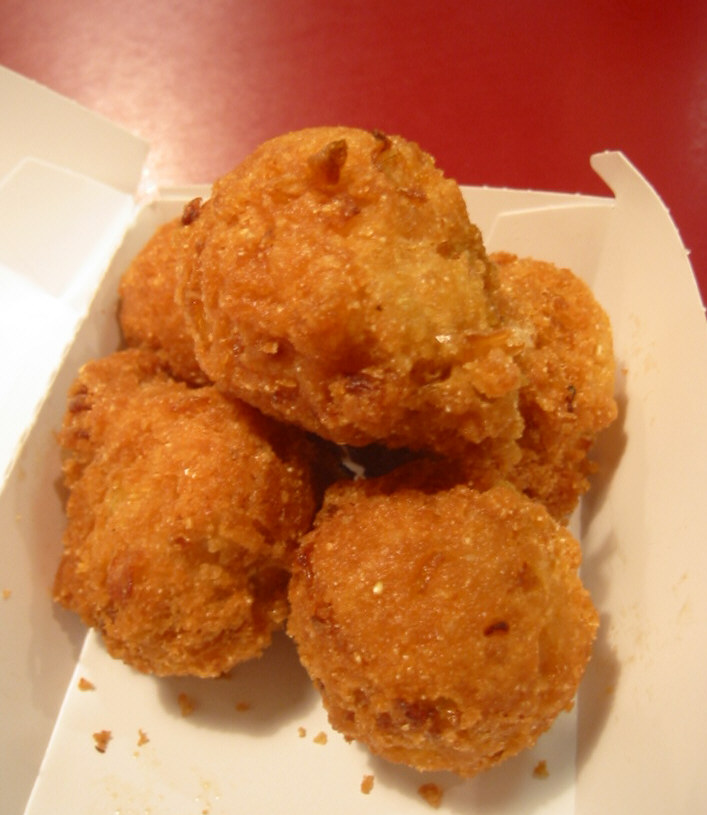 HushpuppyVegetarian
🇺🇸 United StatesDeep-fried cornmeal balls often served with seafood in the Southern United States
Sauce, pickle or ferment, Lunch, Dinner
HushpuppyVegetarian
🇺🇸 United StatesDeep-fried cornmeal balls often served with seafood in the Southern United States
Sauce, pickle or ferment, Lunch, Dinner
 Mushy peasVegan
🇬🇧 United Kingdom and 1 moreSoft-cooked marrowfat peas, a classic side for fish and chips in the UK
Sauce, pickle or ferment, Lunch, Dinner
Mushy peasVegan
🇬🇧 United Kingdom and 1 moreSoft-cooked marrowfat peas, a classic side for fish and chips in the UK
Sauce, pickle or ferment, Lunch, Dinner