
Bagoong
Fermented fish or shrimp paste used as a salty Filipino condiment
Bagoong is a Filipino condiment made by fermenting fish, krill, or shrimp with salt. It comes in several types, depending on the main ingredient and region, and is used to add a strong, savory flavor to many dishes. Bagoong is a staple in the Philippines and varies in preparation across the country.
- Made by fermenting fish, krill, or shrimp with salt
- Main types are bagoóng isdâ (fish) and bagoóng alamáng (shrimp/krill)
- A byproduct of its fermentation is patís, a clear fish sauce
- Regional names and recipes vary across the Philippines
- Vegan versions use vegetables instead of seafood
What is Bagoong?
Bagoong is a savory, salty paste or sauce made by fermenting fish, krill, or shrimp with salt. The finished product ranges in color from pale gray to pink or red, depending on the type and whether a red starter called angkák is added. Its aroma is strong and pungent, and the taste is deeply salty and umami-rich. Bagoong is used as a condiment or flavoring in Filipino cooking, often added to dishes to enhance their depth and savoriness. There are several types, including those made from anchovies, round scads, or shrimp, each with its own local name.
Where does Bagoong come from?
Bagoong comes from the Philippines, where it has long been a staple condiment. Its history goes back centuries, with early Spanish colonial accounts describing it as a food with a strong smell, though Filipino writers have defended its quality and taste. The process of fermenting fish or shrimp with salt is traditional in many coastal communities, and the practice has developed regional variations throughout the country. Bagoong is related to other Southeast Asian fish sauces and pastes, but is distinct in its ingredients and preparation.
How is Bagoong made?
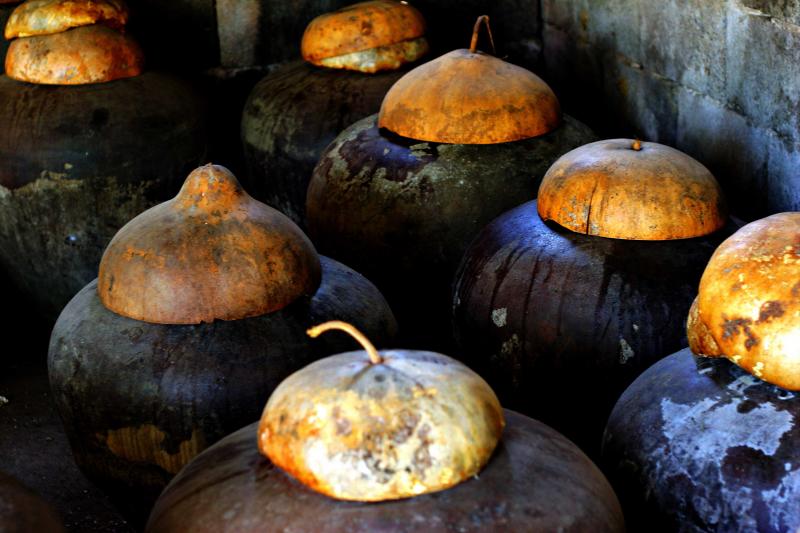
To make bagoong, fish or shrimp are mixed with salt and placed in large earthen jars, where they ferment for one to three months. The mixture is stirred occasionally to ensure even fermentation. For shrimp or krill bagoong, the seafood is first washed in a weak brine before salting. Some variants use a red starter called angkák to give a pink or red color. The longer the fermentation, the more intense the flavor. A clear liquid called patís (fish sauce) forms on top during fermentation and is drained off for separate use.


How and when is Bagoong eaten?
Bagoong is used as a condiment or ingredient in many Filipino dishes. It is often served alongside vegetables, grilled meats, or rice, and can be stirred into stews or sauces for added flavor. Some people enjoy it with green mangoes as a snack. Its strong taste means it is usually used in small amounts. Bagoong is an everyday food in the Philippines and appears in both home cooking and restaurant dishes.
Kinds of Bagoong
There are many regional and ingredient-based variations of bagoong. Bagoóng isdâ refers to fish-based versions, with names changing depending on the fish used, such as bagoóng monamon for anchovies or bagoóng terong for bonnetmouths. In the southern Philippines, anchovy bagoong is called guinamos or ginamos. Shrimp or krill-based bagoong is known as bagoóng alamáng, with local names like uyap or aramang. Vegan versions use vegetables such as squash or moringa instead of seafood.
What Bagoong means
Bagoong is a deeply rooted part of Filipino food culture, found in daily meals across the country. It has sometimes been viewed as exotic or unusual by outsiders, but is widely appreciated in the Philippines for its flavor. Historical accounts show both criticism and defense of its taste and smell. Bagoong is not tied to specific religious or festive occasions, but is a symbol of Filipino culinary tradition and resourcefulness.
Questions people ask about Bagoong
What is bagoong made of?
Bagoong is made by fermenting fish, krill, or shrimp with salt. Some versions use anchovies, round scads, or other small fish, while others use shrimp or krill. There are also vegan versions made from vegetables.
Where does bagoong come from?
Bagoong is from the Philippines and is a common condiment in Filipino cuisine. Its preparation and name can vary by region within the country.
How is bagoong used in food?
Bagoong is used as a condiment or flavoring in many Filipino dishes. It is often served with vegetables, meats, or rice, and can be added to stews and sauces for extra flavor.
What does bagoong taste and smell like?
Bagoong has a strong, pungent aroma and a deeply salty, savory taste. Its flavor is rich in umami, making it a powerful addition to dishes.
Are there different types of bagoong?
Yes, there are many types of bagoong, depending on the main ingredient and region. Fish-based versions are called bagoóng isdâ, while shrimp or krill versions are called bagoóng alamáng. There are also vegan versions made from vegetables.
Good reading and sources
The facts on this page come from the Wikipedia article "Bagoong", written by its contributors and used under the CC BY-SA 4.0 licence, and from its Wikidata record (CC0). Thali rewrote the text in its own words, with AI assistance, and compares every page with the article to make sure no passage is copied. It may be reused under the same CC BY-SA 4.0 licence with a link back.
It may contain mistakes, and it is not dietary or allergy advice: recipes differ from cook to cook. If something is wrong, tell us. Last refreshed 2026-10-03.
More from the Philippines
All the food of the Philippines Adobo
🇪🇸 Spain and 5 moreA marinade or sauce of paprika, garlic, salt, vinegar and spices from Iberia
Sauce, pickle or ferment
Adobo
🇪🇸 Spain and 5 moreA marinade or sauce of paprika, garlic, salt, vinegar and spices from Iberia
Sauce, pickle or ferment
 Salted duck egg
🇨🇳 China and 3 moreDuck eggs preserved in salt, prized for their rich, orange-red yolks
Sauce, pickle or ferment, Breakfast, Lunch
Salted duck egg
🇨🇳 China and 3 moreDuck eggs preserved in salt, prized for their rich, orange-red yolks
Sauce, pickle or ferment, Breakfast, Lunch
 SardineFish or seafood
🇵🇹 Portugal and 5 moreSmall oily fish enjoyed fresh, canned, smoked or pickled in many countries
Main dish, Lunch, Dinner
SardineFish or seafood
🇵🇹 Portugal and 5 moreSmall oily fish enjoyed fresh, canned, smoked or pickled in many countries
Main dish, Lunch, Dinner
 Khao tom
🇱🇦 Laos and 5 moreSticky rice and fillings wrapped in banana leaves and steamed
Sweet or dessert, Snacks
Khao tom
🇱🇦 Laos and 5 moreSticky rice and fillings wrapped in banana leaves and steamed
Sweet or dessert, Snacks
Its cousins elsewhere
All sauces, pickles and ferments SauerkrautVegan
🇩🇪 Germany and 5 moreFinely shredded cabbage preserved by natural fermentation in salt
Sauce, pickle or ferment, Lunch, Dinner
SauerkrautVegan
🇩🇪 Germany and 5 moreFinely shredded cabbage preserved by natural fermentation in salt
Sauce, pickle or ferment, Lunch, Dinner
 GuacamoleVegan
🇲🇽 Mexico and 1 moreAvocado mashed with lime, salt, and herbs, served as a dip or spread
Sauce, pickle or ferment, Snacks, Lunch
GuacamoleVegan
🇲🇽 Mexico and 1 moreAvocado mashed with lime, salt, and herbs, served as a dip or spread
Sauce, pickle or ferment, Snacks, Lunch
 TzatzikiVegetarianτζατζίκι
🇬🇷 Greece and 5 moreStrained yogurt mixed with cucumber, garlic and herbs, served cold as a dip or sauce
Sauce, pickle or ferment, Lunch, Dinner
TzatzikiVegetarianτζατζίκι
🇬🇷 Greece and 5 moreStrained yogurt mixed with cucumber, garlic and herbs, served cold as a dip or sauce
Sauce, pickle or ferment, Lunch, Dinner
 Pâté
🇫🇷 France and 5 moreA smooth or coarse spread made from minced meat, liver, or vegetables
Sauce, pickle or ferment
Pâté
🇫🇷 France and 5 moreA smooth or coarse spread made from minced meat, liver, or vegetables
Sauce, pickle or ferment