Sacred and ceremonial meals
Suhoor
The meal Muslims eat before dawn in Ramadan, ahead of the day's fast, taken quietly at home and finished before the dawn prayer.
Presented by ClearTrust Free for cooks, travellers and the curious.
Suhoor, also written suhur or sehri, is the pre-dawn meal of Ramadan. Muslims wake in the last part of the night to eat and drink before the fast begins at first light. The Prophet Muhammad encouraged it and described it as a blessed meal, so it is valued even when it is only a few dates and water.
What it is
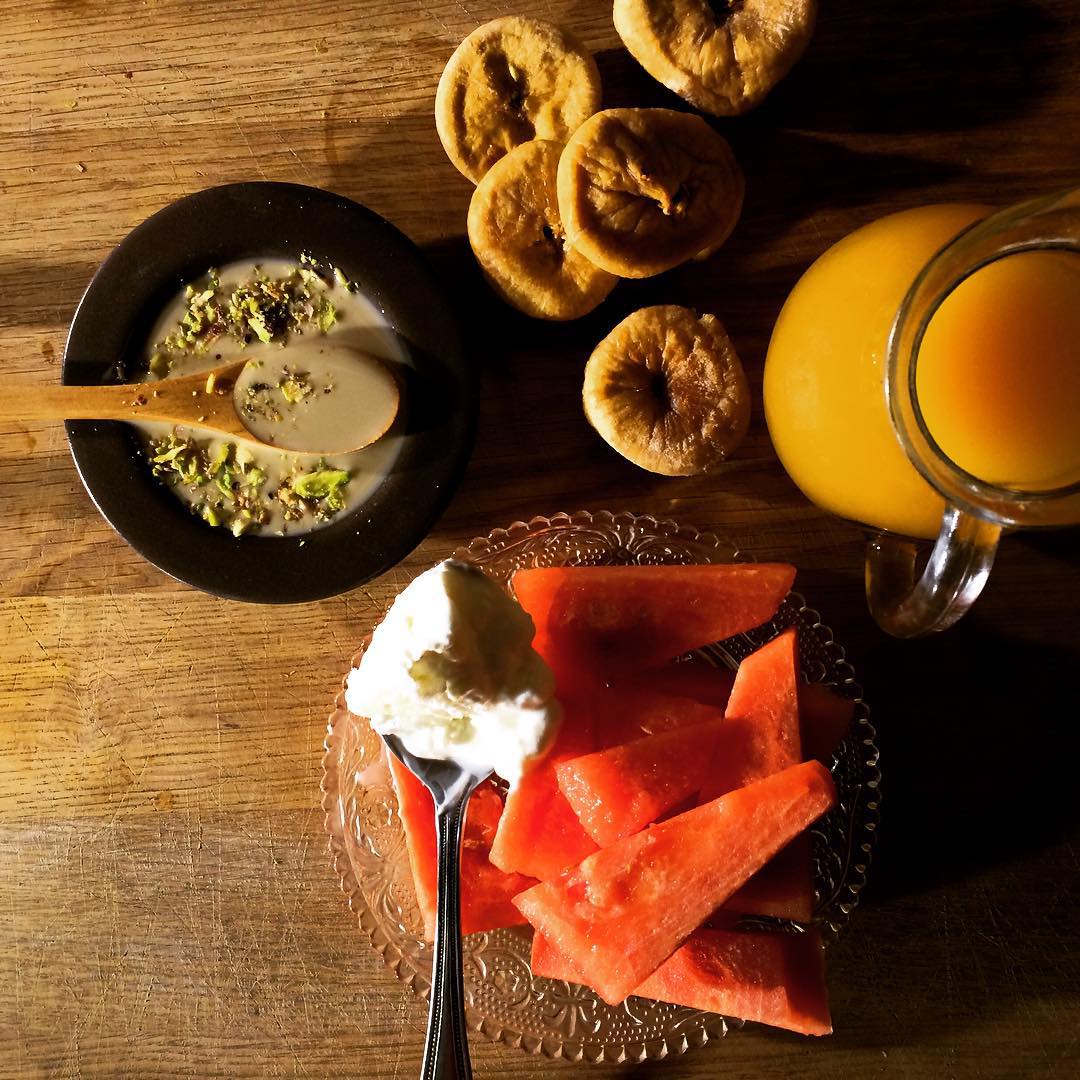
Suhoor is a practical meal. People choose food that will carry them through a long day: beans, eggs, yoghurt, cheese, flatbread, porridge, rice, fruit and plenty of water. Salty and very sweet foods are often avoided because they cause thirst. In Egypt the standard dish is stewed fava beans with bread. In Turkey it may be a spread like breakfast. In Pakistan and Bangladesh there are flatbreads, yoghurt and fine vermicelli soaked in milk. In Indonesia it is called sahur.
Waking the neighbourhood
Before alarm clocks, someone had to wake people in time. In many Muslim countries a man walks the streets in the small hours beating a drum and calling out, sometimes naming the households as he passes. In Egypt and the Levant he is the mesaharati. In Turkey Ramadan drummers do the same job and are tipped at the end of the month. In parts of Indonesia groups of young people parade with drums and bamboo instruments.
How it works
The meal is eaten at home with the family, in the last hour or so before dawn. It is recommended to delay it until near the end of the night. Eating and drinking stop at the start of dawn, when the call to the morning prayer is given. Many people set a margin of a few minutes to be safe. In large cities, restaurants and street stalls open through the night in Ramadan, and going out for suhoor with friends has become popular.
How to do it
- Check the local prayer timetable for the time of dawn (Fajr).
- Wake about an hour before it.
- Eat slow-burning food: beans, eggs, yoghurt, bread, fruit.
- Drink water steadily. Stop eating and drinking before the dawn call.
- Make the intention to fast, then pray the dawn prayer.
Good manners
- Keep noise down. Not everyone in a building is fasting or awake.
- Tip the Ramadan drummer when he calls at the end of the month.
- If staying with a fasting family, join them. Being woken for suhoor is a kindness.
What is eaten
 Ful medamesStew of slow-cooked fava beans with olive oil and spices, a staple across Egypt
 ParathaLayered flatbread from the Indian subcontinent, often fried and sometimes stuffed
 NihariSlow-cooked meat stew from the Indian subcontinent, served hot with bread or rice
 MenemenEggs gently cooked with tomatoes, peppers, and spices, often served for breakfast in Turkey
 Strained yogurtYogurt thickened by straining out most of its whey
 KhichdiRice and lentils cooked together, often with vegetables and spices
 SimitRing-shaped bread with a sesame seed crust, sold by street vendors
Also part of it, and being written: Pheni.
Sources and further reading
Original text by the Thali desk, written with AI assistance and checked against the sources above. Customs vary from place to place. If we have something wrong, tell us.
Photo credits on this page
The small pictures above come from Wikimedia Commons under free licences. Some are cropped to fit.
- Menemen: やましこ, CC BY-SA 2.0, source
- Khichdi: Dkgohil, CC BY-SA 4.0, source
- Paratha: Wagaung at English Wikipedia, CC BY-SA 3.0, source
- Simit: Unknown author, CC BY-SA 3.0, source
- Ful medames: Habib M'henni, CC BY-SA 3.0, source
- Strained yogurt: Takeaway, CC BY-SA 4.0, source
- Nihari: Miansari66, Public domain, source