Shared tables and spreads
Thali
A complete Indian meal on one round plate: rice or bread in the middle and small bowls of vegetables, lentils, yoghurt and pickle around it.
Presented by ClearTrust Free for cooks, travellers and the curious.
Thali is the Hindi word for a plate, and also for the meal served on it. Everything comes at once: several small bowls, each holding a different dish, arranged around rice or flatbread. The idea is balance. A thali should give you something sour, sweet, salty, bitter and hot in a single sitting.

What it is
The plate is usually steel, with a rim. The small bowls are called katori. A typical thali has a dal, two or three vegetable dishes, yoghurt or raita, a pickle, a crisp papad, rice, bread and something sweet. In many restaurants the thali is unlimited. Servers walk the room with pots and refill any bowl that looks low until you tell them to stop. In South India the same meal is simply called meals and is often served on a banana leaf.
Regional forms
Every region fills the plate differently. A Gujarati thali is vegetarian and slightly sweet, with thin rotis, kadhi and a sweet served alongside the savoury dishes. A Rajasthani thali is richer, with dal, baked wheat balls and ghee. A Maharashtrian thali may come with a thin sour curry and millet bread. In the south, rice is the centre and comes with sambar, rasam, vegetables and curd. In Nepal the daily plate of rice, lentils and vegetables is called dal bhat.
How it works
You sit, and the plate arrives either full or empty and is filled in front of you. There is no fixed order, but most people start with bread and the drier vegetables, move to rice with dal or curry, and finish with rice and yoghurt. Food is mixed and eaten with the right hand. The price is fixed. In an unlimited thali house, you signal that you are done by covering your plate with your hand or saying bas, enough.
How to do it
- Wash your hands before sitting. Most thali houses have a basin.
- Tear bread with your right hand and scoop from the bowls.
- Mix rice with dal or curry on the plate, a little at a time.
- Accept refills of what you like and wave away the rest.
- Finish with yoghurt and rice, or buttermilk, to cool the meal.
Good manners
- Eat with the right hand only. The left stays off the food.
- Do not offer food from your plate to others once you have started eating.
- Take only what you will finish. Leaving food is frowned on.
What is eaten
 DalSoupy dish made from split lentils, peas or beans, a staple across South Asia
 ChapatiUnleavened flatbread cooked on a griddle and served hot with meals
 RaitaYogurt mixed with vegetables, fruit or pulses, served as a cooling side dish
 PapadamThin, crisp flatbread made from lentil or other flours, served as a snack or side
 SambarA South Indian lentil and vegetable stew soured with tamarind
 RasamA spiced, tangy South Indian soup served hot with rice
 Dal bhatLentil soup served with plain rice, a staple meal across South Asia
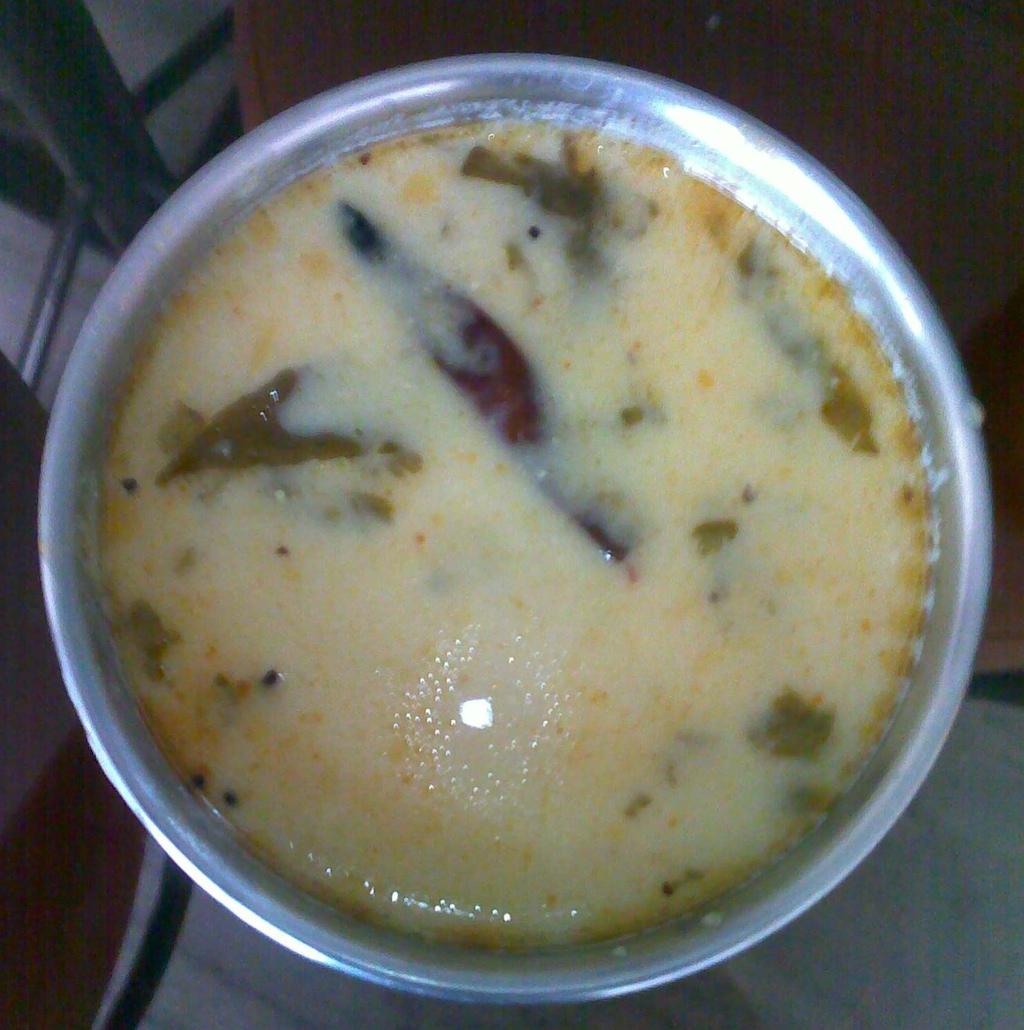 KadhiYogurt and gram flour soup, often with fritters, from RajasthanPuriUnleavened wheat flatbread, deep-fried until puffed and golden
Sources and further reading
Original text by the Thali desk, written with AI assistance and checked against the sources above. Customs vary from place to place. If we have something wrong, tell us.
Photo credits on this page
The small pictures above come from Wikimedia Commons under free licences. Some are cropped to fit.
- Papadam: Windell H. Oskay, CC BY 2.5, source
- Raita: Sonia Goyal, CC BY-SA 2.0, source
- Sambar: Jayashree Govindarajan, CC BY 2.0, source
- Chapati: Roland zh, CC BY-SA 3.0, source
- Rasam: Miansari66, Public domain, source
- Dal bhat: Gaurav Dhwaj Khadka, CC BY-SA 4.0, source
- Dal: Bhaskaranaidu, CC BY-SA 3.0, source
- Kadhi: Mowglee, Public domain, source