🇱🇾 The food of Libya
9 dishes from Libya, best known first.
Libyan cooking blends Amazigh, Arab, Ottoman, and Mediterranean influences, shaped by the country’s geography and history. Meals center on grains, legumes, lamb, and seafood, with bold spice blends and preserved foods reflecting both coastal abundance and desert resourcefulness. Italian colonial history left a strong mark, especially in the widespread use of pasta.
- Bazin is made by beating barley flour into a dense dough.
- Pasta dishes like imbakbaka show Italian influence.
- Lamb is the most common meat; camel is eaten in the south.
- Harissa and complex spice blends flavor many dishes.
- Canned tuna is a staple protein across Libya.
The cooking of Libya
Libyan food is a meeting point of North African and Mediterranean traditions. Along the coast, olive oil, seafood, and fresh herbs are common, while inland and southern areas rely more on preserved meats, barley, and hardy legumes. Italian colonial rule introduced pasta, now a staple, and many dishes use complex spice blends like bzarr and bokharat. Lamb is the main meat, but camel is eaten in the south. Meals often feature slow-cooked stews, spiced sauces, and breads shaped by local customs. The cuisine avoids pork and alcohol, in keeping with Islamic law.
Staple foods in Libya
Barley and wheat are the main grains, used for breads like bazin and pasta. Legumes such as chickpeas, fava beans, and lentils are everyday foods. Lamb and mutton are the most common meats, with camel in the south. Tuna, especially canned, is widely eaten. Olive oil, tomatoes, onions, and a variety of beans and vegetables round out the diet. Fruits like dates, figs, and oranges are abundant, especially near the coast.
Breakfast in Libya
Breakfast often includes shakshouka, eggs poached in a spiced tomato and pepper sauce, sometimes with preserved meat. Flatbreads and tea are common, and lighter egg dishes like ejja (a baked omelet with potatoes, herbs, and chilies) may be served.
Snacks and street food in Libya
Popular snacks include khbeiza, small stuffed breads often filled with tuna and harissa, and bureek, savory turnovers. Salata arabiya, a chopped salad of tomatoes, cucumbers, and onions, is a frequent side. Pickled vegetables (amsyar) and spicy condiments like harissa and sharmoula are served with many meals.
Sweets and drinks in Libya
Sweet date or carob syrup called rub is eaten with asida, a soft wheat pudding. Tea is central to social gatherings, sometimes flavored with mint, sage, almonds, or rose petals. Rose water and orange blossom water are used to scent drinks and desserts.
From region to region in Libya
Coastal areas, especially around Tripoli, feature seafood, olive oil, and Italian-inspired pasta dishes. Eastern Libya shares similar pasta traditions but uses different names. Southern Libyan food is more influenced by Arab and Amazigh roots, with meals built around dried meats, fermented dairy, barley, and legumes, reflecting the arid climate and nomadic history. Each region adapts core dishes to local ingredients and customs.
Festival and religious food in Libya
During Eid al-Adha, lamb is slow-cooked in underground pits (bourdeem) or grilled as shwaya. Couscous is a festive dish, often shared at communal gatherings. Preserved meats like gideed are used in stews and soups for special occasions, especially when fresh meat is scarce.
The facts in this overview come from the Wikipedia article "Libyan cuisine", written by its contributors and used under the CC BY-SA 4.0 licence. Thali rewrote the text in its own words, with AI assistance, and compares every page with the article to make sure no passage is copied. It may be reused under the same CC BY-SA 4.0 licence with a link back.
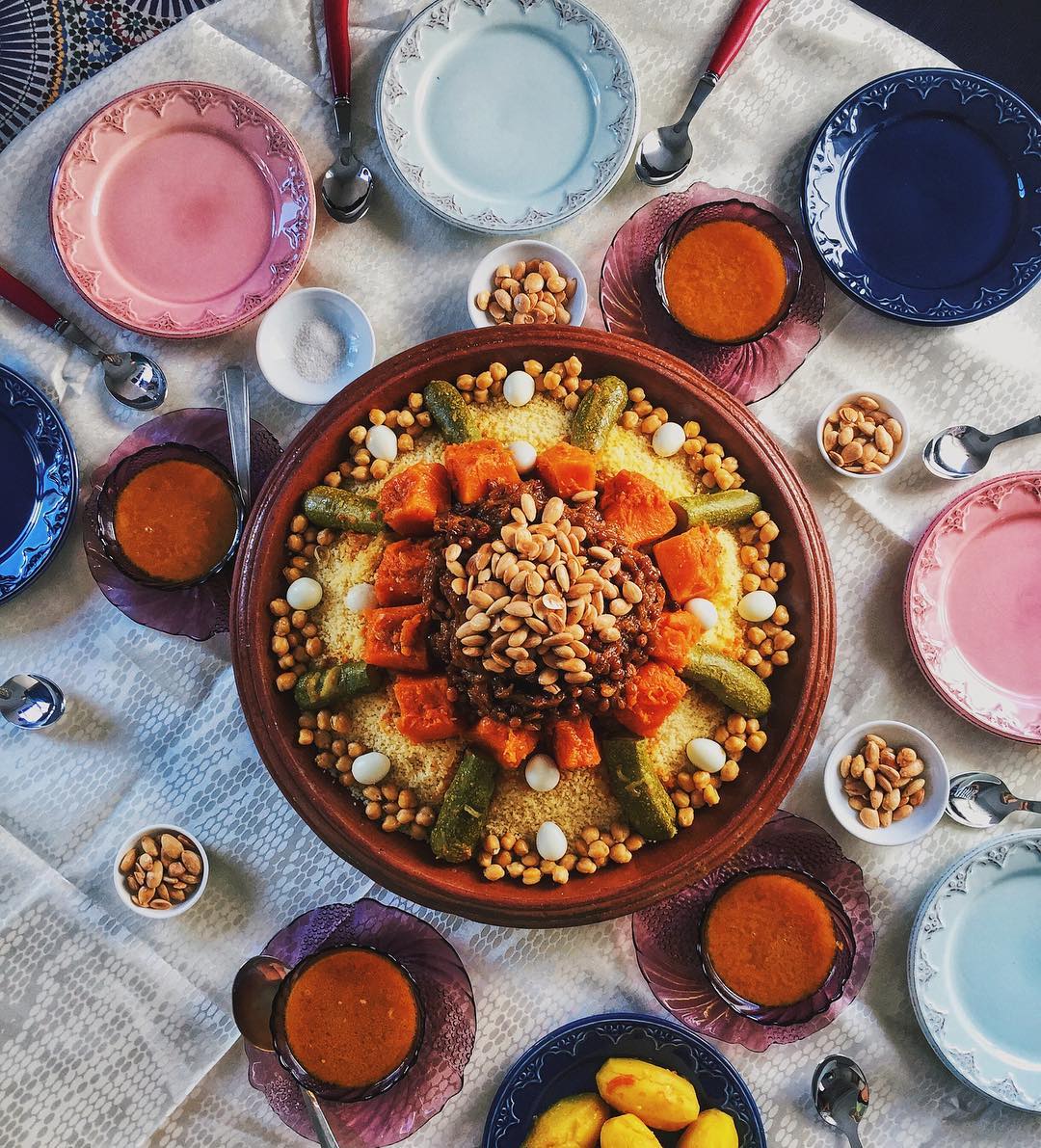 Couscousseksu
🇩🇿 Algeria and 4 moreSteamed semolina granules served with stew or vegetables across North Africa
Main dish, Lunch, Dinner
Couscousseksu
🇩🇿 Algeria and 4 moreSteamed semolina granules served with stew or vegetables across North Africa
Main dish, Lunch, Dinner
 Tajineطاجين
🇲🇦 Morocco and 4 moreNorth African stew slow-cooked in a cone-lidded clay pot
Main dish, Lunch, Dinner
Tajineطاجين
🇲🇦 Morocco and 4 moreNorth African stew slow-cooked in a cone-lidded clay pot
Main dish, Lunch, Dinner
 Bazinبازين
🇱🇾 Libya and 1 moreLibyan dome-shaped barley bread served with stew and eggs
Bread, Lunch, Dinner
Bazinبازين
🇱🇾 Libya and 1 moreLibyan dome-shaped barley bread served with stew and eggs
Bread, Lunch, Dinner
 UsbanMeatعصبان
🇹🇳 Tunisia and 2 moreNorth African sausage stuffed with rice, lamb, liver, herbs and spices
Main dish, Lunch, Dinner
UsbanMeatعصبان
🇹🇳 Tunisia and 2 moreNorth African sausage stuffed with rice, lamb, liver, herbs and spices
Main dish, Lunch, Dinner
Photo credits on this page
The small pictures above come from Wikimedia Commons under free licences. Some are cropped to fit.
- Couscous: Lmmima, CC BY-SA 4.0, source
- Usban: Touzrimounir, CC BY-SA 4.0, source
- Tajine: Bawdeep2010, CC BY-SA 4.0, source