
Abgoosht
In its own language: آبگوشت
Persian lamb and chickpea stew served in stoneware pots
Abgoosht is a traditional Iranian stew made with lamb, chickpeas, beans, potatoes, tomatoes, and spices. Served in stoneware crocks called dizi, it is eaten in two parts: first the broth with bread, then the mashed solids. Variations are found in Armenia and among Assyrians, using beef and different beans.
- Served in traditional stoneware pots called dizi
- Eaten in two stages: broth first, then mashed solids
- Main ingredients are lamb, chickpeas, beans, and potatoes
- Variations use beef in Armenia and among Assyrians
- Azerbaijani piti is a related stew
What is Abgoosht?
Abgoosht is a stew from Iran, often described as a thick mutton soup with chickpeas. It combines lamb, chickpeas, white beans, potatoes, tomatoes, onions, turmeric, and dried lime. The dish is cooked slowly until everything is tender. Traditionally, it is served in heavy stoneware pots called dizi. The meal is eaten in two stages: first, the broth is sipped with bread, then the remaining solids are mashed and eaten with more bread, onions, and sometimes pickles or herbs.
Where does Abgoosht come from?
Abgoosht has roots in Iranian cooking and is closely linked to Persian food traditions. The name means 'meat broth' in Persian. The dish is also known as dizi, after the stoneware pots used to cook and serve it. Over time, abgoosht spread to neighboring regions, where local versions developed. In Armenia and among Assyrians in northwestern Iran, beef is often used instead of lamb, and different beans may be added. The Azerbaijani piti is a related stew.
How is Abgoosht made?
To make abgoosht, lamb is simmered with chickpeas, white beans, potatoes, tomatoes, onions, turmeric, and dried lime. Once the ingredients are cooked through, the broth is separated from the solids. The solids are then mashed, sometimes with a meat grinder or by hand, to make a mixture called gusht kubideh. The broth is eaten first, usually with pieces of bread soaked in it. The mashed mixture is then eaten with more bread and sometimes fresh herbs or pickles.


How and when is Abgoosht eaten?
Abgoosht is typically eaten as a main meal, often for lunch or dinner. It is served in the pot it was cooked in, and diners first enjoy the broth with bread. The remaining ingredients are mashed and eaten with more bread, onions, and sometimes pickled vegetables or herbs. In Assyrian tradition, it is eaten with lavasha bread, especially in winter. The meal is communal and filling, making it a staple in many households.
Kinds of Abgoosht
There are several regional versions of abgoosht. In Armenia, beef replaces lamb, and local beans may be used. Assyrians in Iran use beef, lime, kidney beans, and chickpeas, serving it with potatoes and lavasha bread. The Azerbaijani piti is a similar stew with its own local touches. Beans such as kidney beans or black-eyed peas may be used in place of white beans in some recipes.
What Abgoosht means
Abgoosht is a well-known part of Iranian daily life and is often associated with traditional restaurants. The use of dizi pots is a hallmark of the dish. Among Assyrians, abgoosht is a winter specialty. The dish is valued for its hearty, communal nature and is linked to regional identity in Iran, Armenia, and Azerbaijan. It is not tied to a specific religious or festive occasion, but rather enjoyed as an everyday meal.
Questions people ask about Abgoosht
What is abgoosht made of?
Abgoosht is made from lamb, chickpeas, white beans, potatoes, tomatoes, onions, turmeric, and dried lime. Some versions use different beans or beef instead of lamb.
Where does abgoosht come from?
Abgoosht is a traditional stew from Iran, with similar versions found in Armenia and Azerbaijan. It is also known as dizi in Iran.
How is abgoosht eaten?
Abgoosht is eaten in two parts: first, the broth is enjoyed with bread, then the solids are mashed and eaten with more bread, onions, and sometimes pickles or herbs.
What are the main variations of abgoosht?
In Armenia and among Assyrians, beef is used instead of lamb, and different beans may be added. The Azerbaijani piti is a similar dish with local differences.
Is abgoosht served hot or cold?
The sources do not specify, but abgoosht is typically served hot as a main meal.
Good reading and sources
The facts on this page come from the Wikipedia article "Abgoosht", written by its contributors and used under the CC BY-SA 4.0 licence, and from its Wikidata record (CC0). Thali rewrote the text in its own words, with AI assistance, and compares every page with the article to make sure no passage is copied. It may be reused under the same CC BY-SA 4.0 licence with a link back.
It may contain mistakes, and it is not dietary or allergy advice: recipes differ from cook to cook. If something is wrong, tell us. Last refreshed 2026-10-03.
More from Iran
All the food of Iran Kebabكَبَاب
🇹🇷 Turkey and 5 moreGrilled or roasted meat, often on skewers, found across the Middle East and beyond
Main dish, Lunch, Dinner
Kebabكَبَاب
🇹🇷 Turkey and 5 moreGrilled or roasted meat, often on skewers, found across the Middle East and beyond
Main dish, Lunch, Dinner
 Pilaf
🇺🇿 Uzbekistan and 5 moreRice cooked in stock with spices, meat or vegetables, with each grain kept separate
Main dish, Lunch, Dinner
Pilaf
🇺🇿 Uzbekistan and 5 moreRice cooked in stock with spices, meat or vegetables, with each grain kept separate
Main dish, Lunch, Dinner
 Khoresh bademjanخورش بادمجان
🇮🇷 IranPersian stew of eggplant, tomato, lamb, and tart fruit, served with rice
Stew or curry, Lunch, Dinner
Khoresh bademjanخورش بادمجان
🇮🇷 IranPersian stew of eggplant, tomato, lamb, and tart fruit, served with rice
Stew or curry, Lunch, Dinner
 Kabab koobidehMeatکباب کوبیده
🇮🇷 IranIranian skewered kebab of ground lamb or beef mixed with onion and spices
Main dish, Lunch, Dinner
Kabab koobidehMeatکباب کوبیده
🇮🇷 IranIranian skewered kebab of ground lamb or beef mixed with onion and spices
Main dish, Lunch, Dinner
Its cousins elsewhere
All main dishes ChakhchoukhaMeatشخشوخة
🇩🇿 AlgeriaAlgerian flatbread pieces in a spiced tomato and meat stew
Main dish, Lunch, Dinner
ChakhchoukhaMeatشخشوخة
🇩🇿 AlgeriaAlgerian flatbread pieces in a spiced tomato and meat stew
Main dish, Lunch, Dinner
 Moussakaμουσακάς
🇬🇷 Greece and 5 moreBaked casserole of eggplant or potato, often layered with meat and sauce
Main dish, Lunch, Dinner
Moussakaμουσακάς
🇬🇷 Greece and 5 moreBaked casserole of eggplant or potato, often layered with meat and sauce
Main dish, Lunch, Dinner
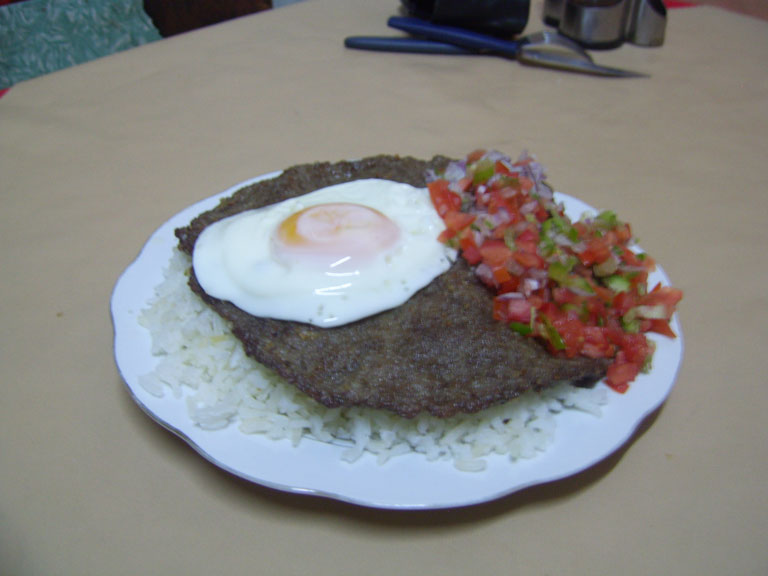 SilpanchoMeatSillp'anchu
🇧🇴 BoliviaLayered Bolivian meal with rice, potatoes, breaded meat, and fried eggs
Main dish, Lunch, Dinner
SilpanchoMeatSillp'anchu
🇧🇴 BoliviaLayered Bolivian meal with rice, potatoes, breaded meat, and fried eggs
Main dish, Lunch, Dinner
 BouillabaisseFish or seafood
🇫🇷 FranceA Marseille fish stew with local seafood, herbs, and saffron broth
Stew or curry, Lunch, Dinner
BouillabaisseFish or seafood
🇫🇷 FranceA Marseille fish stew with local seafood, herbs, and saffron broth
Stew or curry, Lunch, Dinner