
Bánh da lợn
Vietnamese steamed layer cake with colorful, soft, sweet layers
Bánh da lợn is a steamed layer cake from southern Vietnam, made with rice flour, tapioca starch, coconut milk, sugar, and fillings such as mung bean, taro, or durian. Its thin, brightly colored layers are soft and sweet, and it is enjoyed as a snack or dessert.
- Steamed cake with colorful, thin layers
- Made from rice flour, tapioca starch, and coconut milk
- Fillings include mung bean, taro, or durian
- Popular in southern Vietnam
- Similar to kuih lapis and khanom chan
What is Bánh da lợn?
Bánh da lợn is a Vietnamese cake made by steaming layers of batter and filling. The batter uses rice flour and tapioca starch, which give the cake its chewy, gelatinous texture. Each layer is about a centimeter thick and can be colored with natural ingredients like pandan leaf for green or lá cẩm for purple. Fillings include mashed mung bean, taro, or durian, adding flavor and color. The finished cake is soft, sweet, and visually striking, with alternating bands of color and filling.
Where does Bánh da lợn come from?
This cake is most popular in southern Vietnam, though similar layered cakes are found in other Southeast Asian countries. Its name means 'pig skin cake', but it contains no pork; the name refers to the cake's layered appearance. In northern Vietnam, a related dessert called bánh chín tầng mây, or 'nine-layer cloud cake', is made. The cake's use of steamed layers and plant-based colorings reflects local ingredients and cooking styles.
How is Bánh da lợn made?
To make bánh da lợn, cooks prepare a batter from rice flour, tapioca starch, coconut milk or water, and sugar. This batter is divided and colored with ingredients like pandan leaf or magenta plant leaves. Fillings such as mashed mung bean, taro, or durian are prepared separately. The cake is assembled by steaming alternating layers of colored batter and filling, one at a time, until all layers are set. Sometimes, artificial coloring is used instead of plant extracts.


How and when is Bánh da lợn eaten?
Bánh da lợn is served as a snack or dessert, often cut into squares or slices to show off its colorful layers. It is eaten at room temperature and does not require special accompaniments. The cake is popular for everyday enjoyment and is found in markets and bakeries, especially in southern Vietnam. Its soft, sweet texture and bright appearance make it appealing to both children and adults.
Kinds of Bánh da lợn
Common versions use pandan leaf for a green color and mung bean paste for filling, or pandan with durian. Another variation uses lá cẩm, which gives a purple hue, paired with mashed taro. In modern times, cooks may use artificial food coloring to achieve brighter or different colors. Similar cakes exist in neighboring countries, such as kuih lapis in Malaysia and Indonesia, and khanom chan in Thailand.
What Bánh da lợn means
Bánh da lợn is a familiar treat in Vietnamese daily life, especially in the south. Its layered look and soft texture make it a favorite at informal gatherings and as a sweet snack. The cake is not tied to specific festivals or religious events, but its bright colors and gentle sweetness make it a festive presence on many tables. It is also recognized as part of a broader family of Southeast Asian steamed layer cakes.
Questions people ask about Bánh da lợn
What is bánh da lợn made of?
It is made from rice flour, tapioca starch, coconut milk or water, sugar, and fillings such as mung bean, taro, or durian. Natural plant extracts like pandan leaf or magenta plant may be used for coloring.
Where does bánh da lợn come from?
Bánh da lợn comes from southern Vietnam and is a common sweet snack or dessert in Vietnamese cuisine.
What does bánh da lợn look and taste like?
It has thin, colorful layers with a soft, chewy texture. The cake is sweet, and the flavor depends on the filling, such as mung bean, taro, or durian.
Is bánh da lợn vegan or vegetarian?
Bánh da lợn is vegan, as it contains no animal products. Its main ingredients are plant-based flours, coconut milk, sugar, and vegetable colorings.
Are there similar cakes in other countries?
Yes, similar steamed layer cakes include kuih lapis in Malaysia and Indonesia, and khanom chan in Thailand.
Good reading and sources
The facts on this page come from the Wikipedia article "Bánh da lợn", written by its contributors and used under the CC BY-SA 4.0 licence, and from its Wikidata record (CC0). Thali rewrote the text in its own words, with AI assistance, and compares every page with the article to make sure no passage is copied. It may be reused under the same CC BY-SA 4.0 licence with a link back.
It may contain mistakes, and it is not dietary or allergy advice: recipes differ from cook to cook. If something is wrong, tell us. Last refreshed 2026-10-03.
More from Vietnam
All the food of Vietnam Mooncake月饼 / 月餅
🇨🇳 China and 5 moreA round Chinese pastry with sweet or nutty filling, eaten at the Mid-Autumn Festival
Pie or savoury pastry, Tea time, Snacks
Mooncake月饼 / 月餅
🇨🇳 China and 5 moreA round Chinese pastry with sweet or nutty filling, eaten at the Mid-Autumn Festival
Pie or savoury pastry, Tea time, Snacks
 Yule logVegetarianBûche de Noël
🇫🇷 France and 5 moreA rolled sponge cake decorated to look like a wooden log for Christmas
Sweet or dessert
Yule logVegetarianBûche de Noël
🇫🇷 France and 5 moreA rolled sponge cake decorated to look like a wooden log for Christmas
Sweet or dessert
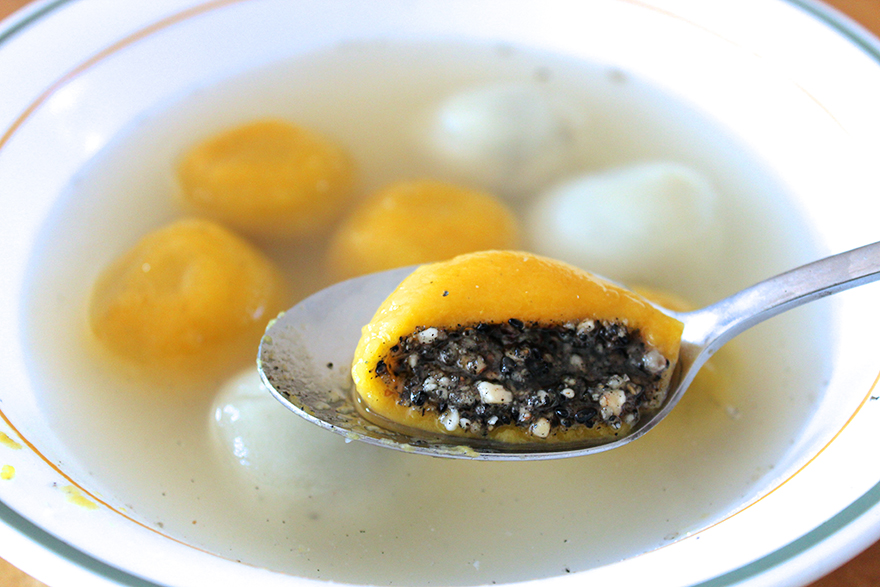 Tangyuan汤圆 / 湯圓
🇨🇳 China and 5 moreGlutinous rice balls, often filled, served in sweet or savory broth
Sweet or dessert, Snacks
Tangyuan汤圆 / 湯圓
🇨🇳 China and 5 moreGlutinous rice balls, often filled, served in sweet or savory broth
Sweet or dessert, Snacks
 CendolVeganꦕꦺꦤ꧀ꦝꦺꦴꦭ꧀
🇮🇩 Indonesia and 5 moreGreen rice flour jelly with coconut milk, palm sugar syrup and ice
Drink, Snacks
CendolVeganꦕꦺꦤ꧀ꦝꦺꦴꦭ꧀
🇮🇩 Indonesia and 5 moreGreen rice flour jelly with coconut milk, palm sugar syrup and ice
Drink, Snacks
Its cousins elsewhere
All sweets and desserts Mofo gasyVegan
🇲🇬 MadagascarSweet rice flour cakes cooked in a mold, eaten for breakfast in Madagascar
Bread, Breakfast
Mofo gasyVegan
🇲🇬 MadagascarSweet rice flour cakes cooked in a mold, eaten for breakfast in Madagascar
Bread, Breakfast
 KuloloVegan
🇺🇸 United StatesChewy Hawaiian pudding made from taro and coconut milk
Sweet or dessert, Snacks
KuloloVegan
🇺🇸 United StatesChewy Hawaiian pudding made from taro and coconut milk
Sweet or dessert, Snacks
 PamonhaVegetarian
🇧🇷 Brazil and 1 moreSweet corn paste boiled in corn husks, a specialty from Brazil
Sweet or dessert, Snacks
PamonhaVegetarian
🇧🇷 Brazil and 1 moreSweet corn paste boiled in corn husks, a specialty from Brazil
Sweet or dessert, Snacks
 CocadaVegetarian
🇧🇷 Brazil and 5 moreChewy coconut sweets baked and served at room temperature
Sweet or dessert, Snacks
CocadaVegetarian
🇧🇷 Brazil and 5 moreChewy coconut sweets baked and served at room temperature
Sweet or dessert, Snacks