
Boil up
In its own language: Kōhua kai
A Māori soup of meat, greens, root vegetables and dumplings boiled together
Boil up is a traditional Māori soup from New Zealand, made by simmering meat and bones, leafy greens like pūhā or watercress, root vegetables such as kūmara or potatoes, and flour dumplings called doughboys. It is a hearty dish, often served as a main meal and rooted in both Polynesian and European influences.
- A Māori soup combining pork, greens, root vegetables and dumplings
- Flour dumplings called doughboys are cooked in the broth
- Pūhā, watercress or cabbage are common greens in the dish
- Adopted European ingredients like pork and potatoes after colonization
What is Boil up?
Boil up is a soup that brings together meat and bones, often pork, with leafy greens such as pūhā (a wild green), watercress, or cabbage. Starchy vegetables like kūmara (sweet potato) or regular potatoes are added, and the mixture is simmered in a broth. Flour dumplings, called doughboys, are cooked in the soup, making it filling and substantial. The dish is known for its hearty, comforting nature and is a staple in Māori homes.
Where does Boil up come from?
Boil up has its roots in Māori cooking traditions, which originally used wooden bowls and hot stones to heat food. This method could not fully cook dense foods like pork or taro, which were instead baked in earth ovens. When Europeans arrived in New Zealand, they introduced pigs, potatoes, and iron cooking pots. Māori communities quickly adopted these new ingredients and tools, leading to the creation of boil up as a way to prepare pork and potatoes in portable camp ovens.
How is Boil up made?
To make boil up, meat and bones are simmered in water to create a rich broth. Leafy greens such as pūhā, watercress, or cabbage are added, along with root vegetables like kūmara or potatoes. Flour is mixed into dough and shaped into dumplings, which are then dropped into the simmering soup. Everything cooks together until the vegetables are tender and the dumplings are light.
How and when is Boil up eaten?
Boil up is usually served as a main meal, often for lunch or dinner. It is eaten hot, straight from the pot, and is valued for its ability to feed a group. The dish is commonly found in Māori households and gatherings, where it is enjoyed as a warming, everyday food. The dumplings and mix of greens and meat make it both nourishing and satisfying.
Kinds of Boil up
While pork is a common meat in boil up, other meats can be used depending on availability. The choice of greens varies too, with pūhā, watercress, or cabbage being popular. Some versions may use only potatoes or kūmara, or a mix of both. The dumplings, or doughboys, are a consistent feature, but their size and texture can differ between cooks.
What Boil up means
Boil up is seen as a symbol of Māori hospitality and adaptability, reflecting both traditional Polynesian methods and the influence of European settlers. It is a dish that connects families and communities, often prepared for gatherings. The use of local greens and the communal style of serving highlight its place in Māori daily life.
Questions people ask about Boil up
What is boil up made of?
Boil up is made with meat and bones, usually pork, leafy greens like pūhā or watercress, root vegetables such as kūmara or potatoes, and flour dumplings called doughboys, all simmered together in a broth.
Where does boil up come from?
Boil up comes from New Zealand and is a traditional food of the Māori people, influenced by both Polynesian cooking methods and European ingredients and tools.
What are doughboys in boil up?
Doughboys are flour-based dumplings that are shaped and cooked in the simmering soup, making the dish more filling and hearty.
When is boil up usually eaten?
Boil up is typically eaten as a main meal, often for lunch or dinner, and is a common dish in Māori households and gatherings.
What greens are used in boil up?
Common greens in boil up include pūhā, which is a wild green, watercress, or cabbage, depending on what is available.
Good reading and sources
The facts on this page come from the Wikipedia article "Boil up", written by its contributors and used under the CC BY-SA 4.0 licence, and from its Wikidata record (CC0). Thali rewrote the text in its own words, with AI assistance, and compares every page with the article to make sure no passage is copied. It may be reused under the same CC BY-SA 4.0 licence with a link back.
It may contain mistakes, and it is not dietary or allergy advice: recipes differ from cook to cook. If something is wrong, tell us. Last refreshed 2026-10-03.
More from New Zealand
All the food of New Zealand Fish and chipsFish or seafood
🇬🇧 United Kingdom and 8 moreBattered fried fish served hot with thick-cut chips
Main dish, Lunch, Dinner
Fish and chipsFish or seafood
🇬🇧 United Kingdom and 8 moreBattered fried fish served hot with thick-cut chips
Main dish, Lunch, Dinner
 Pie
🇬🇧 United Kingdom and 5 moreA baked dish with a pastry crust and sweet or savoury filling
Main dish, Lunch, Dinner
Pie
🇬🇧 United Kingdom and 5 moreA baked dish with a pastry crust and sweet or savoury filling
Main dish, Lunch, Dinner
 Hāngī
🇳🇿 New ZealandFood slow-cooked in an earth oven with hot stones, a Māori tradition
Main dish, Lunch, Dinner
Hāngī
🇳🇿 New ZealandFood slow-cooked in an earth oven with hot stones, a Māori tradition
Main dish, Lunch, Dinner
 KabochaVeganカボチャ
🇯🇵 Japan and 5 moreA sweet, dense winter squash with edible skin, used in Japanese and Asian cooking
Main dish, Lunch, Dinner
KabochaVeganカボチャ
🇯🇵 Japan and 5 moreA sweet, dense winter squash with edible skin, used in Japanese and Asian cooking
Main dish, Lunch, Dinner
Its cousins elsewhere
All soups Cabbage soup
🇷🇺 Russia and 4 moreA hot soup made with cabbage or sauerkraut, common in Eastern and Central Europe
Soup, Lunch, Dinner
Cabbage soup
🇷🇺 Russia and 4 moreA hot soup made with cabbage or sauerkraut, common in Eastern and Central Europe
Soup, Lunch, Dinner
 Shchiщи
🇷🇺 Russia and 1 moreRussian cabbage soup, made with fresh or fermented cabbage
Soup, Lunch, Dinner
Shchiщи
🇷🇺 Russia and 1 moreRussian cabbage soup, made with fresh or fermented cabbage
Soup, Lunch, Dinner
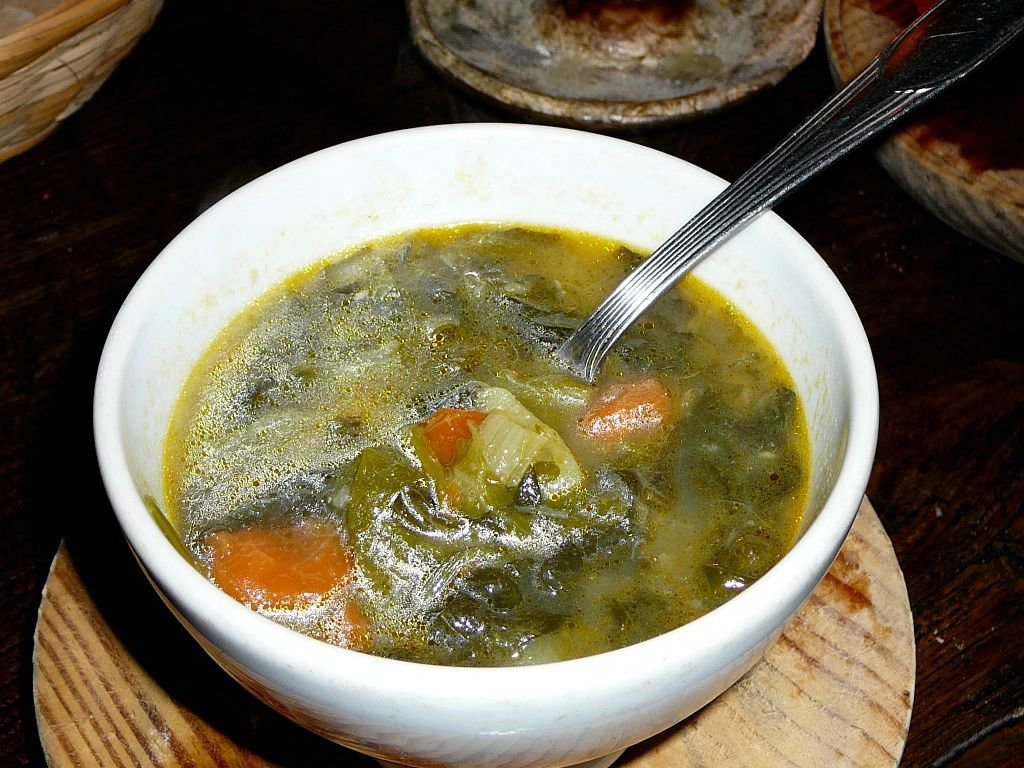 Caldo galegoMeat
🇪🇸 SpainHearty Galician soup with greens, potatoes, beans and pork
Soup, Lunch, Dinner
Caldo galegoMeat
🇪🇸 SpainHearty Galician soup with greens, potatoes, beans and pork
Soup, Lunch, Dinner
 NilagaMeat
🇵🇭 PhilippinesPhilippine soup of boiled beef or pork with vegetables
Soup, Lunch, Dinner
NilagaMeat
🇵🇭 PhilippinesPhilippine soup of boiled beef or pork with vegetables
Soup, Lunch, Dinner