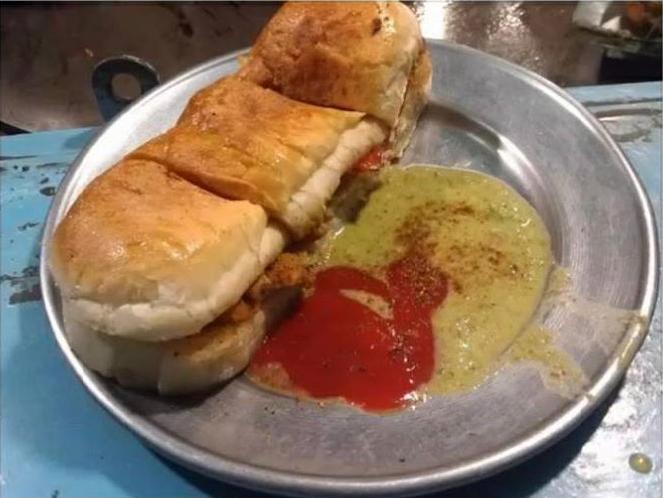
Bun kebab
In its own language: بَن کباب
Spiced kebab patty in a bun, sold hot at street stalls in Pakistan and India
Bun kebab is a Pakistani street sandwich with a spicy fried patty, onions, and chutney in a grilled bun. It began in Karachi and is now found across Pakistan and parts of India, especially at roadside stalls. The patty is usually made from beef, lentils, and egg, but can also be vegetarian. Bun kebab is eaten hot as a main meal or snack, often late at night during Ramadan.
- Originated in Karachi in the 1950s
- Signature street food in Pakistan and parts of India
- Patty can be beef, lentil, potato, or egg
- Popular late at night during Ramadan
- Burns Road in Karachi is famous for its bun kebabs
What is Bun kebab?
Bun kebab is a sandwich with a spiced, shallow-fried patty called shami kebab, placed inside a grilled bun along with onions and a tangy chutney or raita. The patty is often made from ground beef or mutton mixed with ground lentils, cumin, and egg, but vegetarian versions with lentils or potato are common. Some versions include a fried egg or omelette. The chutney typically contains tamarind, salt, cumin, and red chillies. Bun kebabs are usually served hot, with optional toppings like tomatoes or cucumbers.
Where does Bun kebab come from?
Bun kebab is believed to have started in Karachi in the 1950s, though its exact origins are debated. One account credits Haji Abdul Razzak with creating it as a quick meal for workers in 1953. Others suggest it evolved from Mumbai’s vada pav or was first sold outside Khayam Cinema for moviegoers. Over time, new patty variations like dal and shami kebabs became popular, and the sandwich spread to other cities.
How is Bun kebab made?
To make a bun kebab, a spicy patty is prepared by mixing ground meat (beef, mutton, or chicken), ground lentils, cumin, and egg, then shaping and shallow-frying it in ghee or oil. Vegetarian patties may use potato or lentils. The patty is placed in a grilled or toasted bun, often with onions and a chutney made from tamarind, cumin, and red chillies. Some versions add a fried egg or omelette, and toppings like tomato or cucumber.

How and when is Bun kebab eaten?
Bun kebab is eaten hot, usually as a main meal or snack. It is most often found at roadside stalls, street vendors, and fast food places in Pakistani cities like Karachi and Lahore, and in Indian cities such as Bhopal, Lucknow, and Hyderabad. The sandwich is popular late at night, especially during Ramadan among Indian Muslims. It is often served with ketchup or extra chutney, and eaten by hand.
Kinds of Bun kebab
The patty in a bun kebab can be made from beef, mutton, chicken, lentil (dal), potato (aloo), or egg (anda). The beef and egg version is especially common at street stalls. In Lahore, a fried style called 'bun plaster' uses extra butter and a very soft kebab mixture. Vegetarian versions are also available, and frozen bun kebabs are sold in South Asian supermarkets worldwide.
What Bun kebab means
Bun kebab is a signature street food in Pakistani cities, especially Karachi and Lahore, and is closely linked to urban food culture. Burns Road in Karachi is famous for its bun kebab vendors. The sandwich is also a staple during Ramadan, eaten late at night by Indian Muslims. Its popularity has led to frozen versions being sold internationally, and it is seen as a symbol of affordable, everyday food in South Asia.
When Bun kebab is on the table
Questions people ask about Bun kebab
What is bun kebab made of?
Bun kebab consists of a spicy shallow-fried patty (usually beef, mutton, chicken, lentil, potato, or egg), onions, and chutney or raita, all served in a grilled bun. Some versions include a fried egg or omelette.
Where did bun kebab originate?
Bun kebab originated in Karachi, Pakistan, in the 1950s. Its exact beginnings are debated, but it quickly became a popular street food in Pakistani cities and later spread to parts of India.
Is bun kebab always made with meat?
No, bun kebab can be made with meat such as beef, mutton, or chicken, but vegetarian versions using lentils or potato are also common.
When is bun kebab usually eaten?
Bun kebab is eaten as a main meal or snack, often at lunch or dinner. It is especially popular late at night during Ramadan.
Where can I find bun kebab?
Bun kebab is widely available at street stalls and fast food places in Pakistani cities like Karachi and Lahore, and in Indian cities such as Bhopal, Lucknow, and Hyderabad. Frozen versions are sold in South Asian supermarkets worldwide.
Good reading and sources
The facts on this page come from the Wikipedia article "Bun kebab", written by its contributors and used under the CC BY-SA 4.0 licence, and from its Wikidata record (CC0). Thali rewrote the text in its own words, with AI assistance, and compares every page with the article to make sure no passage is copied. It may be reused under the same CC BY-SA 4.0 licence with a link back.
It may contain mistakes, and it is not dietary or allergy advice: recipes differ from cook to cook. If something is wrong, tell us. Last refreshed 2026-10-03.
More from Pakistan
All the food of Pakistan Samosa
🇮🇳 India and 5 moreFried or baked pastry with a spiced filling, shaped into triangles or cones
Pie or savoury pastry, Snacks, Lunch
Samosa
🇮🇳 India and 5 moreFried or baked pastry with a spiced filling, shaped into triangles or cones
Pie or savoury pastry, Snacks, Lunch
 ChapatiVeganचपाती
🇮🇳 India and 4 moreUnleavened flatbread cooked on a griddle and served hot with meals
Bread, Breakfast, Lunch
ChapatiVeganचपाती
🇮🇳 India and 4 moreUnleavened flatbread cooked on a griddle and served hot with meals
Bread, Breakfast, Lunch
 Aloo tikkiVegetarian
🇮🇳 India and 3 morePotato cutlets spiced and fried, served hot with chutneys
Street food, Snacks
Aloo tikkiVegetarian
🇮🇳 India and 3 morePotato cutlets spiced and fried, served hot with chutneys
Street food, Snacks
 Papri chaatVegetarianपापड़ी चाट
🇮🇳 India and 3 moreCrisp wafers topped with potatoes, chickpeas, yoghurt and tangy chutneys
Street food, Snacks
Papri chaatVegetarianपापड़ी चाट
🇮🇳 India and 3 moreCrisp wafers topped with potatoes, chickpeas, yoghurt and tangy chutneys
Street food, Snacks
Its cousins elsewhere
All sandwiches and wraps HamburgerMeat
🇺🇸 United States and 1 moreA hot ground meat patty in a sliced bun, often with salad and sauces
Main dish, Lunch, Dinner
HamburgerMeat
🇺🇸 United States and 1 moreA hot ground meat patty in a sliced bun, often with salad and sauces
Main dish, Lunch, Dinner
 CheeseburgerMeat
🇺🇸 United StatesA hamburger topped with melted cheese, often with lettuce, tomato and condiments
Main dish, Lunch, Dinner
CheeseburgerMeat
🇺🇸 United StatesA hamburger topped with melted cheese, often with lettuce, tomato and condiments
Main dish, Lunch, Dinner
 ChivitoMeat
🇺🇾 Uruguay and 1 moreUruguay’s signature sandwich with beef, cheese, ham and more in a bun
Sandwich or wrap, Lunch, Dinner
ChivitoMeat
🇺🇾 Uruguay and 1 moreUruguay’s signature sandwich with beef, cheese, ham and more in a bun
Sandwich or wrap, Lunch, Dinner
 Hot dogMeat
🇺🇸 United States and 2 moreA sausage in a sliced bun, topped with condiments and eaten hot
Street food, Lunch, Dinner
Hot dogMeat
🇺🇸 United States and 2 moreA sausage in a sliced bun, topped with condiments and eaten hot
Street food, Lunch, Dinner