
Çılbır
Poached eggs served over garlicky yogurt with spiced melted butter
Çılbır is a Turkish dish made of poached eggs placed on thick yogurt, often mixed with garlic, and finished with melted butter flavored with Aleppo pepper or paprika. It dates back to the Ottoman era and is now enjoyed in Turkey and has related versions in the Balkans.
- Ottoman sultans ate çılbır as early as the 15th century
- Served with melted butter infused with Aleppo pepper or paprika
- In the Balkans, čimbur refers to a fried egg dish
- Closely related to Panagyurski style eggs in Bulgaria
What is Çılbır?
Çılbır is a dish where poached eggs are set on a bed of thick, creamy yogurt, which is often blended with garlic for extra flavor. The eggs are topped with melted butter that has been infused with Aleppo pepper, a mildly spicy red pepper, or sometimes paprika. The combination creates a contrast of cool, tangy yogurt and warm, runny eggs, finished with a rich, spiced butter. The dish is simple but layered in taste, with the yogurt's tang balancing the richness of the eggs and butter.
Where does Çılbır come from?
Çılbır has deep roots in Turkish cooking, with records showing that Ottoman sultans enjoyed it as early as the 15th century. Its preparation and presentation have remained largely unchanged, keeping its place as a classic comfort food. The dish has also influenced neighboring cuisines, with similar versions found in several Balkan countries. In these places, the name has shifted slightly, and the method of cooking the eggs may differ, but the connection to the original Turkish dish is clear.
How is Çılbır made?
To make çılbır, eggs are gently poached so the whites are set but the yolks remain soft. Meanwhile, thick yogurt is mixed with crushed garlic and spread onto a plate. The poached eggs are placed on top. Butter is melted and heated with Aleppo pepper or paprika, then poured over the eggs and yogurt. The dish is served immediately, so the butter stays hot and the yogurt cool.
How and when is Çılbır eaten?
Çılbır is eaten as a savory dish, often as part of a meal at home. It can be enjoyed at any time of day, though the sources do not specify a particular meal. The dish is usually served hot, with the yogurt providing a cool base. Bread is commonly used to scoop up the eggs and yogurt, making it a filling and satisfying plate. Its simple ingredients make it an everyday food in Turkey.
Kinds of Çılbır
In Bosnia and Herzegovina, Montenegro, and Serbia, a dish called čimbur uses the same name but refers to fried eggs rather than poached. Bulgaria has a similar preparation called Panagyurski style eggs, which closely resembles Turkish çılbır. These regional versions reflect local tastes and cooking methods, but all share the core idea of eggs combined with yogurt or dairy.
What Çılbır means
Çılbır is a dish with historical significance, having been favored by Ottoman royalty centuries ago. Today, it is a familiar part of Turkish home cooking and is also recognized in the Balkans, showing the lasting influence of Ottoman cuisine in the region. Its continued presence in daily meals highlights its role as a comforting and accessible food.
Questions people ask about Çılbır
What is çılbır made of?
Çılbır is made with poached eggs, thick yogurt (often mixed with garlic), and melted butter flavored with Aleppo pepper or paprika.
Where does çılbır come from?
Çılbır is a traditional Turkish dish with records dating back to the Ottoman Empire in the 15th century.
How is çılbır served?
Poached eggs are placed on garlicky yogurt and topped with hot, spiced melted butter. It is served hot, often with bread.
Are there similar dishes in other countries?
Yes, in Bosnia and Herzegovina, Montenegro, and Serbia, čimbur refers to a fried egg dish, and Bulgaria has a similar dish called Panagyurski style eggs.
Is çılbır vegetarian?
Yes, çılbır is vegetarian as it contains eggs, yogurt, butter, and spices, but no meat or fish.
Good reading and sources
The facts on this page come from the Wikipedia article "Çılbır", written by its contributors and used under the CC BY-SA 4.0 licence, and from its Wikidata record (CC0). Thali rewrote the text in its own words, with AI assistance, and compares every page with the article to make sure no passage is copied. It may be reused under the same CC BY-SA 4.0 licence with a link back.
It may contain mistakes, and it is not dietary or allergy advice: recipes differ from cook to cook. If something is wrong, tell us. Last refreshed 2026-10-03.
More from Turkey
All the food of Turkey Kebabكَبَاب
🇹🇷 Turkey and 5 moreGrilled or roasted meat, often on skewers, found across the Middle East and beyond
Main dish, Lunch, Dinner
Kebabكَبَاب
🇹🇷 Turkey and 5 moreGrilled or roasted meat, often on skewers, found across the Middle East and beyond
Main dish, Lunch, Dinner
 Pilaf
🇺🇿 Uzbekistan and 5 moreRice cooked in stock with spices, meat or vegetables, with each grain kept separate
Main dish, Lunch, Dinner
Pilaf
🇺🇿 Uzbekistan and 5 moreRice cooked in stock with spices, meat or vegetables, with each grain kept separate
Main dish, Lunch, Dinner
 Moussakaμουσακάς
🇬🇷 Greece and 5 moreBaked casserole of eggplant or potato, often layered with meat and sauce
Main dish, Lunch, Dinner
Moussakaμουσακάς
🇬🇷 Greece and 5 moreBaked casserole of eggplant or potato, often layered with meat and sauce
Main dish, Lunch, Dinner
 Freekehفريكة
🇵🇸 Palestine and 5 moreRoasted green durum wheat grains, a staple across the eastern Mediterranean
Main dish, Lunch, Dinner
Freekehفريكة
🇵🇸 Palestine and 5 moreRoasted green durum wheat grains, a staple across the eastern Mediterranean
Main dish, Lunch, Dinner
Its cousins elsewhere
All main dishes Tavë KosiMeat
🇦🇱 Albania and 4 moreAlbanian casserole of lamb, rice and tangy yogurt baked until golden
Main dish, Lunch, Dinner
Tavë KosiMeat
🇦🇱 Albania and 4 moreAlbanian casserole of lamb, rice and tangy yogurt baked until golden
Main dish, Lunch, Dinner
 ShakshukaVegetarian
🇹🇳 Tunisia and 5 moreEggs poached in a spiced tomato and pepper sauce from North Africa
Main dish, Breakfast, Dinner
ShakshukaVegetarian
🇹🇳 Tunisia and 5 moreEggs poached in a spiced tomato and pepper sauce from North Africa
Main dish, Breakfast, Dinner
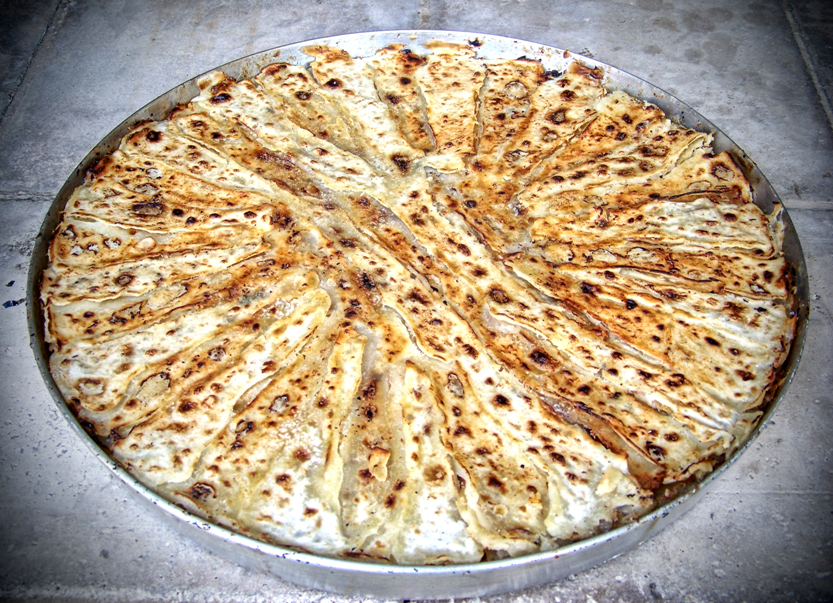 FliaVegetarianfli
🇦🇱 Albania and 1 moreLayered Albanian dish baked in the shape of the sun
Main dish, Lunch, Dinner
FliaVegetarianfli
🇦🇱 Albania and 1 moreLayered Albanian dish baked in the shape of the sun
Main dish, Lunch, Dinner
 Migas
🇪🇸 Spain and 2 moreA dish of leftover bread or tortillas, cooked with savoury ingredients
Main dish, Breakfast, Lunch
Migas
🇪🇸 Spain and 2 moreA dish of leftover bread or tortillas, cooked with savoury ingredients
Main dish, Breakfast, Lunch