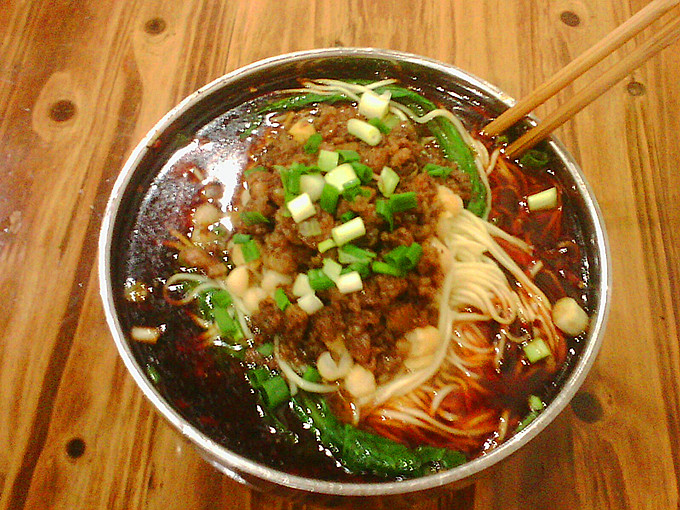
Chongqing noodles
In its own language: 重庆小面
Spicy wheat noodles from Chongqing, served with or without soup
Chongqing noodles are a group of spicy noodle dishes from Chongqing, China, known locally as xiaomian. Made with wheat noodles and a mix of spices, sauces, and Sichuan pepper, they are eaten mainly for breakfast and are a staple street food in Chongqing. The dish comes in both soupy and dry versions, often topped with meats, vegetables, and garnishes.
- A staple street food and breakfast in Chongqing
- Known for its spicy, numbing flavor from Sichuan pepper
- Served both in soup and dry versions
- Toppings include meats, vegetables, and spring onions
What is Chongqing noodles?
Chongqing noodles, called xiaomian in Chinese, are spicy wheat noodle dishes from Chongqing. The noodles are usually thin and chewy, served either in a hot broth or tossed dry with sauces. The flavor is bold and numbing, thanks to Sichuan pepper and chili oil. Toppings can include meats like beef or pork, a variety of vegetables, and garnishes such as chopped spring onions. The dish is known for its strong, spicy aroma and vibrant red color from the chili oil.
Where does Chongqing noodles come from?
These noodles come from Chongqing, a city in southwest China. They have long been a staple food for locals and are deeply tied to the city's street food culture. Over time, xiaomian became a symbol of everyday Chongqing life, eaten by people from all walks of life. While the exact date of origin is not specified, the dish is described as historic and an important part of the region's cuisine.
How is Chongqing noodles made?
To make Chongqing noodles, wheat noodles are cooked and then served either in a spicy broth or mixed with a blend of sauces and seasonings. Sichuan pepper and chili oil are key ingredients, giving the dish its signature heat and numbing sensation. Various meats and vegetables may be added, and the bowl is finished with garnishes like spring onions. The preparation allows for many variations, depending on the vendor or cook.


How and when is Chongqing noodles eaten?
Chongqing noodles are most often eaten for breakfast but are also enjoyed at other times of day. They are a popular street food, found in small shops and stalls across Chongqing. The dish is affordable and quick to eat, making it a daily meal for many residents. Diners can often choose between a soupy or dry version, and add extra toppings or condiments to suit their taste.
Kinds of Chongqing noodles
There are two main types of Chongqing noodles: with soup and without soup. The ingredients and toppings can vary widely, with different meats, vegetables, and garnishes used. Outside Chongqing, the dish has spread to places like the United Kingdom, Australia, and the United States, where it may be adapted to local tastes but keeps its spicy character.
What Chongqing noodles means
Chongqing noodles are more than just a meal; they are part of the city's daily rhythm. As a traditional breakfast and street food, they reflect the fast-paced life of Chongqing. The dish is seen as a symbol of local identity and pride. It is widely available in restaurants and on the street, and its preparation and serving are sometimes standardized down to details like the length of chopped spring onions.
Questions people ask about Chongqing noodles
What are Chongqing noodles made of?
Chongqing noodles are made with wheat noodles, Sichuan pepper, chili oil, a mix of spices and sauces, and often include meats, vegetables, and garnishes like spring onions.
Where do Chongqing noodles come from?
They originate from Chongqing, a city in southwest China, and are a traditional part of the local cuisine.
Are Chongqing noodles always spicy?
Yes, they are typically known for being spicy and numbing, mainly due to Sichuan pepper and chili oil used in their preparation.
Are there different types of Chongqing noodles?
There are two main types: noodles served in a spicy soup and noodles served dry with sauces. Both can have a variety of toppings.
When are Chongqing noodles usually eaten?
They are most commonly eaten for breakfast in Chongqing but are also enjoyed throughout the day as a street food or quick meal.
Good reading and sources
- An Insider's Tour of Chongqing Yields Frugal GemsThe New York Times, Article
- The real zing: Why Chongqing's spicy noodles are good on a hot daySouth China Morning Post, Article
- Chongqing noodles on WikipediaEncyclopedia
- More photos on Wikimedia CommonsPhotos
- Wikidata recordOpen data
The facts on this page come from the Wikipedia article "Chongqing noodles", written by its contributors and used under the CC BY-SA 4.0 licence, and from its Wikidata record (CC0). Thali rewrote the text in its own words, with AI assistance, and compares every page with the article to make sure no passage is copied. It may be reused under the same CC BY-SA 4.0 licence with a link back.
It may contain mistakes, and it is not dietary or allergy advice: recipes differ from cook to cook. If something is wrong, tell us. Last refreshed 2026-10-03.
More from China
All the food of China Pasta
🇮🇹 Italy and 1 moreUnleavened dough shaped and cooked, a staple of Italian cuisine
Main dish, Lunch, Dinner
TofuVegan豆腐
🇨🇳 China and 5 moreSoft white blocks made by curdling soy milk and pressing the curds
Main dish
Pasta
🇮🇹 Italy and 1 moreUnleavened dough shaped and cooked, a staple of Italian cuisine
Main dish, Lunch, Dinner
TofuVegan豆腐
🇨🇳 China and 5 moreSoft white blocks made by curdling soy milk and pressing the curds
Main dish
 RamenMeatラーメン
🇯🇵 Japan and 1 moreJapanese noodle soup with Chinese-style wheat noodles in hot broth
Soup, Lunch, Dinner
RamenMeatラーメン
🇯🇵 Japan and 1 moreJapanese noodle soup with Chinese-style wheat noodles in hot broth
Soup, Lunch, Dinner
 Chuanr串
🇨🇳 ChinaGrilled skewers of meat, seafood or vegetables from northern China
Grill or roast, Dinner, Snacks
Chuanr串
🇨🇳 ChinaGrilled skewers of meat, seafood or vegetables from northern China
Grill or roast, Dinner, Snacks
Its cousins elsewhere
All noodles and pasta RechtaMeatرشتة
🇩🇿 Algeria and 1 moreAlgerian handmade noodles served with chicken and vegetables in a spiced sauce
Main dish, Lunch, Dinner
RechtaMeatرشتة
🇩🇿 Algeria and 1 moreAlgerian handmade noodles served with chicken and vegetables in a spiced sauce
Main dish, Lunch, Dinner
 Cappelletti
🇮🇹 ItalyRing-shaped stuffed pasta from central Italy, often served in broth
Main dish, Lunch, Dinner
Cappelletti
🇮🇹 ItalyRing-shaped stuffed pasta from central Italy, often served in broth
Main dish, Lunch, Dinner
 SpaghettiVegan
🇮🇹 Italy and 2 moreLong, thin pasta strands made from durum wheat and water
Noodle or pasta dish, Lunch, Dinner
SpaghettiVegan
🇮🇹 Italy and 2 moreLong, thin pasta strands made from durum wheat and water
Noodle or pasta dish, Lunch, Dinner
 TortelliniMeat
🇮🇹 ItalySmall ring-shaped pasta parcels filled with seasoned meat and cheese
Main dish, Lunch, Dinner
TortelliniMeat
🇮🇹 ItalySmall ring-shaped pasta parcels filled with seasoned meat and cheese
Main dish, Lunch, Dinner