
Chraime
In its own language: حرايمي
North African fish stew simmered with tomatoes and spices
Chraime is a hot fish stew with a base of tomatoes and spices, originally from North Africa. It is especially known among Libyan Jews and is now common in Israel. The dish is often prepared for Friday nights and Jewish holidays such as Rosh Hashanah and Passover.
- Chraime is a spicy fish stew from North Africa
- The name comes from the Arabic word for 'hot'
- Popular among Libyan Jews and in Israel
- Served at Jewish holidays like Rosh Hashanah and Passover
What is Chraime?
Chraime is a fish stew known for its bold, spicy flavor and deep red color from tomatoes and peppers. The fish is cooked in a sauce that includes Pilpelchuma, a North African chili paste, along with other spices. The result is a warming dish with a strong aroma and a noticeable heat. It is usually served hot and eaten as a main course.
Where does Chraime come from?
Chraime has its roots in North Africa, particularly among Jewish communities in Libya. The name comes from Arabic, meaning 'hot' or 'spicy,' reflecting the dish's characteristic heat. Libyan Jews brought the recipe with them to Israel, where it became a familiar part of Jewish holiday meals. The dish is now associated with both Libyan and Israeli Jewish cooking.
How is Chraime made?
To make chraime, pieces of fish are simmered in a sauce made from tomatoes, Pilpelchuma (a chili and garlic paste), and a blend of spices. The sauce is cooked until thick and aromatic, then the fish is gently added and poached until tender. The stew is served hot, often with bread to soak up the sauce.
How and when is Chraime eaten?
Chraime is most often eaten during dinner, especially on Friday evenings and during Jewish holidays. It is a centerpiece at the table for occasions like Rosh Hashanah and Passover. The dish is typically enjoyed with family or community, and bread is commonly served alongside to dip into the spicy sauce.
Kinds of Chraime
While the basic elements of chraime remain the same, cooks may use different types of fish or adjust the level of spice to taste. Some versions might include extra vegetables or use a different blend of spices. The dish can vary from one family or region to another, reflecting local preferences.
What Chraime means
Chraime holds a special place in Jewish holiday traditions, especially among Libyan Jews. It is a dish that brings people together for religious and festive meals, marking important days in the Jewish calendar. In Israel, it has become a symbol of the culinary heritage of North African Jewish communities.
When Chraime is on the table
Questions people ask about Chraime
What is chraime made of?
Chraime is made from fish cooked in a sauce of tomatoes, Pilpelchuma (a chili paste), and spices.
Where does chraime come from?
Chraime comes from North Africa, especially among Jewish communities in Libya.
When is chraime usually eaten?
It is commonly eaten at dinner on Friday nights and during Jewish holidays such as Rosh Hashanah and Passover.
Is chraime always spicy?
Chraime is known for its spicy flavor, but the level of heat can be adjusted to taste.
What does Pilpelchuma mean in chraime?
Pilpelchuma is a North African chili and garlic paste that gives chraime its heat and flavor.
Good reading and sources
The facts on this page come from the Wikipedia article "Chraime", written by its contributors and used under the CC BY-SA 4.0 licence, and from its Wikidata record (CC0). Thali rewrote the text in its own words, with AI assistance, and compares every page with the article to make sure no passage is copied. It may be reused under the same CC BY-SA 4.0 licence with a link back.
It may contain mistakes, and it is not dietary or allergy advice: recipes differ from cook to cook. If something is wrong, tell us. Last refreshed 2026-10-03.
More from Libya
All the food of Libya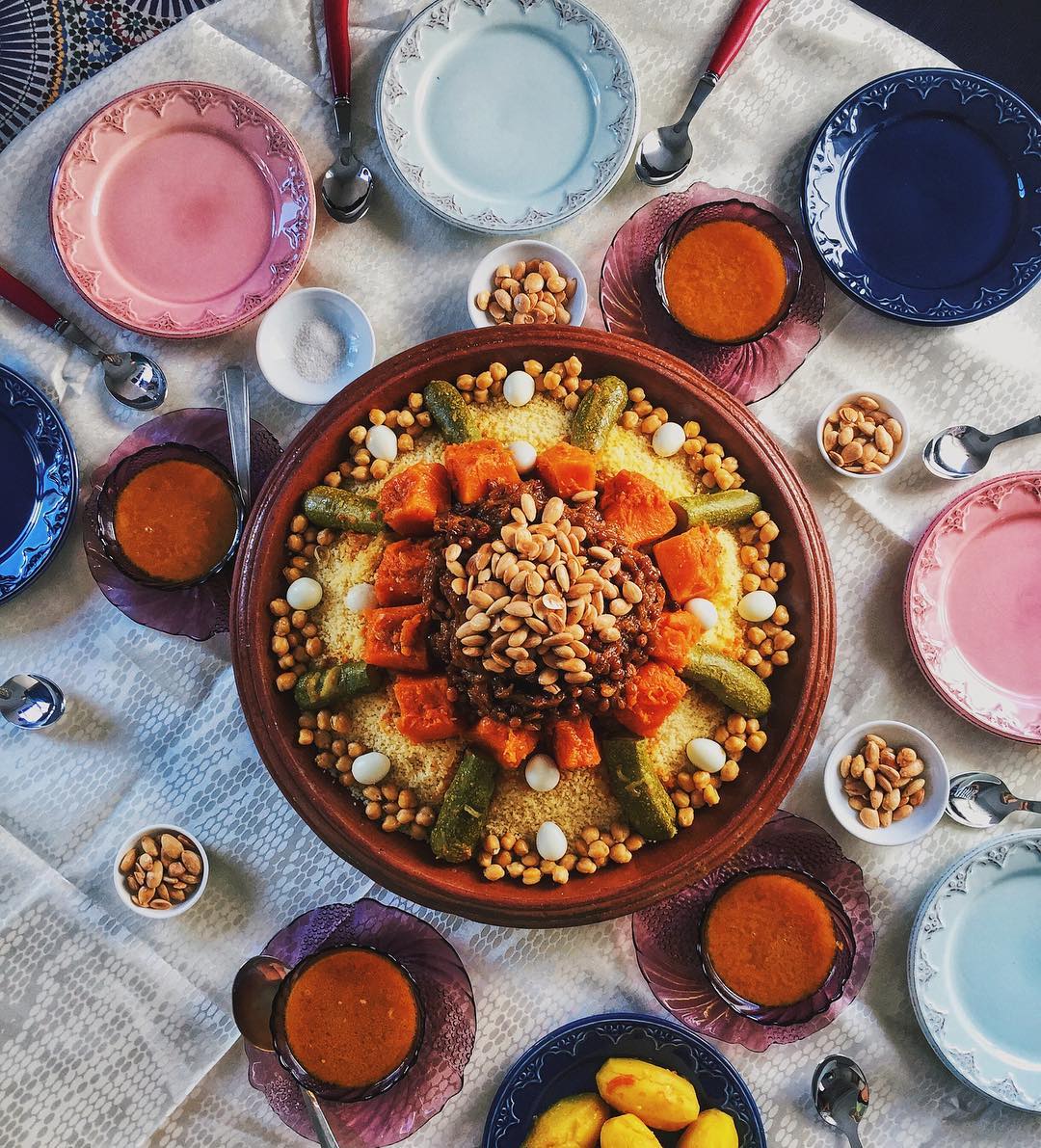 Couscousseksu
🇩🇿 Algeria and 4 moreSteamed semolina granules served with stew or vegetables across North Africa
Main dish, Lunch, Dinner
Couscousseksu
🇩🇿 Algeria and 4 moreSteamed semolina granules served with stew or vegetables across North Africa
Main dish, Lunch, Dinner
 Tajineطاجين
🇲🇦 Morocco and 4 moreNorth African stew slow-cooked in a cone-lidded clay pot
Main dish, Lunch, Dinner
Tajineطاجين
🇲🇦 Morocco and 4 moreNorth African stew slow-cooked in a cone-lidded clay pot
Main dish, Lunch, Dinner
 Hariraالحريرة
🇲🇦 Morocco and 3 moreNorth African soup of tomato, legumes, herbs and spices, often served during Ramadan
Soup, Dinner, Supper
Hariraالحريرة
🇲🇦 Morocco and 3 moreNorth African soup of tomato, legumes, herbs and spices, often served during Ramadan
Soup, Dinner, Supper
 Bazinبازين
🇱🇾 Libya and 1 moreLibyan dome-shaped barley bread served with stew and eggs
Bread, Lunch, Dinner
Bazinبازين
🇱🇾 Libya and 1 moreLibyan dome-shaped barley bread served with stew and eggs
Bread, Lunch, Dinner
Its cousins elsewhere
All main dishes Machher jholFish or seafoodমাছের ঝোল
🇮🇳 India and 2 moreSpicy fish curry with potatoes, served as a stew with rice in eastern South Asia
Main dish, Lunch, Dinner
Machher jholFish or seafoodমাছের ঝোল
🇮🇳 India and 2 moreSpicy fish curry with potatoes, served as a stew with rice in eastern South Asia
Main dish, Lunch, Dinner
 Kebabكَبَاب
🇹🇷 Turkey and 5 moreGrilled or roasted meat, often on skewers, found across the Middle East and beyond
Main dish, Lunch, Dinner
Kebabكَبَاب
🇹🇷 Turkey and 5 moreGrilled or roasted meat, often on skewers, found across the Middle East and beyond
Main dish, Lunch, Dinner
 Freekehفريكة
🇵🇸 Palestine and 5 moreRoasted green durum wheat grains, a staple across the eastern Mediterranean
Main dish, Lunch, Dinner
Freekehفريكة
🇵🇸 Palestine and 5 moreRoasted green durum wheat grains, a staple across the eastern Mediterranean
Main dish, Lunch, Dinner
 Misalमिसळ
🇮🇳 IndiaSpicy sprouted bean curry layered with toppings, served hot with bread
Main dish, Breakfast, Snacks
Misalमिसळ
🇮🇳 IndiaSpicy sprouted bean curry layered with toppings, served hot with bread
Main dish, Breakfast, Snacks