
Cơm tấm
Broken rice with grilled pork, pickles and sweet-sour fish sauce from southern Vietnam
Cơm tấm is a southern Vietnamese meal built around broken rice, usually topped with grilled pork, pickled carrots, and cucumber, and served with a sweet and tangy fish sauce. Once a dish for rice farmers using leftover grains, it is now a staple in cities like Saigon and eaten at any time of day.
- Made with broken rice grains, once seen as a byproduct
- Grilled pork and sweet fish sauce are classic toppings
- Eaten with fork and spoon, not chopsticks
- A staple meal in Saigon and southern Vietnam
- Named one of Vietnam's top dishes by Asia Record Organisation
What is Cơm tấm?
Cơm tấm is a Vietnamese dish centered on broken rice, which are fragments of rice grains left from milling. The rice is served with grilled pork, slices of cucumber, and pickled carrot. A sweet and sour fish sauce is poured over the plate. Other toppings can include pork skin cut into thin strips, a steamed meat and egg loaf, or a fried egg. The dish is finished with a garnish of scallion cooked in oil. It is a colorful plate with a mix of savory, tangy, and slightly sweet flavors.
Where does Cơm tấm come from?
The roots of cơm tấm are in the Mekong Delta, where rice farmers would cook with broken rice when whole grains were scarce or too valuable to sell. At first, this type of rice was seen as less desirable. As cities in southern Vietnam grew in the 20th century, the dish became popular in urban areas, especially Saigon. Food sellers adapted it for new tastes, adding grilled meats and changing how it was served. Over time, it became a symbol of Saigon's food culture.
How is Cơm tấm made?
To make cơm tấm, broken rice is steamed or boiled until fluffy. Grilled pork, often marinated and cooked over charcoal, is placed on top. The plate is arranged with pickled carrot, cucumber slices, and sometimes tomato. A garnish of scallion fried in oil is spooned over the rice. Pork skin and a steamed meat and egg loaf or a fried egg may be added. A bowl of sweetened fish sauce with vinegar or lime is served on the side to be poured over the dish.


How and when is Cơm tấm eaten?
Cơm tấm is eaten with a fork and spoon, rather than chopsticks. The fish sauce is not for dipping but is drizzled over the rice and toppings. It is a common choice for breakfast, lunch, or dinner, found in street stalls and restaurants alike. The dish is enjoyed on ordinary days and is a familiar meal in southern Vietnamese cities. It is often eaten alone as a complete plate, with no need for extra side dishes.
Kinds of Cơm tấm
There are many versions of cơm tấm, but the base of broken rice remains the same. Toppings can change: some plates feature pork chops, others use pork ribs or shredded pork skin. The egg component might be a steamed meat and egg loaf, a fried egg, or an omelet. The vegetables and pickles served alongside can also vary. In Saigon, the dish is sometimes called 'cơm tấm Sài Gòn', but the main elements are consistent.
What Cơm tấm means
Cơm tấm is now seen as a key part of Saigon's food identity. It is widely available and recognized as an everyday meal. The Asia Record Organisation has named it among the top Vietnamese dishes of international culinary value. Its history reflects changes in Vietnamese society, from rural roots to urban adaptation. Eating cơm tấm is considered a daily habit for many in southern Vietnam.
Questions people ask about Cơm tấm
What is cơm tấm made of?
Cơm tấm is based on broken rice and is usually topped with grilled pork, pickled carrot, cucumber, and a sweet-sour fish sauce. Other common additions include pork skin, a steamed meat and egg loaf, or a fried egg.
Where does cơm tấm come from?
Cơm tấm originated in the Mekong Delta of southern Vietnam, where rice farmers used broken rice grains. It later became popular in cities like Saigon and is now a well-known dish across the region.
How is cơm tấm eaten?
Cơm tấm is eaten with a fork and spoon, and the fish sauce is poured over the dish rather than used for dipping. It is served as a complete plate and is commonly eaten for breakfast, lunch, or dinner.
What makes the rice in cơm tấm different?
The rice is made from broken grains, which are fragments left from milling. This gives the rice a slightly different texture compared to whole-grain rice.
Are there different versions of cơm tấm?
Yes, while the base of broken rice stays the same, toppings can include various cuts of pork, pork skin, egg, and different pickled vegetables. The dish is sometimes called by different names in various regions.
Good reading and sources
The facts on this page come from the Wikipedia article "Cơm tấm", written by its contributors and used under the CC BY-SA 4.0 licence, and from its Wikidata record (CC0). Thali rewrote the text in its own words, with AI assistance, and compares every page with the article to make sure no passage is copied. It may be reused under the same CC BY-SA 4.0 licence with a link back.
It may contain mistakes, and it is not dietary or allergy advice: recipes differ from cook to cook. If something is wrong, tell us. Last refreshed 2026-10-03.
More from Vietnam
All the food of Vietnam Mu kropMeat
🇹🇭 Thailand and 4 moreThai-style fried pork belly with a crunchy golden skin
Main dish, Lunch, Dinner
Mu kropMeat
🇹🇭 Thailand and 4 moreThai-style fried pork belly with a crunchy golden skin
Main dish, Lunch, Dinner
 Phophở
🇻🇳 Vietnam and 5 moreVietnamese rice noodle soup with beef or chicken in aromatic broth
Soup, Breakfast, Lunch
Phophở
🇻🇳 Vietnam and 5 moreVietnamese rice noodle soup with beef or chicken in aromatic broth
Soup, Breakfast, Lunch
 Pâté
🇫🇷 France and 5 moreA smooth or coarse spread made from minced meat, liver, or vegetables
Sauce, pickle or ferment
Pâté
🇫🇷 France and 5 moreA smooth or coarse spread made from minced meat, liver, or vegetables
Sauce, pickle or ferment
Its cousins elsewhere
All main dishes Arroz chaufa
🇵🇪 PeruPeruvian fried rice with meat, egg, vegetables and soy sauce
Main dish, Lunch, Dinner
Arroz chaufa
🇵🇪 PeruPeruvian fried rice with meat, egg, vegetables and soy sauce
Main dish, Lunch, Dinner
 Pancake
🇺🇸 United States and 5 moreFlat cakes made from batter, cooked on a griddle or pan and served sweet or savoury
Main dish, Breakfast, Snacks
Pancake
🇺🇸 United States and 5 moreFlat cakes made from batter, cooked on a griddle or pan and served sweet or savoury
Main dish, Breakfast, Snacks
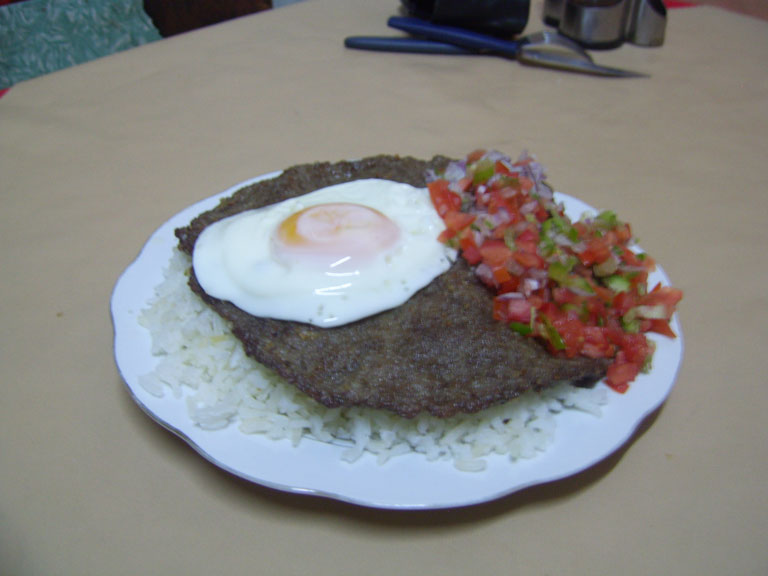 SilpanchoMeatSillp'anchu
🇧🇴 BoliviaLayered Bolivian meal with rice, potatoes, breaded meat, and fried eggs
Main dish, Lunch, Dinner
SilpanchoMeatSillp'anchu
🇧🇴 BoliviaLayered Bolivian meal with rice, potatoes, breaded meat, and fried eggs
Main dish, Lunch, Dinner
 ShakshukaVegetarian
🇹🇳 Tunisia and 5 moreEggs poached in a spiced tomato and pepper sauce from North Africa
Main dish, Breakfast, Dinner
ShakshukaVegetarian
🇹🇳 Tunisia and 5 moreEggs poached in a spiced tomato and pepper sauce from North Africa
Main dish, Breakfast, Dinner