
Deviled eggs
Hard-boiled eggs filled with a seasoned yolk mixture, served cold
Deviled eggs are hard-boiled eggs halved and filled with a seasoned mash of their own yolks, most often blended with mayonnaise and mustard. Served cold, they are a popular appetizer or party dish in Europe, North America, and Australia, with many regional variations and names. They are especially common at gatherings and festive meals.
- Hard-boiled eggs filled with a seasoned yolk mixture
- Popular at parties and holiday gatherings, especially Easter
- Known by many names, including stuffed eggs and Russian eggs
- Common in Europe, North America, and Australia
- Filling ingredients and garnishes vary by country
What is Deviled eggs?
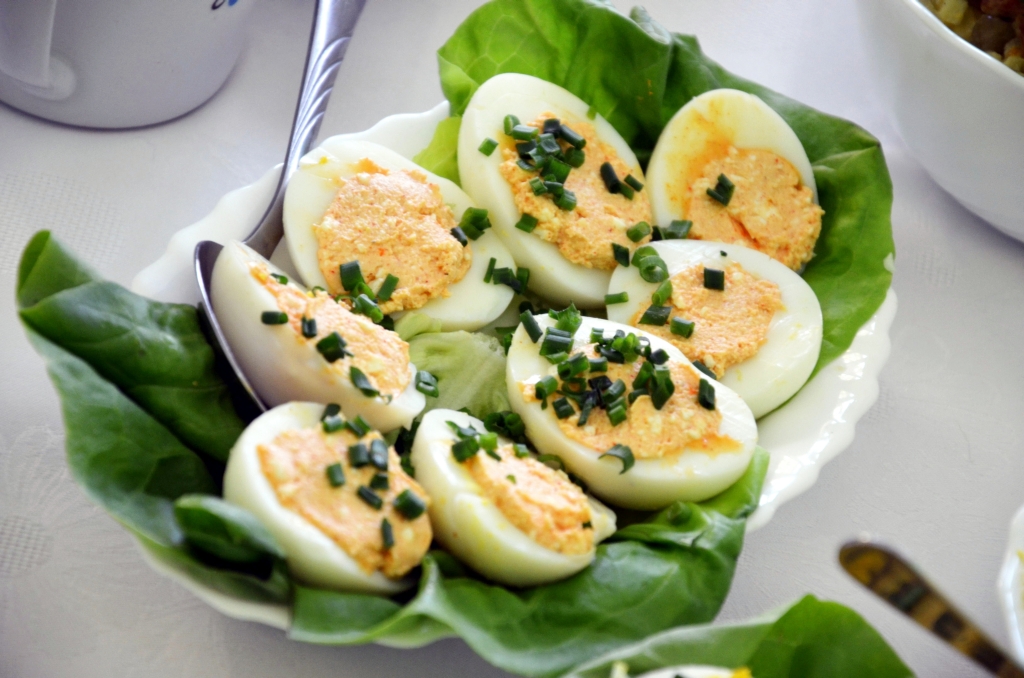
Deviled eggs are made by halving hard-boiled eggs, removing the yolks, and mixing them with ingredients like mayonnaise, mustard, and seasonings before spooning the mixture back into the whites. The filling is smooth and creamy, often tangy from mustard or vinegar, and sometimes dusted with paprika or other spices. The dish is served cold, making it a refreshing and rich bite. The look is simple: white egg halves with a yellow or orange-tinted filling, sometimes garnished with herbs or pickles.
Where does Deviled eggs come from?
The idea of stuffing eggs dates to medieval Europe, with early recipes found in 13th-century Spain, where yolks were blended with herbs, spices, and sauces. The English term 'devilled' began to mean spicy or zesty foods in the 18th century. By the 19th century, 'devilled eggs' referred to eggs filled with piquant mixtures, especially those using mustard or pepper. The use of mayonnaise in the filling became common in the late 19th century. The dish spread widely, taking on local flavors and names across Europe and North America.
How is Deviled eggs made?
To make deviled eggs, hard-boiled eggs are cooled, peeled, and sliced in half. Yolks are removed and mashed with mayonnaise, mustard, vinegar, and sometimes pickle relish or other seasonings. The mixture is blended until smooth and then spooned or piped back into the hollowed whites. The eggs are usually garnished with paprika, herbs, or small pieces of vegetables. Ingredient choices vary widely, and some versions use butter, cream, or other flavorings.


How and when is Deviled eggs eaten?
Deviled eggs are most often served as appetizers or side dishes at gatherings, parties, and picnics. They are a common sight at buffets and holiday meals, especially during Easter in several countries. The eggs are eaten cold, picked up by hand or with a fork. In some places, they are part of a larger spread, such as the Swedish smörgåsbord. The dish is flexible and can be adapted to different tastes and occasions.
Kinds of Deviled eggs
Many countries have their own versions of deviled eggs. In the United States, the filling often includes mayonnaise, mustard, and relish, sometimes topped with paprika. In Italy, uova ripiene may include tuna, capers, and anchovies. Swedish versions might use caviar or sour cream, while Hungarian recipes can add bread soaked in milk. In Germany, Russian eggs are served with vegetable salad and mayonnaise. Romanian versions may use liver paté or fish paste.
What Deviled eggs means
Deviled eggs have become a staple at social gatherings and festive meals, especially in the United States and Europe. They are closely tied to Easter celebrations, when eggs are symbolic and plentiful. In some American church communities, alternative names like 'stuffed eggs' or 'angel eggs' are used to avoid the word 'devil.' The dish is valued for its simplicity, adaptability, and ability to feed a crowd.
When Deviled eggs is on the table
Questions people ask about Deviled eggs
What are deviled eggs made of?
Deviled eggs are made from hard-boiled eggs that are halved, with the yolks mixed with mayonnaise, mustard, and seasonings, then spooned back into the whites.
Where do deviled eggs come from?
Stuffed eggs have roots in medieval Europe, with early recipes from 13th-century Spain. The modern dish and the term 'devilled' became common in England and spread widely.
When are deviled eggs usually served?
They are typically served cold as appetizers or side dishes at gatherings, parties, and especially during Easter celebrations.
Are there different versions of deviled eggs?
Yes, recipes vary by country and region. Some include tuna, capers, caviar, or even liver paté, and garnishes range from paprika to herbs and pickles.
What do deviled eggs taste like?
The taste is creamy and tangy, with flavors from mayonnaise, mustard, and spices. The filling is smooth and contrasts with the firm egg white.
Good reading and sources
The facts on this page come from the Wikipedia article "Deviled egg", written by its contributors and used under the CC BY-SA 4.0 licence, and from its Wikidata record (CC0). Thali rewrote the text in its own words, with AI assistance, and compares every page with the article to make sure no passage is copied. It may be reused under the same CC BY-SA 4.0 licence with a link back.
It may contain mistakes, and it is not dietary or allergy advice: recipes differ from cook to cook. If something is wrong, tell us. Last refreshed 2026-10-03.
More from the United Kingdom
All the food of the United Kingdom Pizza
🇮🇹 Italy and 4 moreFlatbread topped with tomato, cheese and baked at high heat
Main dish, Lunch, Dinner
Pizza
🇮🇹 Italy and 4 moreFlatbread topped with tomato, cheese and baked at high heat
Main dish, Lunch, Dinner
 French toast
🇫🇷 France and 5 moreBread soaked in egg and milk, pan-fried and served sweet or savoury
Main dish, Breakfast, Snacks
French toast
🇫🇷 France and 5 moreBread soaked in egg and milk, pan-fried and served sweet or savoury
Main dish, Breakfast, Snacks
 Pancake
🇺🇸 United States and 5 moreFlat cakes made from batter, cooked on a griddle or pan and served sweet or savoury
Main dish, Breakfast, Snacks
Pancake
🇺🇸 United States and 5 moreFlat cakes made from batter, cooked on a griddle or pan and served sweet or savoury
Main dish, Breakfast, Snacks
 Fish and chipsFish or seafood
🇬🇧 United Kingdom and 8 moreBattered fried fish served hot with thick-cut chips
Main dish, Lunch, Dinner
Fish and chipsFish or seafood
🇬🇧 United Kingdom and 8 moreBattered fried fish served hot with thick-cut chips
Main dish, Lunch, Dinner
Its cousins elsewhere
All main dishes ChivitoMeat
🇺🇾 Uruguay and 1 moreUruguay’s signature sandwich with beef, cheese, ham and more in a bun
Sandwich or wrap, Lunch, Dinner
ChivitoMeat
🇺🇾 Uruguay and 1 moreUruguay’s signature sandwich with beef, cheese, ham and more in a bun
Sandwich or wrap, Lunch, Dinner
 Pique machoMeat
🇧🇴 Bolivia and 1 moreA Bolivian platter of beef, sausage, fries, vegetables and spicy sauces
Main dish, Dinner, Lunch
Pique machoMeat
🇧🇴 Bolivia and 1 moreA Bolivian platter of beef, sausage, fries, vegetables and spicy sauces
Main dish, Dinner, Lunch
 ShakshukaVegetarian
🇹🇳 Tunisia and 5 moreEggs poached in a spiced tomato and pepper sauce from North Africa
Main dish, Breakfast, Dinner
ShakshukaVegetarian
🇹🇳 Tunisia and 5 moreEggs poached in a spiced tomato and pepper sauce from North Africa
Main dish, Breakfast, Dinner
 Okonomiyakiお好み焼き
🇯🇵 JapanJapanese savory pancake cooked on a griddle with cabbage and toppings
Main dish, Lunch, Dinner
Okonomiyakiお好み焼き
🇯🇵 JapanJapanese savory pancake cooked on a griddle with cabbage and toppings
Main dish, Lunch, Dinner