
Ema datshi
In its own language: ཨེ་མ་དར་ཚིལ་
Spicy Bhutanese stew of chili peppers and cheese, served with red rice
Ema datshi is a spicy stew from Bhutan made with chili peppers and a homemade cheese called datshi. It is considered the national dish of Bhutan and is a staple in everyday meals, often served with red rice and other local dishes. The stew is known for its strong heat and rich, cheesy flavor.
- Ema datshi is considered the national dish of Bhutan.
- The stew features chili peppers and homemade cheese called datshi.
- It is usually served with red rice as a main course.
- Varieties include versions with potatoes, mushrooms, beef, or pork.
- The dish is known for its intense spiciness.
What is Ema datshi?
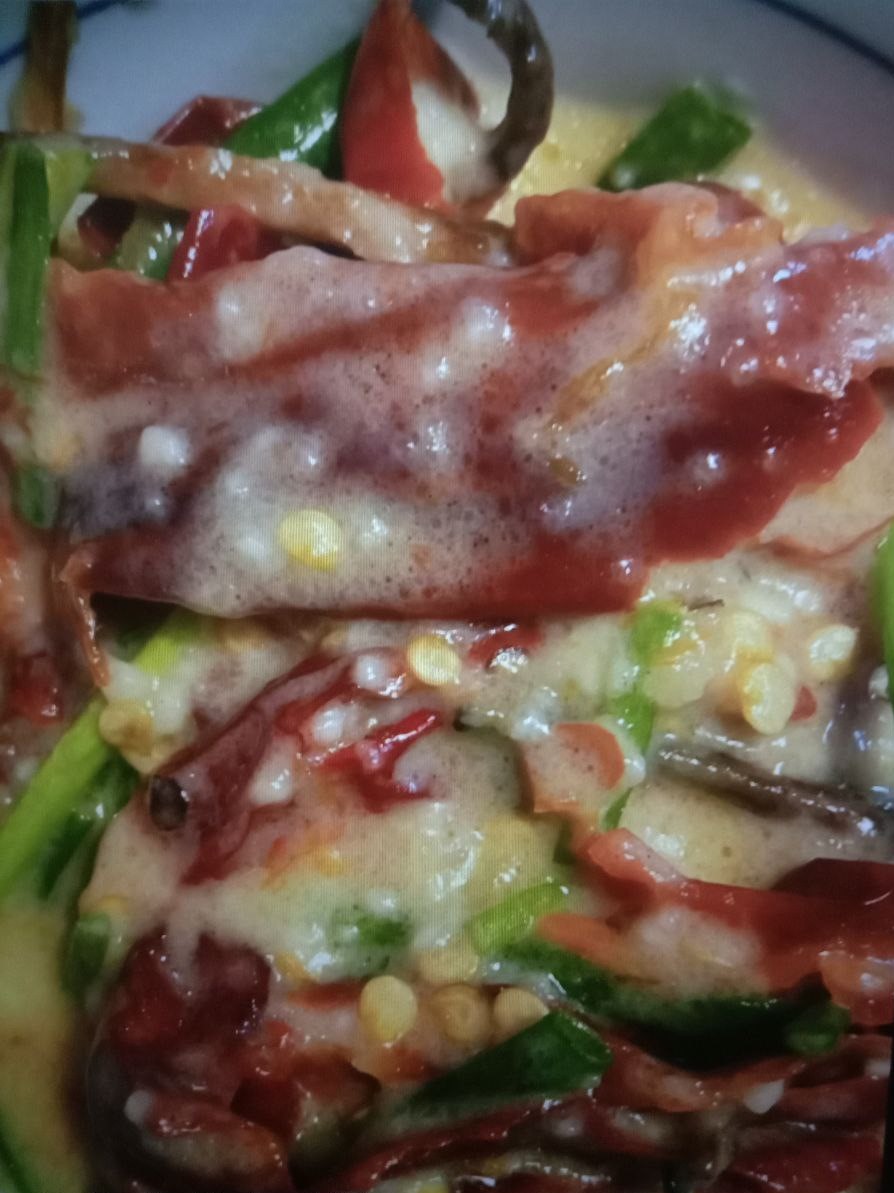
Ema datshi is a stew from Bhutan that combines chili peppers and a local cheese called datshi. The dish is known for its intense spiciness, as it uses a variety of chilies, which may be fresh or dried, green, red, or white. Datshi is a homemade cheese made from cow's or yak's milk curd, giving the stew a rich and creamy texture. Spring onions, vegetable oil, and salt round out the main ingredients. The finished dish is thick, with visible pieces of chili and melted cheese, and is usually served hot.
Where does Ema datshi come from?
Ema datshi has its roots in Bhutanese cuisine and is recognized as the national dish of Bhutan. Its name comes from Dzongkha, the official language, where 'ema' means chili and 'datshi' means cheese. The dish reflects Tibetan culinary influences but has evolved to suit Bhutanese tastes. Before chilies arrived in Bhutan, a plant called 'namda' was used for seasoning. Chilies were likely introduced by Indian pilgrims in later years, eventually becoming central to this dish.
How is Ema datshi made?
To make ema datshi, chilies are sliced and cooked with datshi cheese, spring onions, vegetable oil, and salt. The cheese is typically made at home from cow's or yak's milk curd. The chilies can be used fresh or dried, and their type and color may vary. Everything is simmered together until the cheese melts and the chilies soften, creating a thick, spicy stew. The result is a dish with a strong chili flavor balanced by the creamy cheese.


How and when is Ema datshi eaten?
Ema datshi is usually eaten as a main course for lunch or dinner in Bhutan. It is commonly served with red rice, a staple grain in the region, and may be accompanied by other Bhutanese dishes like dried pork with chilies or spicy chicken curry. The stew is part of the daily diet and is enjoyed in homes and restaurants alike. Its bold heat and rich texture make it a comforting food, especially in the cool mountain climate.
Kinds of Ema datshi
There are several variations of ema datshi. Kewa datshi replaces chilies with potatoes, while shamu datshi uses mushrooms instead. Semchung datshi features beans as the main ingredient. For meat versions, shakam datshi uses dried beef, and sikam datshi uses pork, often with extra chilies. These variations allow for different flavors and levels of spiciness, depending on local preferences and available ingredients.
What Ema datshi means
Ema datshi holds a special place in Bhutanese culture as the national dish and a symbol of local identity. It is a staple food, eaten daily across the country. The dish showcases the Bhutanese love for spicy flavors and homemade cheese. While not tied to specific festivals or religious events, its presence at every meal highlights its importance in Bhutanese life.
Questions people ask about Ema datshi
What is ema datshi made of?
Ema datshi is made from chili peppers, a homemade cheese called datshi, spring onions, vegetable oil, and salt. The cheese is usually prepared from cow's or yak's milk curd.
Where does ema datshi come from?
Ema datshi comes from Bhutan and is considered the national dish of the country. It is a key part of Bhutanese cuisine.
How spicy is ema datshi?
Ema datshi is known for being very spicy, as it uses a large amount of chili peppers. The level of heat can vary depending on the type and amount of chilies used.
Are there different types of ema datshi?
Yes, there are several variations. Kewa datshi uses potatoes, shamu datshi uses mushrooms, semchung datshi uses beans, shakam datshi uses dried beef, and sikam datshi uses pork.
When is ema datshi usually eaten?
Ema datshi is typically eaten as a main course for lunch or dinner in Bhutan and is part of the everyday diet.
Good reading and sources
The facts on this page come from the Wikipedia article "Ema datshi", written by its contributors and used under the CC BY-SA 4.0 licence, and from its Wikidata record (CC0). Thali rewrote the text in its own words, with AI assistance, and compares every page with the article to make sure no passage is copied. It may be reused under the same CC BY-SA 4.0 licence with a link back.
It may contain mistakes, and it is not dietary or allergy advice: recipes differ from cook to cook. If something is wrong, tell us. Last refreshed 2026-10-03.
More from Bhutan
All the food of Bhutan Momo
🇳🇵 Nepal and 3 moreSteamed dumplings filled with meat or vegetables, served with spicy sauces
Dumpling, Lunch, Dinner
Momo
🇳🇵 Nepal and 3 moreSteamed dumplings filled with meat or vegetables, served with spicy sauces
Dumpling, Lunch, Dinner
 GundrukVeganगुन्द्रुक
🇳🇵 Nepal and 3 moreFermented leafy greens dried and eaten as a side dish in Nepal
Sauce, pickle or ferment
GundrukVeganगुन्द्रुक
🇳🇵 Nepal and 3 moreFermented leafy greens dried and eaten as a side dish in Nepal
Sauce, pickle or ferment
 Butter teaབོད་ཇ་
🇨🇳 China and 4 moreA hot Himalayan drink of tea, yak butter and salt, churned to a creamy texture
Drink, Breakfast, Snacks
Butter teaབོད་ཇ་
🇨🇳 China and 4 moreA hot Himalayan drink of tea, yak butter and salt, churned to a creamy texture
Drink, Breakfast, Snacks
 Thukpaཐུག་པ
🇨🇳 China and 3 moreTibetan noodle soup with many regional versions
Soup
Thukpaཐུག་པ
🇨🇳 China and 3 moreTibetan noodle soup with many regional versions
Soup
Its cousins elsewhere
All main dishes ChorizoMeat
🇪🇸 Spain and 5 moreA seasoned pork sausage from the Iberian Peninsula, made in many regional styles
Sausage or cured food, Breakfast, Lunch
ChorizoMeat
🇪🇸 Spain and 5 moreA seasoned pork sausage from the Iberian Peninsula, made in many regional styles
Sausage or cured food, Breakfast, Lunch
 Potato pancakeVegetarian
🇧🇾 Belarus and 5 moreShallow-fried pancakes made from grated or mashed potato, common across Europe
Main dish, Lunch, Dinner
Potato pancakeVegetarian
🇧🇾 Belarus and 5 moreShallow-fried pancakes made from grated or mashed potato, common across Europe
Main dish, Lunch, Dinner
 Ful medamesVeganفول مدمس
🇪🇬 Egypt and 5 moreStew of slow-cooked fava beans with olive oil and spices, a staple across Egypt
Main dish, Breakfast
Ful medamesVeganفول مدمس
🇪🇬 Egypt and 5 moreStew of slow-cooked fava beans with olive oil and spices, a staple across Egypt
Main dish, Breakfast