
Thukpa
In its own language: ཐུག་པ
Tibetan noodle soup with many regional versions
Thukpa is a noodle soup from Tibet, now enjoyed in Nepal, India, and Bhutan. It can be made with vegetables or meat, with chicken being a common non-vegetarian choice. Regional styles use different noodles and garnishes, and the dish is eaten in both vegetarian and non-vegetarian forms.
- Thukpa is a Tibetan noodle soup with many regional styles
- It can be made vegetarian or with chicken, egg, or beans
- Popular in Tibet, Nepal, India (Ladakh, Sikkim, Darjeeling, Arunachal Pradesh), and Bhutan
- Noodles may be hand-pulled, hand-rolled, or chopped
- Nepalese thukpa is spicier and mostly vegetarian
What is Thukpa?
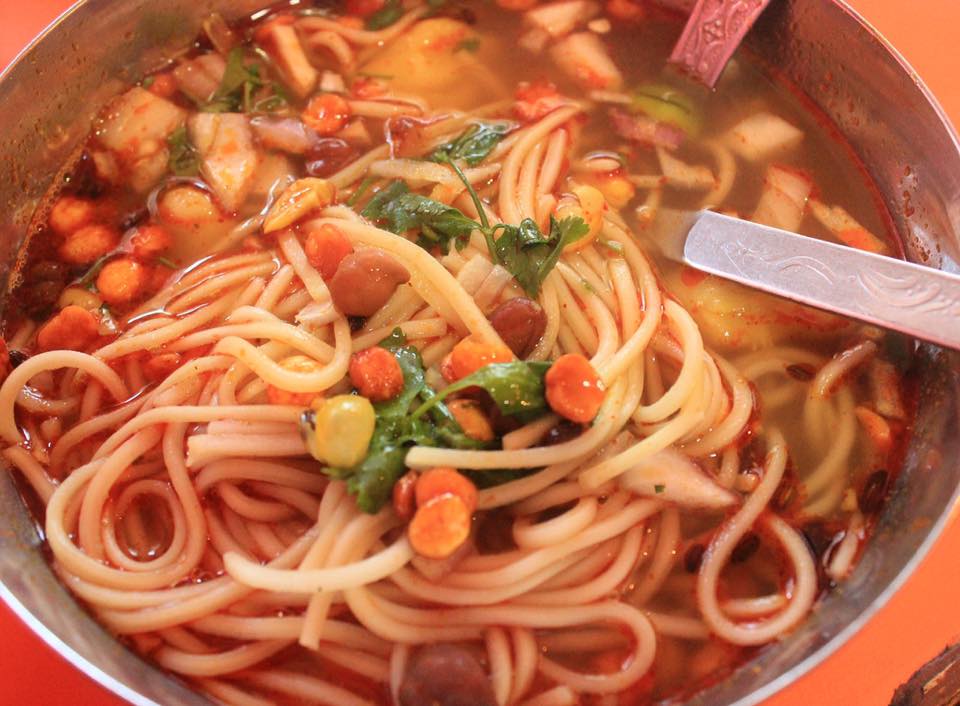
Thukpa is a noodle soup that comes from Tibet and has spread to nearby regions. It can be made with a range of ingredients, including vegetables, chicken, or eggs. The soup features noodles that may be hand-pulled, hand-rolled, or chopped, depending on the style. In Nepal, it is often spicier and mostly vegetarian, while in Bhutan, it tends to be sweeter. Garnishes like coriander leaves, spring onions, or garlic leaves are common, especially in Nepalese thukpa.
Where does Thukpa come from?
Thukpa began in eastern Tibet and is described as a general Tibetan term for any soup or stew with noodles. Over time, it traveled to neighboring regions, especially to areas in India such as Ladakh, Sikkim, Arunachal Pradesh, and Darjeeling, where it became a staple among communities of Tibetan and Nepalese origin. Its adaptability to local tastes and ingredients helped it become popular across the Himalayas.
How is Thukpa made?
The base of thukpa is a broth with noodles, which can be hand-pulled, hand-rolled, or chopped. The soup may be vegetarian or include chicken or eggs. In Nepal, beans, chickpeas, gram, or kidney beans are used as protein alternatives. The broth is flavored with local spices and finished with fresh herbs or spring onions. Each region adapts the preparation to suit local preferences and available ingredients.


How and when is Thukpa eaten?
Thukpa is eaten as an everyday meal in Tibet, Nepal, India, and Bhutan. It is enjoyed by people of all ages and backgrounds, often as a warming dish in cold climates. In Nepal, it is commonly garnished with fresh herbs. The soup is served hot and can be found in homes, restaurants, and roadside stalls, especially in Himalayan regions.
Kinds of Thukpa
There are several types of thukpa, each with its own noodle style. Thenthuk uses hand-pulled noodles, gyathuk features Chinese-style noodles, bhakthuk has hand-rolled pinched noodles similar to gnocchi, and tsapthuk uses chopped noodles. Nepalese thukpa is usually vegetarian and spicier, while Bhutanese thukpa is known for its sweeter taste. Egg thukpa is also popular in Nepal.
What Thukpa means
Thukpa is a part of daily life in Tibetan, Nepalese, and Himalayan Indian communities. It is not tied to specific festivals or religious practices but is valued for its comfort and adaptability. In Bhutan, it is especially popular among tourists. The dish reflects the blending of local ingredients and culinary traditions across the Himalayan region.
Questions people ask about Thukpa
What is thukpa made of?
Thukpa is a noodle soup made with vegetables, and sometimes chicken, egg, or beans. The type of noodle and garnish can vary by region.
Where does thukpa come from?
Thukpa originated in eastern Tibet and is now widely eaten in Nepal, Bhutan, and Himalayan regions of India.
Are there vegetarian and non-vegetarian versions?
Yes, thukpa can be made vegetarian, especially in Nepal, or with chicken, egg, or other protein.
What are the main regional differences?
Nepalese thukpa is spicier and mostly vegetarian, while Bhutanese thukpa is sweeter. Indian regions use different noodle types.
How is thukpa served?
Thukpa is served as a hot soup, often garnished with fresh herbs like coriander or spring onion, and eaten as an everyday meal.
Good reading and sources
The facts on this page come from the Wikipedia article "Thukpa", written by its contributors and used under the CC BY-SA 4.0 licence, and from its Wikidata record (CC0). Thali rewrote the text in its own words, with AI assistance, and compares every page with the article to make sure no passage is copied. It may be reused under the same CC BY-SA 4.0 licence with a link back.
It may contain mistakes, and it is not dietary or allergy advice: recipes differ from cook to cook. If something is wrong, tell us. Last refreshed 2026-10-03.
More from China
All the food of China Pasta
🇮🇹 Italy and 1 moreUnleavened dough shaped and cooked, a staple of Italian cuisine
Main dish, Lunch, Dinner
Pasta
🇮🇹 Italy and 1 moreUnleavened dough shaped and cooked, a staple of Italian cuisine
Main dish, Lunch, Dinner
 RamenMeatラーメン
🇯🇵 Japan and 1 moreJapanese noodle soup with Chinese-style wheat noodles in hot broth
Soup, Lunch, Dinner
RamenMeatラーメン
🇯🇵 Japan and 1 moreJapanese noodle soup with Chinese-style wheat noodles in hot broth
Soup, Lunch, Dinner
 Lei chaVegan擂茶
🇨🇳 China and 3 moreA Hakka tea-based drink or soup made with ground tea, nuts, seeds and grains
Drink
Lei chaVegan擂茶
🇨🇳 China and 3 moreA Hakka tea-based drink or soup made with ground tea, nuts, seeds and grains
Drink
 Shanghai fried noodlesMeat上海粗炒
🇨🇳 ChinaThick wheat noodles stir-fried with beef or pork, bok choy, and onion
Main dish, Lunch, Dinner
Shanghai fried noodlesMeat上海粗炒
🇨🇳 ChinaThick wheat noodles stir-fried with beef or pork, bok choy, and onion
Main dish, Lunch, Dinner
Its cousins elsewhere
All soups Chicken soupMeat
🇺🇸 United States and 4 moreA hot soup of chicken simmered with vegetables, noodles or grains
Soup, Lunch, Dinner
Chicken soupMeat
🇺🇸 United States and 4 moreA hot soup of chicken simmered with vegetables, noodles or grains
Soup, Lunch, Dinner
 MinestroneVegetarian
🇮🇹 ItalyHearty Italian vegetable soup with beans, pasta or rice
Soup, Lunch, Dinner
MinestroneVegetarian
🇮🇹 ItalyHearty Italian vegetable soup with beans, pasta or rice
Soup, Lunch, Dinner
 Chorba
🇩🇿 Algeria and 5 moreA family of hearty soups and stews found from North Africa to Central Asia
Soup
Chorba
🇩🇿 Algeria and 5 moreA family of hearty soups and stews found from North Africa to Central Asia
Soup
 Lablabiلبلابي
🇹🇳 Tunisia and 1 moreTunisian chickpea soup poured over torn bread and topped with bold garnishes
Soup, Breakfast, Lunch
Lablabiلبلابي
🇹🇳 Tunisia and 1 moreTunisian chickpea soup poured over torn bread and topped with bold garnishes
Soup, Breakfast, Lunch