
Fish amok
In its own language: អាម៉ុកត្រី
Steamed Cambodian fish curry with coconut and kroeung, set in banana leaf
Fish amok is a steamed fish curry from Cambodia, known for its mousse-like texture and fragrant blend of coconut cream, eggs, and kroeung (a fresh herb and spice paste). Traditionally served hot in banana leaf containers, it is considered a national dish and is usually eaten with rice.
- Steamed in banana leaf cups for a mousse-like texture
- Uses kroeung, a fresh Cambodian spice paste
- Traditionally made with goby, snakehead or catfish
- Served hot with steamed rice
- Considered a national dish of Cambodia
What is Fish amok?
Fish amok is a steamed fish curry from Cambodia, with a soft, mousse-like consistency. The dish blends fish fillets with a fresh spice paste called kroeung, coconut cream or milk, and eggs. This mixture is placed in a banana leaf cup, often lined with great morinda leaves, then steamed until set. The result is a fragrant, savory custard, usually served hot in the banana leaf or sometimes a coconut shell. It is eaten with steamed rice, and is recognized as one of Cambodia's most iconic dishes.
Where does Fish amok come from?
Fish amok is widely regarded as a national dish of Cambodia and is linked to Khmer royal cuisine. Some believe it dates back to the Khmer Empire, though its exact origins are debated. While many consider it a classic Cambodian creation, there are questions about whether it first appeared in Cambodia or was influenced by neighboring cuisines. Despite this, it remains a central part of Cambodian food culture and is closely associated with Khmer identity.
How is Fish amok made?
To make fish amok, fillets of fish such as goby, snakehead, or catfish are marinated in a freshly made kroeung paste, which can be yellow or green. Coconut cream or milk and eggs are mixed in to create a rich, smooth curry. The mixture is spooned into banana leaf containers, often with great morinda leaves at the bottom, and then steamed for about 20 to 30 minutes until it firms up with a mousse-like texture. The dish is served hot, either in the banana leaf or a coconut shell.
How and when is Fish amok eaten?
Fish amok is usually eaten as a main dish for lunch or dinner. It is served hot, often in individual banana leaf cups or coconut shells, accompanied by steamed rice. The presentation in banana leaf gives it a distinctive look and aroma. While it is a staple in Cambodian homes and restaurants, it is also a popular choice for visitors wanting to try traditional Khmer food. The dish is enjoyed in everyday settings rather than being tied to specific festivals or ceremonies.
Kinds of Fish amok
While fish is traditional, some Cambodian restaurants offer amok made with chicken, tofu, or beef. Other changes include using store-bought herb pastes, different types of kroeung, or adjusting the consistency to be more liquid. In places where great morinda leaves are unavailable, Swiss chard may be used instead. Some versions are cooked rather than steamed, but the classic preparation is always steamed for the signature mousse-like texture.
What Fish amok means
Fish amok holds a special place in Cambodian cuisine as a symbol of national pride and culinary heritage. It is often highlighted as a must-try dish for visitors and is featured in many Cambodian restaurants. Its association with royal Khmer cuisine and its unique preparation method set it apart from other regional curries. The use of banana leaf containers and traditional ingredients reflects the importance of local produce and cooking techniques in Cambodian food culture.
Questions people ask about Fish amok
What is fish amok made of?
Fish amok is made from fish fillets mixed with kroeung (a Cambodian herb and spice paste), coconut cream or milk, eggs, and sometimes great morinda leaves, all steamed in banana leaf cups.
Where does fish amok come from?
Fish amok comes from Cambodia and is considered one of the country's national dishes, with roots in Khmer royal cuisine.
How is fish amok cooked?
The fish and spice mixture is placed in banana leaf containers and steamed until it sets into a mousse-like curry. It is served hot, often with rice.
Can fish amok be made with other proteins?
Yes, some versions use chicken, tofu, or beef instead of fish, though the classic dish uses fish.
What does kroeung mean in fish amok?
Kroeung is a fresh Cambodian paste made from herbs and spices, and it gives fish amok its distinctive flavor.
Good reading and sources
The facts on this page come from the Wikipedia article "Fish amok", written by its contributors and used under the CC BY-SA 4.0 licence, and from its Wikidata record (CC0). Thali rewrote the text in its own words, with AI assistance, and compares every page with the article to make sure no passage is copied. It may be reused under the same CC BY-SA 4.0 licence with a link back.
It may contain mistakes, and it is not dietary or allergy advice: recipes differ from cook to cook. If something is wrong, tell us. Last refreshed 2026-10-03.
More from Cambodia
All the food of Cambodia Hot pot火鍋
🇨🇳 China and 5 moreSimmering broth at the table for cooking meats, vegetables and more as you eat
Main dish, Dinner, Lunch
Hot pot火鍋
🇨🇳 China and 5 moreSimmering broth at the table for cooking meats, vegetables and more as you eat
Main dish, Dinner, Lunch
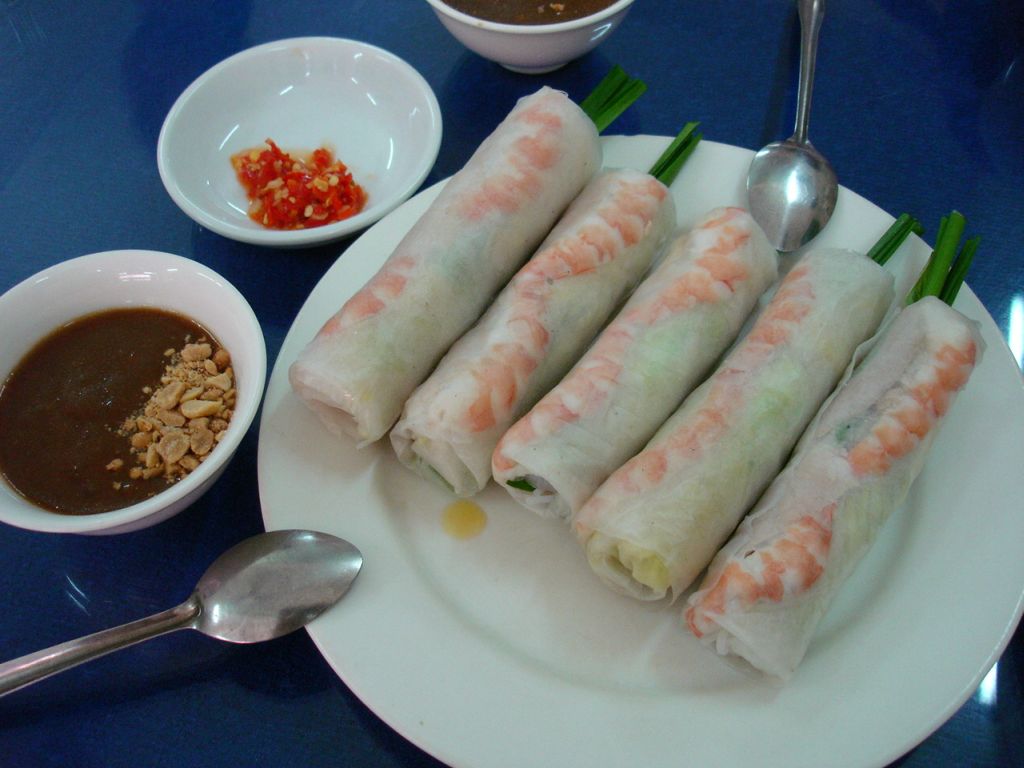 Gỏi cuốn
🇻🇳 Vietnam and 5 moreVietnamese rolls of pork, shrimp, noodles and herbs wrapped in rice paper
Main dish, Lunch, Dinner
Gỏi cuốn
🇻🇳 Vietnam and 5 moreVietnamese rolls of pork, shrimp, noodles and herbs wrapped in rice paper
Main dish, Lunch, Dinner
 Buddha Jumps Over the WallMeat佛跳牆
🇨🇳 China and 4 moreA lavish Fujian soup with seafood, meat and rare delicacies
Soup, Dinner
Buddha Jumps Over the WallMeat佛跳牆
🇨🇳 China and 4 moreA lavish Fujian soup with seafood, meat and rare delicacies
Soup, Dinner
 Num banhchokFish or seafoodនំបញ្ចុក
🇰🇭 CambodiaLightly fermented rice noodles served with fish-based sauces and fresh herbs
Noodle or pasta dish, Breakfast, Lunch
Num banhchokFish or seafoodនំបញ្ចុក
🇰🇭 CambodiaLightly fermented rice noodles served with fish-based sauces and fresh herbs
Noodle or pasta dish, Breakfast, Lunch
Its cousins elsewhere
All main dishes AspicMeat
🇫🇷 France and 5 moreMeat or fish set in savoury gelatin, served cold as an appetizer or festive dish
Main dish, Lunch, Dinner
AspicMeat
🇫🇷 France and 5 moreMeat or fish set in savoury gelatin, served cold as an appetizer or festive dish
Main dish, Lunch, Dinner
 Pastillaبسطيلة
🇲🇦 Morocco and 2 moreNorth African pie with layers of thin pastry and a savory or sweet filling
Main dish, Dinner, Lunch
Pastillaبسطيلة
🇲🇦 Morocco and 2 moreNorth African pie with layers of thin pastry and a savory or sweet filling
Main dish, Dinner, Lunch
 Quenelle
🇫🇷 FranceSoft dumplings of creamed fish or meat, shaped and poached
Dumpling, Lunch, Dinner
Quenelle
🇫🇷 FranceSoft dumplings of creamed fish or meat, shaped and poached
Dumpling, Lunch, Dinner
 Rissole
🇫🇷 France and 5 morePastry or breadcrumbed parcels with savoury or sweet fillings, fried or baked
Pie or savoury pastry, Snacks, Lunch
Rissole
🇫🇷 France and 5 morePastry or breadcrumbed parcels with savoury or sweet fillings, fried or baked
Pie or savoury pastry, Snacks, Lunch