
Pastilla
In its own language: بسطيلة
North African pie with layers of thin pastry and a savory or sweet filling
Pastilla is a layered pie from Morocco and Algeria, made with thin warqa pastry and filled with poultry, fish, or sometimes offal. The pie may be sweet or savory, often combining spiced meat or seafood with nuts, eggs, and sometimes sugar. It is usually served at special gatherings and celebrations.
- Made with thin warqa pastry, similar to filo
- Filling can be poultry, fish, or offal
- Sweet and savory flavors combine in poultry pastilla
- Seafood pastilla is spiced, not sweet
- Served at weddings and special occasions in Morocco
What is Pastilla?
Pastilla is a North African pie built from many thin sheets of warqa dough, which is similar to filo pastry. The filling can be poultry, such as chicken or pigeon, or seafood like fish and vermicelli, and sometimes offal. Poultry versions often mix shredded meat with a sauce thickened with eggs, and a layer of ground almonds, cinnamon, and sugar, giving a blend of sweet and savory flavors. The pie is baked until crisp and golden, then topped with powdered sugar and cinnamon or, for seafood, cheese and lemon.
Where does Pastilla come from?
The roots of pastilla trace back to both Andalusi and Ottoman influences. Some historians connect its name to the Spanish word for 'small pastry', while others point to Turkish origins brought by Algerian migrants to northern Morocco in the 19th century. Recipes resembling pastilla appear in 13th-century Andalusi cookbooks, and the dish likely arrived in Morocco through waves of migration from al-Andalus and Ottoman Algeria. Its pastry, warqa, and the dish's name are thought to have spread from Tétouan to the rest of Morocco after 1830.
How is Pastilla made?
To make pastilla, cooks layer sheets of warqa dough in a round pan, brushing each with butter or oil. The filling for poultry pastilla starts with browning the meat, simmering it with onions, spices like saffron, and herbs, then shredding it. The cooking liquid is thickened with eggs to make a rich sauce. Fried and crushed almonds mixed with sugar and cinnamon form another layer. The filling and pastry are assembled in alternating layers, wrapped, and baked until crisp. Seafood versions use fish, sometimes with vermicelli, and are usually spiced rather than sweet.


How and when is Pastilla eaten?
Pastilla is often brought out for special occasions, such as weddings or festive meals, especially in Morocco. It is usually served as a starter or main course, sliced at the table. Poultry pastilla is topped with sugar and cinnamon, while seafood pastilla is finished with cheese and lemon. In some Jewish Moroccan households, olive oil or margarine replaces butter to meet dietary laws. The pie is eaten hot, and sometimes smaller, individual versions are made for convenience.
Kinds of Pastilla
There are several forms of pastilla. Poultry pastilla, originally made with pigeon, now often uses chicken. Seafood pastilla swaps the sweet almond layer for a spicy, savory filling, and is common at Moroccan weddings. In Fassi cuisine, a dessert version called jowhara uses a creamy, milk-based filling and orange flower water. Jewish Moroccan cooks may use margarine or olive oil, and in Israel, pastilla is sometimes made with phyllo and shaped into small rolls or cigars.
What Pastilla means
Pastilla holds a place of honor at Moroccan celebrations and is a symbol of hospitality and festivity. Its preparation is often reserved for important gatherings, such as weddings and major holidays. The dish reflects the blend of Andalusi, Ottoman, and Maghrebi culinary traditions, and its layered flavors and textures are a point of pride. In Jewish Moroccan communities, adaptations allow it to fit kosher rules, showing its flexibility and cultural reach.
Questions people ask about Pastilla
What is pastilla made of?
Pastilla is made with thin warqa pastry, filled with poultry like chicken or pigeon, or with fish or offal. The filling often includes eggs, spices, and sometimes ground almonds, sugar, and cinnamon.
Where does pastilla come from?
Pastilla is a specialty of Morocco and Algeria, with influences from Andalusi and Ottoman cuisines. It is especially associated with Moroccan celebrations and festive meals.
Is pastilla sweet or savory?
Poultry pastilla blends both sweet and savory flavors, using spiced meat and a layer of sugared almonds. Seafood pastilla, on the other hand, is spicy and not sweet.
How is pastilla served?
Pastilla is baked and served hot, often as a starter or main dish at special events. Poultry versions are topped with powdered sugar and cinnamon, while seafood versions may have cheese and lemon.
Are there different kinds of pastilla?
Yes, there are poultry, seafood, and even dessert versions. Some Jewish Moroccan versions use margarine or olive oil instead of butter, and in Israel, pastilla may be made as small pastries.
Good reading and sources
The facts on this page come from the Wikipedia article "Pastilla", written by its contributors and used under the CC BY-SA 4.0 licence, and from its Wikidata record (CC0). Thali rewrote the text in its own words, with AI assistance, and compares every page with the article to make sure no passage is copied. It may be reused under the same CC BY-SA 4.0 licence with a link back.
It may contain mistakes, and it is not dietary or allergy advice: recipes differ from cook to cook. If something is wrong, tell us. Last refreshed 2026-10-03.
More from Morocco
All the food of Morocco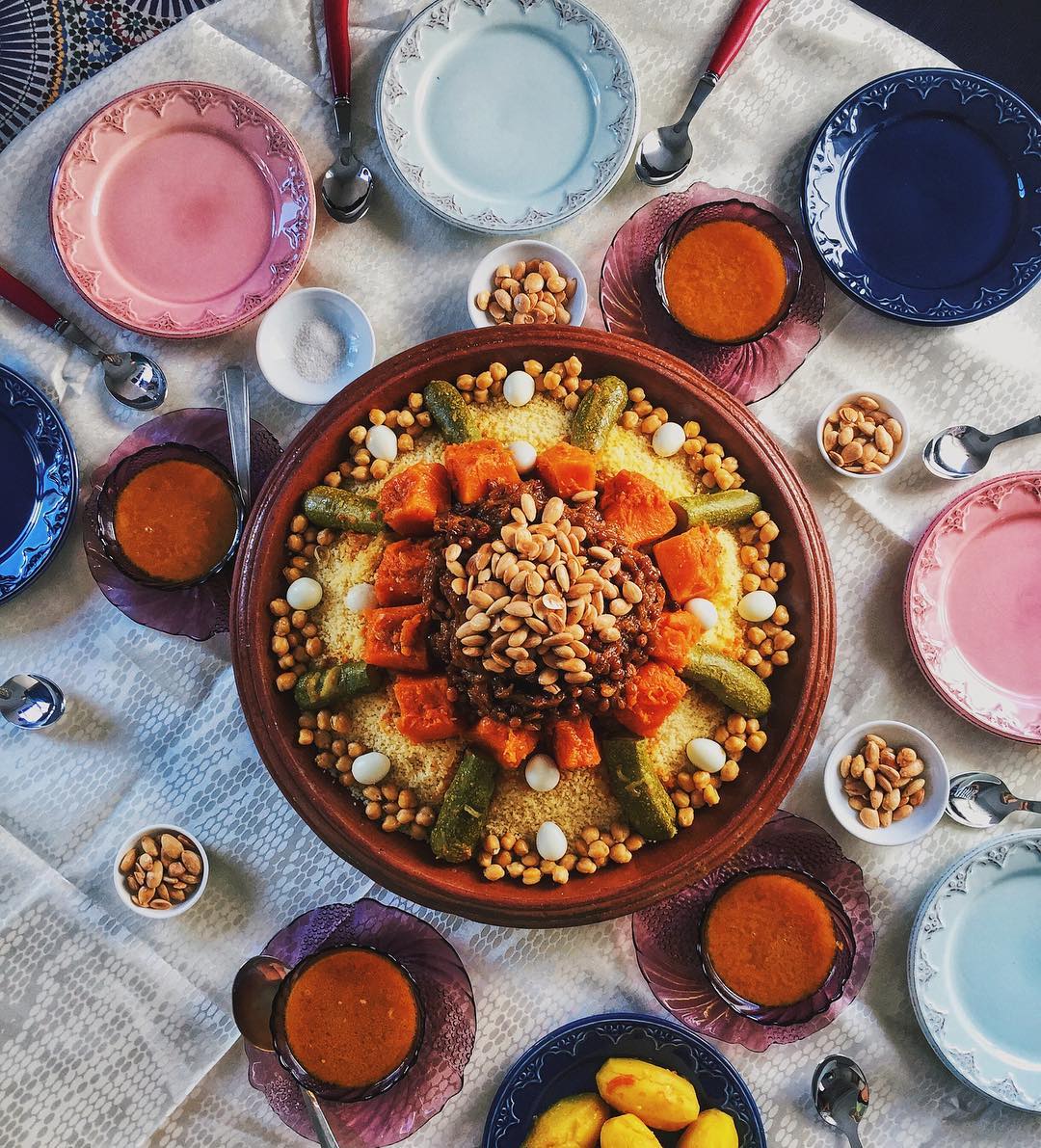 Couscousseksu
🇩🇿 Algeria and 4 moreSteamed semolina granules served with stew or vegetables across North Africa
Main dish, Lunch, Dinner
Couscousseksu
🇩🇿 Algeria and 4 moreSteamed semolina granules served with stew or vegetables across North Africa
Main dish, Lunch, Dinner
 ShakshukaVegetarian
🇹🇳 Tunisia and 5 moreEggs poached in a spiced tomato and pepper sauce from North Africa
Main dish, Breakfast, Dinner
ShakshukaVegetarian
🇹🇳 Tunisia and 5 moreEggs poached in a spiced tomato and pepper sauce from North Africa
Main dish, Breakfast, Dinner
 Tajineطاجين
🇲🇦 Morocco and 4 moreNorth African stew slow-cooked in a cone-lidded clay pot
Main dish, Lunch, Dinner
Tajineطاجين
🇲🇦 Morocco and 4 moreNorth African stew slow-cooked in a cone-lidded clay pot
Main dish, Lunch, Dinner
 Hariraالحريرة
🇲🇦 Morocco and 3 moreNorth African soup of tomato, legumes, herbs and spices, often served during Ramadan
Soup, Dinner, Supper
Hariraالحريرة
🇲🇦 Morocco and 3 moreNorth African soup of tomato, legumes, herbs and spices, often served during Ramadan
Soup, Dinner, Supper
Its cousins elsewhere
All main dishes Freekehفريكة
🇵🇸 Palestine and 5 moreRoasted green durum wheat grains, a staple across the eastern Mediterranean
Main dish, Lunch, Dinner
Zereshk poloMeatزرشکپلو
🇮🇷 Iran and 1 morePersian rice with tart barberries, often served with saffron chicken
Main dish, Lunch, Dinner
Freekehفريكة
🇵🇸 Palestine and 5 moreRoasted green durum wheat grains, a staple across the eastern Mediterranean
Main dish, Lunch, Dinner
Zereshk poloMeatزرشکپلو
🇮🇷 Iran and 1 morePersian rice with tart barberries, often served with saffron chicken
Main dish, Lunch, Dinner
 Satayꦱꦠꦺ
🇮🇩 Indonesia and 5 moreGrilled skewers of seasoned meat or seafood, often served with peanut sauce
Main dish, Lunch, Dinner
Satayꦱꦠꦺ
🇮🇩 Indonesia and 5 moreGrilled skewers of seasoned meat or seafood, often served with peanut sauce
Main dish, Lunch, Dinner
 Korma
🇮🇳 India and 4 moreA rich curry of meat or vegetables simmered in yogurt and spices
Stew or curry, Lunch, Dinner
Korma
🇮🇳 India and 4 moreA rich curry of meat or vegetables simmered in yogurt and spices
Stew or curry, Lunch, Dinner